


Decision-Making Made Simple: Guide Your Teen with Sorting It Out
2025 was marked by the publication of many valuable books. Among them, Sorting It Out stands out as a practical and scientifically based guide intended for parents, teachers, and anyone who works with young people. Published by Cambridge University Press, the book by authors Robin Gregory and Brooke Moore presents a clear and practical framework for mentoring teenagers in making decisions that shape their lives, all within its 242 pages.
We spoke with Robin Gregory, one of the authors of the book, who is a Senior Research Scientist at Decision Research in Eugene, Oregon, and an Adjunct Professor at the University of British Columbia.
The teenage years are often marked by the belief that they know everything best, making it difficult for adults to reach them. In this interview, you will learn how the book can help in such moments and how approaches from different cultures can enrich our understanding of decision-making. You will also discover how the book can help parents accept their children’s decisions even when they disagree with them, and why it is equally useful for adults who want to improve their own decision-making. Finally, we address the crucial question of how to support young people in making decisions during a period of hormonal changes, environmental pressures, and constant life challenges, while preserving their mental well-being and sense of security.
The teenage years are often marked by the belief that they know everything best, so it can be difficult for adults to reach them
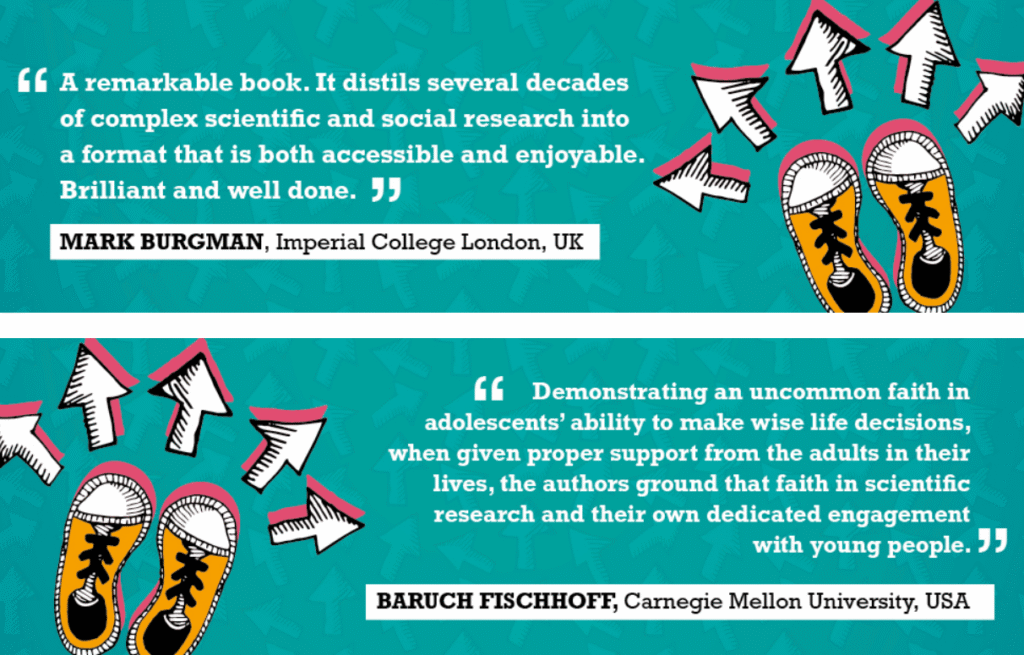
The book has received extremely positive reviews from experts in education, psychology, and the social sciences. Mark Burgman from Imperial College London described it as outstanding and highly accessible, while educational consultant Jo Chrona highlighted its value for anyone who works with young people. Experts such as Baruch Fischhoff and Nancy Golden emphasize how important this manual is for developing responsibility, self-confidence, and the ability to make thoughtful decisions.
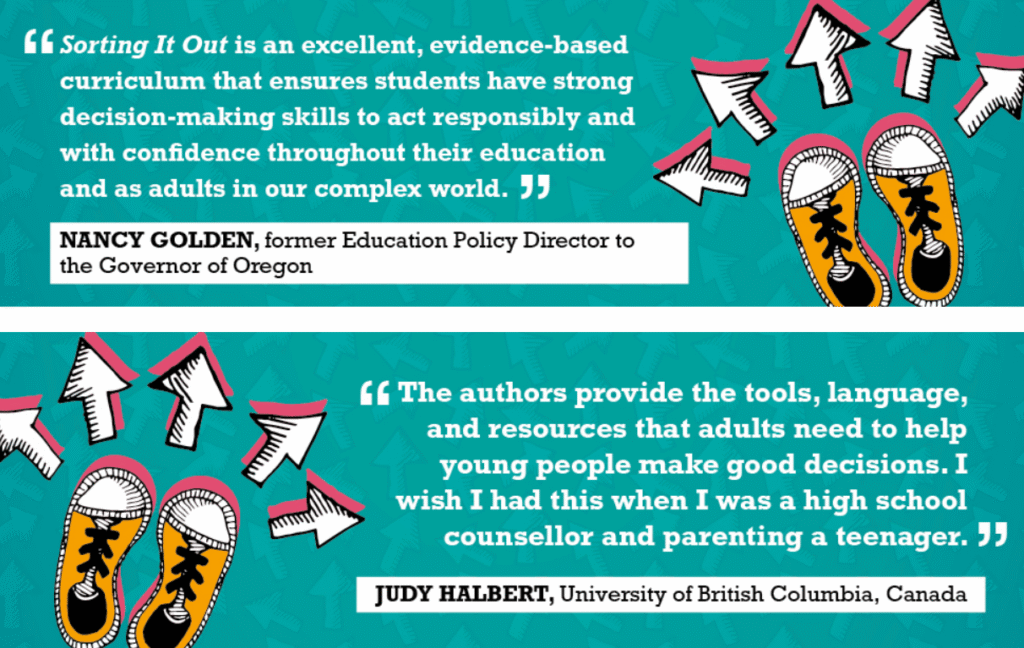
Many reviewers believe that this is a book every parent, teacher, or counselor should have on hand—because its clear techniques, examples, and warm approach can become a key tool in supporting children and young people on their journey toward maturity.
Written for parents, teachers, and others who live or work with teenagers
“Written for parents, teachers, and others who live or work with teenagers, this science-based guide describes how you can become a confident ‘decision mentor.” Learn to support young people in making good decisions for themselves.” It’s not always easy with teenagers; those are the years when they think they know everything and that their decisions are the smartest. How can your book help in that case?
Professor Robin Gregory: It is well known that teenagers often think they know nearly everything. Our response to this is to set up an adult they trust – a parent, an aunt or uncle, a favorite teacher, a coach, or a school counselor – as their mentor when it comes to the difficult decisions they inevitably will face. With the help of the sequenced Decision Maker Moves (DMM), we hope that a dialogue will be established that interests the teen (because it starts with Framing the problem and Identifying Values/Interests) and that, with lots of back and forth between the teen and the mentor, leads to an improved decision – one that supports who the teenager is and wants to become.
“We acknowledge our deepening awareness that Indigenous Peoples’ ways of being and knowing often emphasize many qualities also found in the thinking characterized by the Decision-Maker Moves – listening carefully, encouraging dialogue, embracing multiple values, taking a long-run perspective, and constructing resilient options.” When it comes to decision-making and learning not only from our own experiences but also from the values and approaches of Indigenous peoples, what do you think is the most important lesson that someone from Europe could apply?
Professor Robin Gregory: I think the primary lesson of working on decision-making skills with Indigenous youth in Canada is that different cultures will bring their own perspective to decision-making. This includes both the appropriate role of a decision mentor and the constraints or limits placed on a teenager, who in some societies at age 14/15 is still considered quite young (and thus expected to closely follow parental leads) whereas in other societies, teens of this age will be considered young adults and be given significant responsibilities and freedom when it comes to decision making. It is also true that some societies are very individualistic, whereas others are more community-based, which changes the outlook and perspective of the teenage decision maker.
What inspired you to write this book?
Professor Robin Gregory: Inspiration for writing the book came from the realization that students receive little or no training, in schools or at home, in how to make decisions well – decisions that support their agency and individual nature and talents – even though the choices they make are arguably the most important factor in shaping their current and future lives.
“Both teenagers and their parents need to learn what a good decision-making process looks like.”
How can the book help in cases when the child needs to make a good decision, and yet the parent must also learn to accept that the child made a decision they thought was right at that moment? It’s not just about making a decision, but also about accepting it.
Professor Robin Gregory: There is a reason we subtitled the book “supporting teenage decision making” and not something along the lines of getting your child to do what you want them to do. Both teenagers and their parents need to learn what a good decision-making process looks like, and that it is intended to follow and support their own unique goals. Parents and their children can share the same fundamental belief structures and values, but still differ markedly in their decisions because of variations in the relative importance they attach to different values.
Adults make mistakes too, so I have to ask: how can this book help adults make better decisions themselves? Did you learn anything new while working on the book?
Professor Robin Gregory: As you say, adults have much to learn about making decisions as well, and we have heard from many of the adults who have bought and used the book (as a way to support their students or their own children) that they also have learned a great deal through the book. Our emphasis on teenagers is not a sign of the need for different adult/teen decision-making methods but rather an expression of our hope that the next generation – today’s teenagers – will do a better job making decisions than have the current crop of adults.
“Nancy Reagan was a very narrow-minded person. I would not invite her to dinner.”
You mentioned Nancy Reagan, the former First Lady of the United States, in the book. Could you tell the readers why you mentioned her?
Professor Robin Gregory: Nancy Reagan is famous, at least in North America, for not wanting others (adults or teenagers) to make thoughtful decisions based on their own values but, instead, to do exactly what she wanted them to do. Her approach is very rule-based and has nothing to do with supporting the individual to become more of who they are. She was a very narrow-minded person. I would not invite her to dinner.
You also wrote about compassionate thinking. The fact is, we live in a world where people are not always kind, and where the kindness of others can sometimes be taken advantage of. How can we help children in that situation, while still encouraging compassion and protecting them?
Professor Robin Gregory: The decision-maker moves encourage kindness and compassion because they require listening to the values of others as well as developing a better understanding of one’s own values. I think that as we get to know another person better by having a values-based dialogue, it becomes more difficult not to see them as a human and to not allow them to live their life, in terms of jobs, religion, gender, etc. — in a way that helps them to achieve what is important to them. And the emphasis on agency that comes from a growing confidence in our ability to make decisions can also help protect us from others who might seek to take advantage of our compassion.
The most important move is how a problem is framed
In the book, you explain six moves. Which one is the most difficult to apply in practice, and which one do you like the most?
Professor Robin Gregory: All the moves are important – decision making is a sequenced process – but if I had to pick just one as the “most” important, I would say the first, framing the problem. Why? Two reasons. First, it is perhaps the most neglected in that people rarely think about how a problem is framed and, instead, just go along with the frame they are given (e.g., choose between A and B. But wait: what about C or D?). Second, if you neglect the frame and get it wrong, then everything else that follows is invalidated because it either fails to apply to the problem at hand or fails to identify the relevant values and opportunities. And the ability to reframe a problem is an expression of our agency — living in the world, as a teenager or as an adult, is an active process, and the best way to realize this is by shaping our lives through the decisions that we make.
It often seems like every decision is important and can be stressful, so I would like to conclude with the question: how can we help them make decisions while preserving and caring for children’s mental health? Growing up isn’t always easy—for example, choosing a college. Children are growing up, and teenagers are affected by hormones, so there are many factors to consider.
Professor Robin Gregory: Decisions reflect values, and values change over time. In a way, this makes the mental health side of things easier, because most decisions made by teenagers – choosing partners, selecting a career path, etc. – can (and often will) be changed later in life. Everything feels like it’s going to last forever, but very little actually does. The other side of this is that the outcomes of some decisions made by teenagers – drugs, risky activities, etc. – could in fact last forever, and these need to be given serious attention because the consequences might not be reversible, so for these decisions, advance thought and preplanning (along with discussions with adult mentors) is essential.
Foster dialogue, build trust, and encourage conversation
Every decision, big or small, carries the potential for error, and making thoughtful choices is not always easy. Sorting It Out equips parents, teachers, and mentors with practical tools to foster dialogue and build trust, encouraging conversation. In doing so, it serves as a gentle reminder that, through patience, understanding, and support, we can help young people grow into self-aware and responsible individuals, while also offering guidance for adults on how to navigate their own decisions.
Image: Professor Robin Gregory, The University of British Columbia
