

When Malaria Isn’t Malaria: The First Imported Case of Babesiosis in Honduras
In July 2025, a 72-year-old man from Honduras returned from Massachusetts with a fever, headache, and neurological symptoms. Initial tests suggested malaria caused by Plasmodium falciparum, so the patient received standard antimalarial treatment. However, his condition gradually worsened, developing into multiorgan failure. Only molecular analysis revealed the true culprit: Babesia microti, a tick-borne parasite that can cause malaria-like symptoms.
The case report, titled “First documented case of imported human babesiosis in Honduras: Diagnostic challenges with Plasmodium falciparum”, was published in November 2025. The authors are Lesly Chaver, Heydi Flores, Wendy Padilla, Jenny Rodríguez, Concepción Zúniga, Francisco Medina, Gabriela Matamoros, María Esther Araujo, Bryan Ortiz, and Gustavo Fontecha.
The first confirmed imported case of human babesiosis in Honduras
This case represents the first confirmed imported case of human babesiosis in Honduras and highlights how challenging it can be to diagnose the disease in malaria-endemic regions. Babesiosis is rare but serious, attacking red blood cells and potentially causing hemolytic anemia.
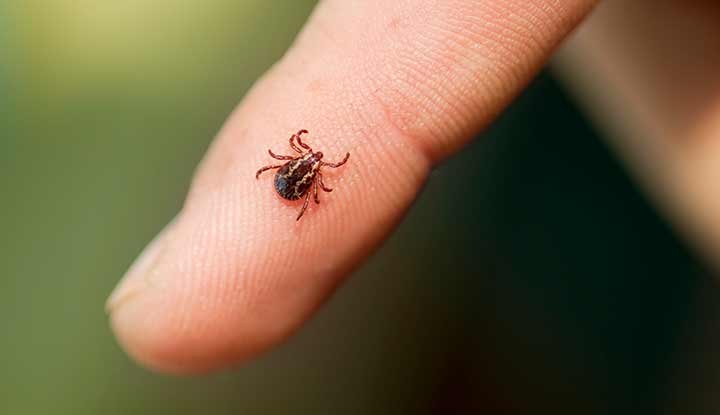
“The first human case was described in 1957 in Croatia, followed by the first in an immunocompetent host in Nantucket, USA, in 1969. Since then, cases have been documented in North America, Europe, Asia, and South America. In North America, Babesia microti is the predominant species, transmitted by Ixodes scapularis ticks,” the scientists explained.
Older patients and those with chronic conditions, such as heart disease, are at greater risk of severe illness. In this case, the patient’s age and comorbidities likely contributed to the fatal outcome.
Why was it misdiagnosed?
Babesia microti parasites look very similar to Plasmodium falciparum under the microscope, and the clinical picture is also very similar, including fever, chills, fatigue, and headache. A key morphological characteristic, occasionally observed in cases of high parasitemia, is the formation of a ‘Maltese cross’ tetrad within erythrocytes. However, this finding is unusual and should not be relied upon as the only basis for diagnosis, the scientists pointed out. In areas where malaria is endemic, babesiosis can be misdiagnosed as malaria caused by P. falciparum, unless molecular methods such as PCR for Babesia 18S rRNA or serological analyses are used. For this reason, molecular diagnostics are necessary in patients who do not respond to standard antimalarials.
The broader implications are clear: as international travel increases and tick vectors expand their range, rare infections like babesiosis may appear in countries where they are not normally seen. In malaria-endemic regions, patients who do not respond to standard antimalarials should be tested for babesiosis. Introducing molecular diagnostics in reference laboratories can prevent misdiagnosis and inappropriate treatment.
“With increasing travel and expanding tick vectors, more imported cases are likely. Improving diagnostic capacity and clinical awareness is crucial to reduce morbidity and mortality,” the scientists concluded.
Image: Blacklegged (deer) ticks spread babesiosis in the U.S, Clevelandclinic.org
