


How Homelessness Affects Kidney Health in People with Diabetes?
Homelessness and chronic diseases are often viewed as separate problems, but this research shows they are actually connected. A new study examined whether kidney outcomes differed between groups with and without a history of homelessness. Diabetes is a chronic disease that requires constant blood sugar monitoring, regular medication use, and frequent medical checkups. When these conditions are not met, serious complications can develop, and one of the most severe is kidney damage.
The authors of the study titled The Impact of Homelessness on Kidney Outcomes Among Adults With Diabetes are Kathryn Wiens, Saania Tariq, Tucker Reed, Li Bai, Paul E. Ronksley, Stephen W. Hwang, Peter C. Austin, Gillian L. Booth, Eldon Spackman, and David J.T. Campbell.
The kidneys play a key role in the body because they filter waste products from the blood. In people with diabetes, high blood sugar levels can damage small blood vessels in the kidneys over time. If the disease is not controlled, this can lead to chronic kidney disease, and in more severe cases, the need for dialysis or a kidney transplant.
As the study authors noted, “To date, there has not been a large-scale assessment of rates of diabetic kidney disease among people experiencing homelessness.” They also described the population they followed, stating: “Our study population included adults with diabetes who used hospital services in Ontario between April 01, 2008, and March 31, 2019.”
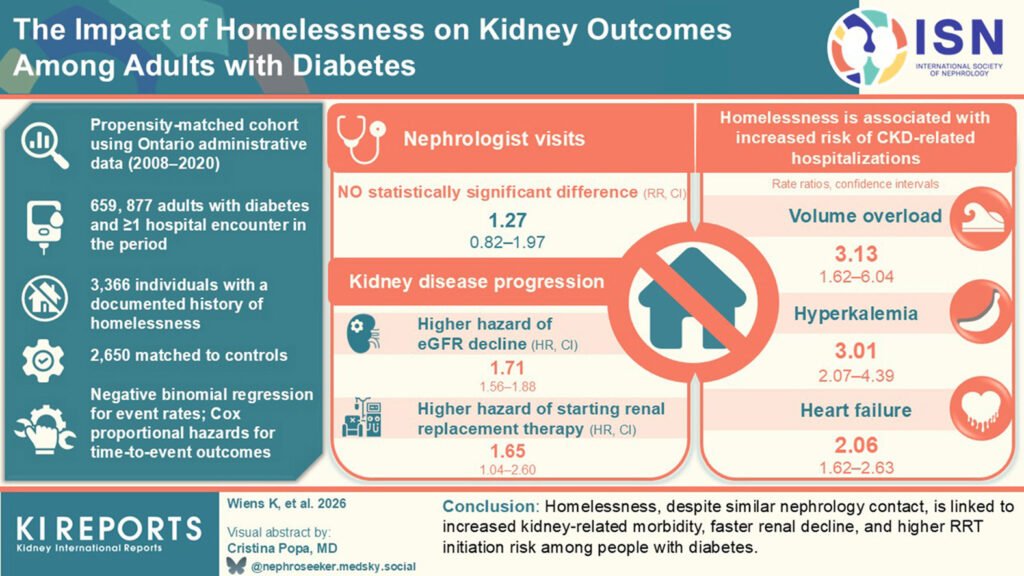
The study conducted a cohort analysis using administrative healthcare data from Ontario, Canada. Out of 659,877 people with diabetes, 3,366 had a history of homelessness, and 2,650 were successfully matched with a control group of people who were not homeless.
Stable housing plays an important role in maintaining health, particularly in the context of chronic diseases
The results showed a clear difference between the groups. People with a history of homelessness had a significantly higher risk of kidney function decline and more frequent kidney-related complications. The study authors emphasize that “homelessness may independently increase the occurrence of adverse kidney events among people living with diabetes.” This means that homelessness itself may be a risk factor, not just poverty or limited access to healthcare.
These findings suggest that stable housing plays an important role in maintaining health, particularly in the context of chronic diseases. The reasons for this are complex. People without stable housing often lack a place to store medications or medical equipment. It is also harder for them to maintain regular meal schedules or attend medical appointments. In addition, homelessness is often linked to high levels of stress, mental health challenges, and other health issues that can further worsen diabetes management.
The authors also highlight the broader importance of these findings, stating: “This study adds to the literature on disparities in diabetes-related complications due to homelessness, further supporting the need for tailored, person-centered approaches to diabetes care that reduce existing barriers to timely and efficient access to care.”
All of this shows that health is not determined only by medicine and treatment, but also by living conditions. If a person does not have a safe place to live, it becomes much harder to manage a chronic illness. The study clearly shows that treating diabetes is not only about providing medication. For some people, an equally important medical intervention may be helping them secure stable housing and social support.
Image: The problem of homelessness in Canada | Canada Housing
