

Meeting the Donor: Experiences of Donor-Conceived Individuals with Professional Support
For donor-conceived people, learning about their biological origins often evokes strong emotions and raises many questions. It is not surprising that meeting the donor can trigger curiosity and excitement, but also nervousness, uncertainty, or fear of disappointment. Although previous research has shown that experiences are generally positive, little is known about the nuances of these meetings, the participants’ motivations, and the role of professional support in the process.
A new Dutch study explored the experiences of 17 individuals aged 16 or older who, with the help of the professional organization Fiom, had their first meeting with a donor. As explained in the study, two organizations currently play an important role in donor linking in the Netherlands: College Donorgegevens Kunstmatige Bevruchting (Artificial Fertilisation Donor Information Office) (Cdkb) and Fiom. In other words, the participants in this study had already met the donor before being included in the study. The study focused on exploring their experiences of that meeting, including emotions, expectations, and perceptions of professional support.
The authors of the study “Meeting the sperm donor for the first time: what can shape the experiences of donor-conceived people?” are Floor B. van Rooij, Monique H. Mochtar, Annick C. van Brouwershaven, Anne M. Schrijvers, Sophie H. Bolt, Marja Visser, A. Janneke B.M. Maas, and Henny M.W. Bos.
Motivation and Desire to Meet
Participants most often reported multiple motivations for seeking and meeting the donor. These included the need to understand their own identity, curiosity, and a desire to learn about their genetic origins or medical information. Motivation changed over the course of life, particularly increasing after participants became parents.
“A few participants mentioned that their desire to meet the donor increased after they had children. They saw themselves and their partners reflected in their children. This realization highlighted their own experience of missing out on knowing half of their heritage,” the scientists wrote in the study.
The strength of the desire to meet the donor varied, from moderate curiosity to feeling that the meeting would be a valuable addition to life, to a strong inner need to know the donor. Expectations of the donor were also highly diverse. Some participants had low or minimal expectations to avoid disappointment, while others idealized the donor, placing him on a “pedestal” and imagining him as a perfect person. These expectations strongly shaped emotions before and during the meeting. Meeting the donor elicited a mix of emotions: excitement, nervousness, discomfort, happiness, relief, and sometimes disappointment. Recognition of the donor’s physical or personal characteristics, as well as a sense of connection, contributed to positive experiences. On the other hand, mismatches between expectations and reality sometimes triggered more difficult emotions, such as insecurity.
Experience
“From the moment I heard that my biological father is a donor, I wanted to know who he is. If I would look like him, if I could find a bit of recognition I could not find with my own family. […] And what I also hoped was to find a bit of peace, that you no longer stand, for example, on a platform, and think with all people walking by that he could be one of them. That you look at someone and think that their nose matches mine. I was hoping to get rid of a piece of anxiety.” (ID 8, born in a mother-father family, formerly anonymous donor, 42 years old)
“The predominant feeling was to meet him. Because you only know half of who you are, there are so many things you just don’t know. I noticed how annoying that was, especially in the hospital. Because, for example, I had my child through ART. So, every time in the hospital, when they asked about hereditary things, I didn’t know, and I had to explain every time that I am a donor-conceived person. But also for my child, I want to know about hereditary diseases.” (ID 7, born in a mother-father family, formerly anonymous donor, 40 years old)
The Role of Professional Support
Professional counselors played a key role in participants’ experiences. Preparation included discussions about expectations, potential emotions, and topics participants might not want to address. During the meeting, the presence of a counselor was helpful for participants who felt overwhelmed or nervous, while others preferred privacy and minimal intervention. After the meeting, follow-up conversations with counselors helped some participants better understand and evaluate their experiences. Support from parents, partners, siblings, or other donor-conceived individuals was also important, although some participants did not involve their parents due to fear of negative reactions.
The study confirms that experiences of meeting the donor are highly diverse and shaped by multiple contexts: motivation, the intensity of the desire to meet, expectations, interaction with the donor, the support provided, and socio-demographic factors. Aligning expectations with actual experiences is crucial. The results highlight the importance of individually tailored counseling, support throughout the search and meeting process, and monitoring of participants’ emotions. Although participants were predominantly from mother-father families and women outnumbered men, the findings provide valuable guidance for counselors and organizations facilitating connections between donor-conceived individuals and donors.
Meeting the donor can be an emotionally rich and complex event. Professional support, family involvement, and a clear understanding of one’s expectations play a vital role in navigating these sensitive situations.
“Based on the study’s findings, it is recommended that counselors maintain contact with donor-conceived people during the meeting, as support needs may change over time. This will help assess whether the support being provided, which may align with what they previously discussed, continues to meet their needs, allowing for adjustments as necessary. By doing so, they enhance the positive experience of meeting the donor for the first time,” the scientists concluded.
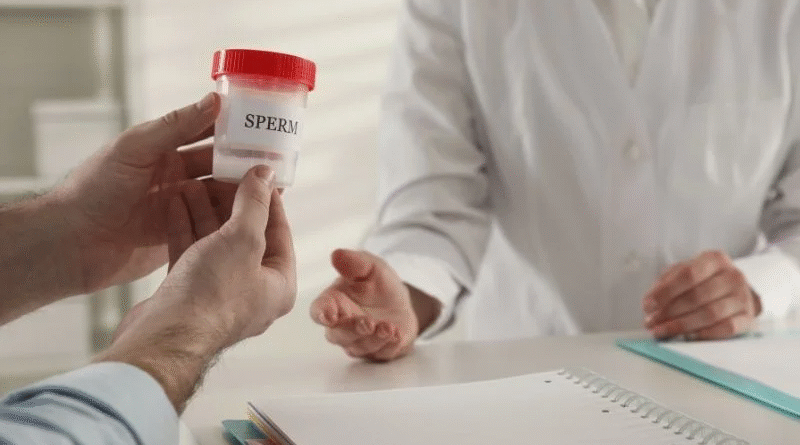
Image: Sperm Donation, DrInvitro
