

A delicate battle: A rare fungal infection in an extremely preterm neonate
In a new case, scientists describe a fatal infection with the fungus Aspergillus flavus in a baby born at 25 weeks of gestation. Aspergillus is ubiquitous in soil, plants, air, and food, and while the most common cause of illness in babies is Aspergillus fumigatus, A. flavus and A. niger are less common.
The authors of this case report, titled “An invasive Aspergillus flavus infection in an extremely preterm neonate: a case report,” are Neema Pithia, Margie Morgan, Thea Tagliaferro, and Priya R. Soni.
In this case, the mother’s placenta showed no signs of the fungus, and the baby’s twin, who died two days before the onset of illness from a pulmonary hemorrhage, also showed no signs of infection. This strongly suggests that the infection occurred after birth, with the baby being particularly vulnerable due to extreme prematurity and an underdeveloped immune system. “On day of life six, a small ecchymosis appeared on the right flank, progressing rapidly over 6–12 hours to involve the entire back,” the scientists wrote. This prompted an urgent transfer to a specialized neonatal intensive care unit. Biopsies were taken immediately, and treatment was initiated.
Laboratory tests confirmed the presence of A. flavus, and the baby developed serious complications. Autopsy revealed that the fungus was present only in the skin lesions, although the damage to the cerebral blood vessels could have been caused by fungal invasion, even when the fungus was not present in the sampled tissue.
“This case highlights the high mortality of Aspergillus flavus in extremely premature infants despite early recognition, initiation of amphotericin B, and surgical debridement. It emphasizes the importance of multidisciplinary care for prompt biopsy, culture confirmation, and surgical intervention, as well as consideration of alternative antifungal regimens, while also demonstrating the limitations of available therapies in this vulnerable population,” the scientists concluded.
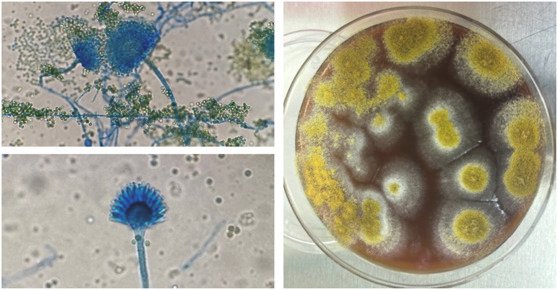
Image: a) A. flavus produces hyaline septate hyphae with vesicles that support phialides with spore production, b) A. flavus grows well on routine fungal media, producing a powdery yellow-green colony. Pithia N et al., An invasive Aspergillus flavus infection in an extremely preterm neonate: a case report.
