

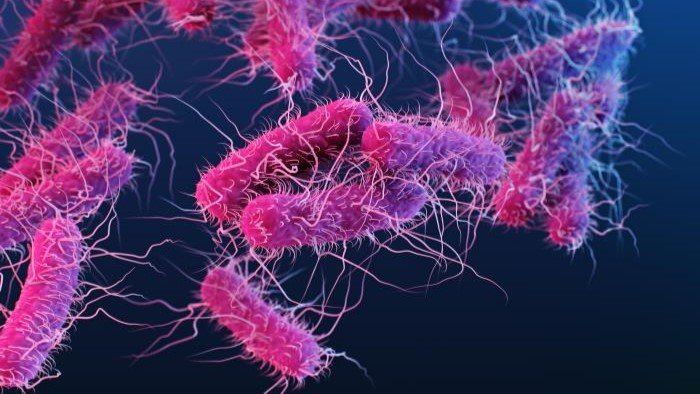
E. coli Protein NleL Helps Bacteria Evade Gut Defenses
Every year, millions of people fall ill from infections caused by the bacterium Escherichia coli, particularly strains such as O157:H7, which can lead to severe diarrhea and complications like hemolytic uremic syndrome (HUS). Estimates indicate that in the United States, these infections result in approximately $405 million in annual costs, including medical care, premature deaths, and lost productivity.
Bacteria have developed various ways to circumvent the body’s natural defenses. One of these ways is described in a new study, Enteropathogenic bacteria evade ROCK-driven epithelial cell extrusion, which focuses on Escherichia coli (E. coli).
We spoke with Isabella Rauch, Ph.D., one of the corresponding authors of the study and an associate professor of molecular microbiology and immunology at Oregon Health & Science University.
About the study and the results
When intestinal cells become infected, the body usually expels them to prevent the spread of the infection, a process known as cell extrusion. However, the bacterium Escherichia coli produces a protein called NleL, which degrades key host enzymes, including caspase-4 and the proteins ROCK1 and ROCK2, preventing the expulsion of infected cells. This allows the bacteria to survive and spread in the intestines.
Experiments in mice showed that the host’s defense response is more effective when the bacteria lack the NleL protein. The experiments were carried out in mice housed in controlled conditions, with stable temperature, humidity, and a 14-hour light-dark cycle, to minimize external factors that could affect the intestinal epithelium’s defenses. The mice were given bacteria that carried the NleL protein and those that did not, and the scientists monitored the efficiency of expelling infected cells from the intestinal epithelium.
These findings are relevant to humans because intestinal epithelial defense mechanisms in mice and humans share similar pathways. Thus, the results of the experiment provide valuable insight into how NleL can interfere with intestinal defenses in humans and identify potential targets for the development of therapeutic interventions that would prevent the spread of bacteria without relying on antibiotics.
Gut Defenses, Microbiota, and the Climate Factor in E. coli Infections
How important is the state of intestinal immunity and microbiota in this context?
Isabella Rauch: The microbiota can provide what is called “colonization resistance” to prevent the bacteria from taking hold in the first place. But once the bacteria have reached the intestinal lining, it is up to the host cells to defend themselves, and this is what the bacteria are suppressing. The state of intestinal immunity is a very vague term, so this question is hard to answer. The overall immune response to an infection always consists of various components, so if one of these is weakened, the resistance to infection will be lower.
As the scientists said, understanding how bacteria bypass our body’s defenses is important, but they also warn that climate change and weakened food systems could lead to increased numbers of these infections. This raises questions about potential strategies, such as the use of probiotics.
So, how could this help when it comes to the use of probiotics, but also whether enough attention is being paid to the interaction between these diseases and climate change?
“Our research cannot directly advance the field of probiotics, since this research deals explicitly with the interaction between pathogenic bacteria and the host and does not involve probiotic bacteria. Scientists are trying to call out the climate change risks of increasing food-borne illness. The food safety system weakening is largely a U.S.-specific phenomenon since the federal administration is deregulating this sector,” concluded Rauch.
Image: Kinds of E. coli/CDC.GOV
