

First confirmed case of anthrax and brucellosis co-infection reported in China
Scientists from China described a very rare medical case of a patient infected with both anthrax and brucellosis at the same time. Although both diseases are well known, there had previously been no confirmed report of one person having them together.
Anthrax is an infectious disease caused by the bacterium Bacillus anthracis. It is a zoonotic disease, which means it spreads from animals to humans. People usually become infected through direct contact with sick or dead animals, or with their meat, skin, or other animal products. If it is not treated in time, the infection can spread into the bloodstream and become life-threatening. Brucellosis is another bacterial zoonotic disease caused by bacteria from the genus Brucella. It also spreads through contact with infected animals, especially sheep, goats, and cattle, or by consuming unpasteurized dairy products. Unlike anthrax, brucellosis does not have clear and easily recognized symptoms. It usually causes fever, tiredness, sweating, and pain in the muscles and joints.
In a new case report titled First documented case of cutaneous anthrax and brucellosis coinfection in a human in rural northern China: a case report, researchers from China describe the first confirmed instance of a person infected with anthrax and brucellosis at the same time. The paper, authored by Yunzheng An, Jiangyu Liu, Xuedan Liu, Fei Di, Yuan Gao, Lianchun Liang, Feng Zhao, Jianru Jia, and Zhenhuan Cao, details the unusual case.
“Anthrax is estimated to cause 20,000 to 100,000 human cases each year. In China, 951 human cases were reported between 2017 and 2019, primarily in the western and northeastern provinces...Brucellosis is one of the most prevalent zoonotic diseases globally, with an estimated 1.6 to 2.1 million human cases annually. In China, its incidence has markedly increased from 2005 to 2020, exhibiting a clear seasonal pattern with peaks between March and September,” the authors explained.
The patient was a 61-year-old farmer from northern China
In this case, the patient was a 61-year-old farmer from northern China. “A 61-year-old male farmer from northern rural China presented on July 23, 2024. Around 20 days earlier, he had slaughtered a sheep that had suddenly died while grazing. The sheep belonged to a neighbor’s flock and showed no prior symptoms. According to locals, other animals in the flock were healthy. The patient butchered the carcass himself at home and stored the meat in his freezer. He fed some of the meat to his household dog, which remained asymptomatic. No other family members had contact with the carcass or developed symptoms. Notably, another cutaneous anthrax case was reported less than 3 km away during the same period.”
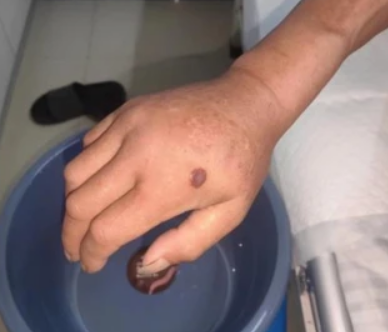
About two weeks later, he developed fever, fatigue, and body aches. A small red spot appeared on his hand and later turned into a blister. Laboratory tests confirmed the presence of Bacillus anthracis, and tests for brucellosis were also positive, showing that he was infected with Brucella at the same time. The patient was treated with a combination of antibiotics. After several weeks of treatment, his condition improved, and he made a full recovery.
Early diagnosis and proper treatment can prevent serious complications and save lives
Controlling diseases in animals, regular veterinary checks, and educating farmers about protective measures. This case shows that two zoonotic diseases can occur together, even in areas that are not considered high-risk. Doctors need to be alert, especially when treating patients who work closely with livestock, because early diagnosis and proper treatment can prevent serious complications and save lives.
“This case highlights the diagnostic challenges and public health implications of simultaneous anthrax and brucellosis infection. Although both diseases are typically associated with endemic, high-risk pastoral areas, our report demonstrates that cases can also occur in non-endemic, low-risk settings. This underscores the importance of maintaining vigilance and strengthening surveillance and screening not only in high-risk regions but also in areas traditionally considered low-risk. Such efforts, combined with timely diagnosis, appropriate treatment, animal vaccination, and cross-sectoral One Health collaboration, are essential for the effective control and prevention of these zoonotic diseases,” the scientists concluded.
Image credit: An Y. et al., BMC Infectious Diseases (2026).
