

Japanese Scientists Report First Human-to-Human Transmission of SFTS Virus
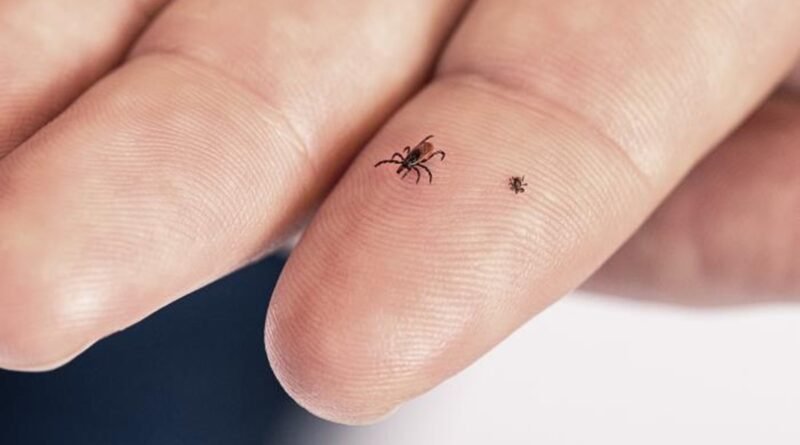
Diseases that spread from animals to humans are a reminder of how fragile the boundaries between species can be. One such virus is SFTS, the cause of severe fever with thrombocytopenia syndrome, a serious illness marked by high fever and a dangerously low platelet count. A new report from Japan shows that, under rare circumstances, the virus can also be transmitted from person to person. The patient contracted the infection through a tick bite.
In this case report entitled “First case of nosocomial transmission of severe fever with thrombocytopenia syndrome in Japan”, Japanese researchers Shu Kiyotoki, Ryotaro Kurotaka, Yoshihiro Tokunaga, Toru Takahashi, Masayuki Shimojima, Tomoki Yoshikawa, Hideki Ebihara, Ryuichi Minoda Sada, and Satoshi Kutsuna describe the first confirmed case of hospital-acquired (nosocomial) transmission of the SFTS virus in Japan.
Since the first case of SFTS was reported in Japan in 2013, no human-to-human transmission has been reported in Japan
SFTS is caused by Bandavirus dabieense. Infected patients typically develop sudden high fever, diarrhoea, vomiting, and abnormalities in blood cell counts, while severe cases can progress to multiple organ failure. In Japan, the fatality rate approaches 30 per cent, making SFTS one of the more dangerous infections.
In the newly reported case, published in the medical literature, researchers describe an elderly patient who was admitted to a hospital in western Japan with nonspecific symptoms, including fever and weakness. “Since the first case of SFTS was reported in Japan in 2013, no human-to-human transmission has been reported in Japan. Herein, we report the first known case of nosocomial human-to-human transmission of SFTSV in Japan….Our area is located in the western part of Japan, which is an endemic region for SFTS,” the scientists explained.
Blood tests soon pointed to SFTS, and the diagnosis was confirmed by laboratory testing. Despite treatment, the patient’s condition rapidly deteriorated, and he died just three days after admission.
Just over a week later, a young doctor who had been involved in the patient’s care developed similar symptoms. He too experienced high fever, joint pain, and gastrointestinal problems, and tests confirmed the same disease. What makes this case particularly concerning is that the doctor had no known exposure to ticks, animals, or outdoor environments. His only plausible source of infection was the patient himself.
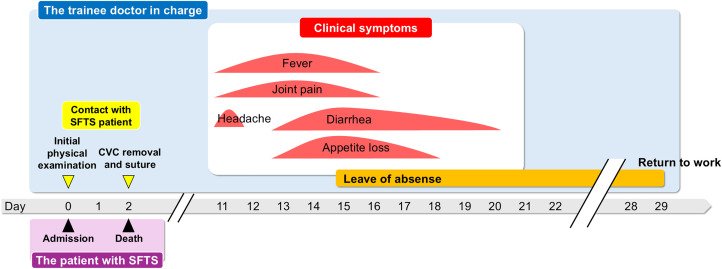
“Genomic analysis of the SFTS virus (SFTSV) isolated from both the patient and the doctor revealed that they were infected with the same viral strain. These findings strongly suggest that the trainee doctor acquired the infection through nosocomial exposure,” the scientists wrote.
Prevention
Researchers believe the infection most likely occurred during postmortem care, when the doctor removed a central venous catheter and was exposed to the deceased patient’s blood. Although he was wearing gloves and a mask, he did not wear protective goggles, which may have allowed the virus to enter through the mucous membranes of the eyes. It is well known that the bodies of people who die from SFTS can contain extremely high levels of the virus in their blood. According to the report, no other healthcare workers developed SFTS.
This case does not suggest that SFTS spreads easily between people, but it serves as a warning. “To prevent future cases of human-to-human SFTSV transmission, thorough standard and transmission-specific precautions should be implemented, particularly in situations in which blood splashes are possible during postmortem care. In such situations, wearing appropriate PPE, including goggles, is essential. Trainees who are unfamiliar with infection control measures should take particular care when having contact with patients with SFTS, and advance training is critical in such contexts,” the scientists concluded.
Image: About Ticks and Tick-Borne Disease, The Centers for Disease Control and Prevention
Funding: This work was supported by a grant from the Japan Agency for Medical Research and Development [grant number 25fk0108717].
