

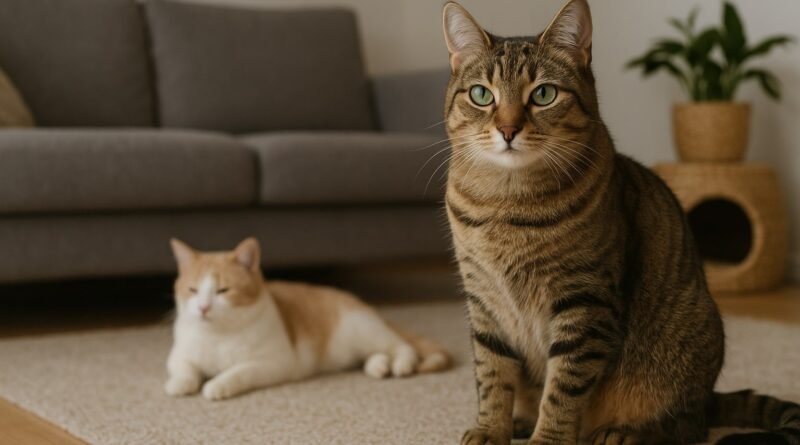
Meow Inside: How Cats Adapt to Indoor Life
A new study from researchers in Australia and New Zealand has shed light on how cats cope when moved from outdoor to indoor living, and how their owners experience the transition.
The authors of the study “Who let the cats in? Evaluation of the transitioning of cats to indoor life” are Renee Railton, Julia Henning, Rina Hannaford, Gosia Zobel, Natalie Waran, and Susan Hazel.
Cats are among the world’s most popular pets, and in New Zealand, around 40% of households have at least one. Traditionally, many owners allow their cats outdoor access, believing it supports natural behaviours and wellbeing. But concerns are mounting over the risks of free-ranging cats, due to injury, illness, and accidents.
The study involved 16 cat-owning households. Participants, mostly women aged 18 to 74, included full-time workers, students, and families, with many households having children. Most cats were the only pets in the home. Over four weeks in November and December 2024, the first week followed each household’s usual routine, while for the remaining three weeks, cats were kept strictly indoors. As they explained, participants were asked to complete three online surveys at three time points: at the end of week 1, end of week 2 (after the first week of indoor-only living), and end of weeks 3 and 4 (at the study’s conclusion).
Results showed that most cats adapted quickly to indoor life
Results showed that most cats adapted quickly to indoor life, with around 10 out of 15 adjusting within three weeks. Some exhibited short-term signs of stress, but overall, daily behaviour remained largely unchanged. Owners cited health and safety concerns as the main motivation for keeping cats inside. Yet, guilt over restricting natural behaviours and practical challenges of managing indoor cats were common difficulties. Many highlighted the importance of environmental enrichment, such as toys and hiding spots, to prevent stress and unwanted behaviours.
According to the study, it is important to note that many of the behavioural changes reported may not solely be due to being kept indoors and could be due to other factors, such as changes to the cat’s regular routine. “For example, some cats may not have previously used a litter tray, or not as their main toilet, and may have preferred to toilet outside (although we do not have this information for this sample),” they explained.
Six months later, nine cats had returned to the outdoors, with only three remaining fully indoor.
Few studies have examined the transition itself
The researchers note that, while previous work has compared indoor and outdoor cats, few studies have examined the transition itself.
“While some studies have examined the differences between indoor and outdoor cats, to the best of our knowledge, no research to date has focused on the transition process itself. The current study aims to address this knowledge gap by investigating behavioural changes in cats transitioning from outdoor to indoor-only living, as well as the experiences and adaptations of their owners. By examining both cat behaviour and owner perceptions, this research seeks to provide valuable insights into the challenges and identify potential strategies for successfully adapting cats and their owners to an indoor lifestyle…
Despite most cats adapting well, the majority of participants indicated that they would revert to giving their cats outdoor access after the study. Owner attitudes, perceptions, and practical challenges were key factors in the successful transition of cats to indoor living. This highlights the importance of considering both feline and human factors when developing strategies to promote indoor cat housing as a means of protecting both cats and wildlife. Future research that further elucidates barriers and adaptation across different seasons, geographical locations, home environments, and cat temperaments are needed,” the researchers wrote in the study.
By focusing on both cats’ behaviour and owner experience, this study offers new insights into the challenges and strategies for successfully adapting cats to an indoor lifestyle. One owner summed it up after three weeks: their cat was “chilled out and happy living the indoor life.”
AI-generated image
