
Princeton’s Simon Morrison: Music and the Human Story
Simon Morrison is an archival historian and a professor at Princeton University who uncovers music through the stories preserved in archives. He specializes in 20th-century Russian and Soviet music. His research has taken him deep into Russian archives, where unpublished letters, diaries, and photographs reveal the lives of some of the world’s greatest artists. As a leading expert on composer Sergei Prokofiev, he has collaborated with a Yale professor to offer a fresh, nuanced perspective on the life and career of Pyotr Ilyich Tchaikovsky.
Professor Morrison brings stories and emotions to the world that not only enrich our understanding but also illuminate human lives within complex social and political circumstances. His books include Bolshoi Confidential: Secrets of Russian Ballet from the Reign of the Tsars to the Present, The Love and Wars of Lina Prokofiev.
About Lina Prokofiev
Lina Ivanovna Prokofieva, born Carolina Codina Nemísskaia in Madrid in 1897, “inherited a deep love of music from her father and courage, zeal, and a strong commitment to various causes from her mother,” according to the book. She married the Russian composer Sergei Prokofiev, and although he later left her for another woman, she continued to love him. Her strength and resilience remained unwavering throughout her life, and more about her remarkable story can be found in the book.
Every note, every ballet performance, every operatic voice
Every note, every ballet performance, every operatic voice carries a story that reveals and evokes human emotions with equal intensity. In this interview, Professor Morrison discusses Tchaikovsky and Prokofiev, Lina Prokofiev’s life, and also considers the role of artificial intelligence in composition and performance. He also addresses our assumptions about Tchaikovsky hiding his homosexuality.
“Tchaikovsky didn’t conceal his homosexuality with friends and family. It’s our assumption that he did, but a lot of his letters and diaries find him quite open about his relationships with men, desires, and the discomfort he felt in the company of women. I wrote a book about him that argues against lumping his music and life together. Art is artifice, and his art – sensual, playful, time-traveling, surreal – addresses everything but his intimate life. My students love Tchaikovsky’s music because it’s gorgeous and accessible and addresses the profundities of everyday reality. And yet there is this vast literature out there that reduces Tchaikovsky to a suffering, self-loathing, melancholic who couldn’t help but channel his unhappiness into his compositions. Except that his music is not unhappy. Nor was he, “ Professor Morrison told Unknown Focus.
It is difficult to single out just one of the topics he deals with. Professor Morrison covers everything in his works: the attack on the artistic director of the Bolshoi Ballet, the importance of the Bolshoi for the art of ballet, for Russia, and for the world. He explores exclusive approaches, history, life on stage, and political connections, all imbued with notes of balletic elegance and the power of opera.
How much has the current political situation affected your work?
Professor Morrison: For my Tchaikovsky bio, I had most of the documents that I needed on my laptop. I’d done the archival research over several years, and if I didn’t know something important, I reached out to Tchaikovsky experts in Russia who generously shared their expertise with me. Much is cut off and re-impeded for foreigners seeking to conduct research in Russia, but the people running the archives aren’t part of Z-World and cautiously helped me when possible.
For the book I’ve just completed, a history of Moscow, I had a greater challenge. The sources for the ancient layer of the city’s past– the liturgical chronicles, the decrees – are published, but the imperial period remains a cipher. And, frankly, no one knows much about Moscow’s 13th-14th century transformation from provincial burg to the center of Muscovy – beyond violent deeds and the Mongol Yoke. For help, I enlisted a brilliant Moscow-based research assistant, and her expert findings clarified much that I didn’t know or understand about Moscow’s church-and-state politics, then and now. The work she did for me before Russia’s invasion of Ukraine couldn’t be done now, since assisting “foreign agents” like myself is a sackable, imprisonable offence, one-hundred-percent taboo. I haven’t myself been in Moscow for a while, and I miss my friends there, concert life, the libraries, everything.
“I’m glad to see the magic that present-day choreographers like Alexei Ratmansky draw from their artists without crackups and breakdowns, without turning the pursuit of excellence into a pursuit of the impossible, with Black-Swan-horror-movie results.”
In a study published “Enhancing ballet posture Teaching: Evaluation of a scientific computing model with motion capture integration”, scientists looked at how computer models can analyze movements, enable personalized training, prevent injuries, and improve performance. Given your knowledge of ballet, I wonder if this is the right way to improve performance. It’s one thing to work on preventing injuries, but how much can computer models help, and do you think they should be incorporated into ballet in this way?
Professor Morrison: I see no problem using such technologies for physical therapy and health improvement. Well-being is more of a behavioral matter, not something computer programs can address. The technical demands of ballet have increased since George Balanchine, a choreographer intent on turning the women in his company into angelic marionettes (and he somehow convinced those women that the sacrifice was worth the great man’s vision). Thank goodness that time is over! Stress and strain are inevitable – in school, in sports, and in the art of physical display (ballet). Abuse is obviously unacceptable, but it’s long been part of the history of ballet, without bettering anything that happened on stage. So, I’m glad to see the magic that present-day choreographers like Alexei Ratmansky draw from their artists without crackups and breakdowns, without turning the pursuit of excellence into a pursuit of the impossible, with Black-Swan-horror-movie results.
Sergei Prokofiev was only two years old when Pyotr Ilyich Tchaikovsky passed away. How did Tchaikovsky’s work and legacy influence Prokofiev, and what fascinates you the most about their work and personalities?
Professor Morrison: Both composers had immense creative talents, and both strained under the burden of that talent and the celebrity that comes with it throughout their entire lives. In Tchaikovsky’s case, I’m fascinated by the pressure he placed on himself to produce as much music as possible, and he did so despite living an itinerant, effortlessly international existence without ever owning a home.
Prokofiev is a counterexample, effortlessly international in the youth, then stuck in Moscow under Stalin during the worst of all times in terms of thought control. His music was heavily censored, banned, and unperformed at different points during his tragic Stalinist denouement. Music was ninety-nine percent of what mattered to him, and the restrictions placed on his music broke his spirit. Tchaikovsky died too young, but by accident, during a fiendish cholera epidemic in St. Petersburg. Prokofiev died too young as well, but his was a slow death, stemming from incredible stress and uncertainty, revolution, war, and deeply macabre politics.
“Writing is thinking and composing is imagining”
We can see that AI is increasingly taking on the role of composer… What is your opinion on this, and what kind of impact do you think it could have on younger generations? Or do you believe that people who truly enjoy the creative process won’t be affected by it?
Professor Morrison: Writing is thinking, and composing is imagining. AI takes thinking and imagining away from people, so I’m not a fan. We’ve been living with different types of automated processes for decades now – autotune, randomized sampling, trashy 90s’ software programs like Garage Band and their descendants – but obviously the past couple of years have landed us in a post-composer, post-producer, and post-listener world (in the sense that the sounds produced by AI are not meant to be contemplated, focused upon).
The good news is that AI consumes and replicates itself, which will instill a desire among us humans for fresh sounds, fresh takes, the natural, the real, string, wire, live mics in live rooms. Perhaps that freshness will be consumed by the technology it resists, but it’s the nature of the AI beast that no one can predict its progress. I read about an AI-created pop band that has an AI-created album and millions of AI-fans. But the AI tour? Not happening.
In the past, books and poetry were, in some way, also a form of resistance against the system. Today, we have social media where people can say whatever they think. Do you notice these changes in today’s artists?
Professor Morrison: It’s hard to resist in a world (our wired world) where no one believes in anything because truth belongs to techno-feudalists and the influencers on their payrolls. I hope I’m wrong in thinking that we’re headed to catastrophe. But if we are, I’d like it to be of the positively transformative kind that artists have always imagined.
It’s a cliché to say that art builds communities; it’s more than art imagines communities to which people want to belong, and in that sense, art and artists are as important as ever. The communities might be virtual or actual, but they will save us.
“Lina went through hell with her husband. He relocated her and the kids from Paris to Moscow in the mid-1930s, their marriage fell apart, he abandoned his family for another relationship with a woman much younger than him, Lina survived the war on her own in Moscow and then was thrown into the Gulag.”
Prokofiev’s older son, Svyatoslav, gave you his mother’s letters. I assume that was of great importance to you, but I also imagine it came with great responsibility. Can you tell me what moved you the most, specifically? Lina Prokofiev continued to love her husband despite everything. When you compare that period to today, do you think attitudes toward love and marriage have changed?
Professor Morrison: I was moved by the amount of letters Lina sent to Sergei Prokofiev, and how pitifully few he sent back. The marriage was one-sided, and she was constantly red-eyed from his impatience and misplaced anger at her. He emerges in the correspondence as a person of little feeling, or at least someone who placed all his feeling in his art. Most, if not all, of Prokofiev’s love ended up in his later operas and ballets; there was little, if anything, left for his wife and children. I can’t say that people’s attitudes about relationships, love, and marriage have changed since their time, at least not as much as conceptions of gender and sexuality have shifted.
Lina went through hell with her husband. He relocated her and the kids from Paris to Moscow in the mid-1930s, their marriage fell apart, and he abandoned his family for another relationship with a woman much younger than him. Lina survived the war on her own in Moscow and was then thrown into the Gulag. Clearly, she went through a lot. But still Lina loved her (ex) husband, at least the musical genius side of him, and when she got out of the Soviet Union in 1974, she helped to preserve his legacy. She understood something that’s hard for us to wrap our minds around – how much Prokofiev had been deceived by the Stalinist regime, how much he’d deceived himself, the devastation, desolation, and disappointment he felt.
You have written books such as Bolshoi Confidential: Secrets of the Russian Ballet from the Rule of the Tsars to Today, The Love and Wars of Lina Prokofiev, Tchaikovsky’s Empire: A New Life of Russia’s Greatest Composer… Which of your books would you recommend or give as a gift to world leaders of your choice, and why, and which one would to today’s youth?
Professor Morrison: I’ve been blessed to have my book about the Bolshoi Theater and my biography of Stevie Nicks given as gifts to numerous people. For a world leader, I’d recommend my forthcoming history of Moscow. It’s titled “A Kingdom and a Village,” and it’s coming out in March. Writing that book nearly killed me.
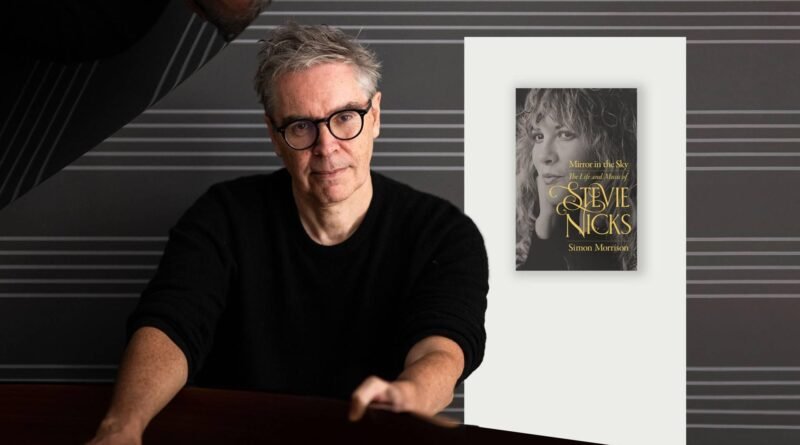
Image: Professor Simon A. Morrison, Princeton.edu
