

Screening More Women for Cervical Cancer in the USA
Federally Qualified Health Centers (FQHCs) in the U.S. provide comprehensive primary and preventive health care to low-income, underserved people. The community health center movement began in 1965 as part of the War on Poverty, and FQHCs now serve over 30 million people annually across thousands of sites. But despite their importance, these centers face structural constraints, such as staffing shortages, underfunding, and limited resources.
This was precisely the research topic led by Dr. Trisha Amboree and Dr. Jane Montealegre, which highlighted the role of Federally Qualified Health Centers (FQHCs) in reducing disparities in cervical cancer screening and explored how these centers could increase screening rates nationwide. In a new study, National Outcomes of Increasing Cervical Cancer Screening in Federally Qualified Health Centers, the researchers presented the results of the study.
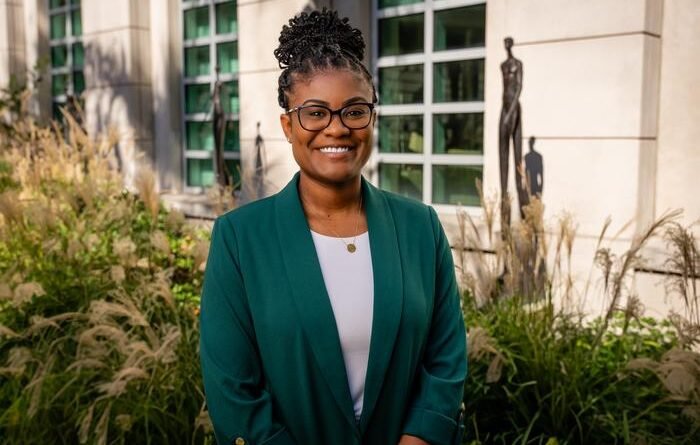
We spoke with Trisha Amboree, Ph.D., assistant professor in the MUSC Department of Public Health Sciences, about the study.
The main research question was: What proportion of individuals from traditionally underscreened groups is served by federally qualified health centers, and how would increasing cervical cancer screening in FQHCs change national screening rates?
About the Study and Its Results
The study’s goal was to estimate how many underserved individuals use FQHC services and what the impact would be if these centers were improved to meet the Healthy People 2030 goal of a screening rate of 79.2%. The research methodology was based on a cross-sectional study, using 2023 Uniform Data System (UDS) data collected from 1,352 FQHCs across the United States, self-reported screening frequency data from the National Health Interview Survey and population size estimates from the 2023 American Community Survey conducted by the U.S. Census Bureau. Adult FQHC beneficiaries eligible for cervical cancer screening were analyzed, out of an estimated total population of 85,364,685 individuals eligible for screening in the United States. Analyses were conducted from September 2024 to July 2025.
The current screening rate at FQHCs is 55.1%. If the Healthy People 2030 goal of 79.2% were achieved, an additional 1,872,367 women would be screened, and screening rates across all groups and regions would increase by 2 to 6 percentage points.
“Population-wide implementation of cervical cancer screening (CCS) has led to a greater than 50% reduction in cervical cancer incidence and mortality in the US. It is projected that with widespread human papillomavirus (HPV) vaccination and high up-to-date (UTD) CCS and treatment of precancer, cervical cancer can be eliminated as a public health problem (defined as <4 cases per 100,000 population) in the US in the next 2 to 3 decades. However, continued disparities are evident among low-resourced populations, which could significantly delay cervical cancer elimination. Additionally, previous studies indicate recent increases in cervical cancer incidence and mortality among US women who live in poverty,” as noted in the study.
“For these populations, barriers to cervical cancer screening include lack of insurance, time, and transportation; cost and distance to see a health care practitioner; unpaid time taken from work to access health care appointments; competing health care needs; discomfort or inability to undergo a pelvic examination; and psychosocial barriers (eg, distrust of the health care system and low health literacy).”
The results showed that FQHC centers in all U.S. states, Puerto Rico, and the District of Columbia serve 9.1% of the 85.4 million women eligible for cervical cancer screening, but the up-to-date screening rate (UTD CCS) in these centers is only 55.1%. FQHCs specifically serve historically underserved groups: 19.5% uninsured, 22.4% with incomes up to 200% of the federal poverty threshold, 17.7% from minority ethnic groups, 26.3% in rural areas, and 35.9% publicly insured. Much of the gap between current screening rates and the Healthy People 2030 goal is concentrated within the FQHC population.
Targeted interventions at these centers could result in an additional 1.87 million screenings, increasing the national rate by 2.2 percentage points, and would particularly benefit groups with low screening rates, including the publicly insured (from 68.8% to 74.8%), the uninsured (56.6% to 61.2%), rural residents (71.9% to 76.3%), and low-income individuals (65.9% to 70.0%). Although this improvement alone may not achieve the HP2030 goal, strategic investments in preventive services at FQHCs could significantly reduce disparities.
As they point out in the study, their analysis explored a novel method to estimate the national screen-eligible population size overall and among subgroups known to have lower CCS rates, thereby explicitly highlighting opportunities to mitigate cancer screening disparities.
Some women may be afraid of the results and therefore postpone screening. How can we help and support them?
What is the key step in this case, and where is the greatest need for support?
Trisha Amboree: Cervical cancer is preventable through vaccination against HPV, timely screening, and the early detection and treatment of precancerous lesions. However, screening has been declining in the US over the past several years, with lower screening uptake more apparent in lower-resourced populations. With this, our study aimed to assess the impact of improving screening coverage in federally qualified health centers (FQHCs)—safety net health systems that provide high-quality primary and preventive care to over 30 million Americans.
Our study findings indicate that FQHCs provide service to approximately 1 in every 3 underscreened publicly insured screen-eligible people in the US, over 1 in 4 underscreened rural people, over 1 in 5 underscreened people living at or below 200% of the federal poverty level, and almost 1 in every 5 underscreened uninsured people. This indicates that if we were to target efforts and resources to improve screening uptake in FQHCs to at least meet the national goal of 79.2%, we would effectively screen over 1.8 million more screen-eligible people in the US who are currently underscreened. This could not only help improve early detection and treatment of precancers before they turn into invasive cancer, but also help our ability to catch invasive cancers at earlier stages to improve outcomes.
Some challenges FQHCs may face in increasing screening include resource and capacity constraints, cost, competing healthcare needs, and patients’ unwillingness and/or inability to undergo a pelvic examination. Concerted efforts to implement evidence-based initiatives focused on improving screening are needed, as well as sustained investment in FQHCs, including funding and technical assistance to improve patient education and provider and staff retention.
Some women may be afraid of the results and therefore postpone screening. How can we help and support them?
Trisha Amboree: This is a valid concern. It is important to explain the purpose of cervical cancer screening, what the test is looking for, and what the results mean. For example, most people are unaware that HPV is one of the most common viruses and that most people will be exposed to or infected with HPV at some point in their lifetime. These are often transient infections that clear on their own. However, if the virus is not cleared by the person’s immune system, this can have negative health impacts. A positive HPV test does not necessarily mean that cancer is present. It is instead an indicator that further testing needs to be done. Discussing the importance of timely and appropriate screening and what the results mean is crucial.
When asked how urgently action needs to be taken on this issue and within what timeframe it would be important to implement it, Amboree emphasizes that immediate action is critical to improve cervical cancer prevention and early detection. She concluded, “If targeted efforts and investments can be made in our safety-net health system, particularly FQHCs, we have the potential to substantially enhance cervical cancer prevention and reduce morbidity nationally.“
Image: Researcher Trisha Amboree, Ph.D. Medical University of South Carolina
