


Spanish scientists uncover a new threat to the European mink, one of Europe’s most endangered animals
The European mink (Mustela lutreola), a semi-aquatic predator, is among the continent’s most endangered mammals. Its populations have declined dramatically over recent decades due to habitat degradation, climate change, invasive species, and disease, leading to its classification as Critically Endangered on the IUCN Red List. Measuring 30–40 centimetres in length and weighing 600-800 grams as an adult, the European mink can live up to eight years in captivity, although conditions in the wild are often far harsher.
The first clinical case report of a European mink sick with Leishmania infantum
Recently, the first documented clinical diagnosis of leishmaniosis in a European mink was reported. The disease is caused by the parasite Leishmania infantum and transmitted by sand flies (phlebotomine flies). This case, identified in a captive European mink in Toledo, Spain, raises new concerns about the health of remaining populations and the potential threats to the species’ survival.
The authors of the report, “First report of treatment and short-term follow-up of a European mink (Mustela lutreola) with leishmaniosis in Spain”, are José Villora, Rafael Guerra, Jacobo Giner, Antonio Fernández, María-Magdalena Alcover, Álex Gómez, Xavier Roca-Geronès, Cristina Riera, María del Carmen Aranda, Roser Fisa, Sergio Villanueva-Saz, and Diana Marteles-Aragüés.
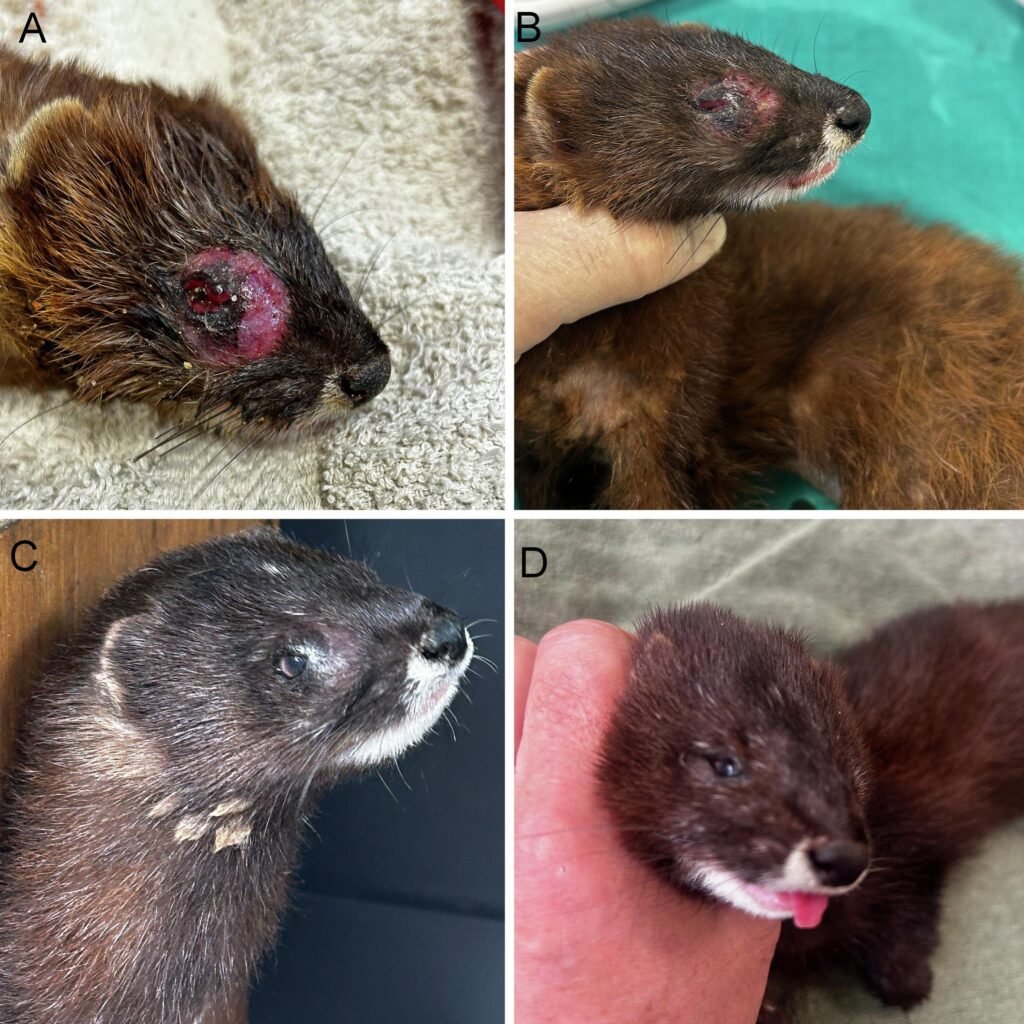
Until now, L. infantum has been mainly associated with domestic animals, particularly dogs, as well as some wild species such as badgers and mustelids in other parts of Europe. However, clinical cases in wild mustelids have been rare and poorly documented. In this report, a seven-year-old European mink housed in a breeding centre in Spain showed pronounced clinical signs, including weight loss, chronic skin lesions around the eye, enlarged lymph nodes, and severe abnormalities in blood and biochemical parameters. This is particularly concerning given the already declining numbers of the species in the wild.
Treatment and recovery
The scientists explain that, in order to minimise stress and improve the response to treatment, the drugs were placed inside the carcass of a mouse so that the European mink could consume them without direct human handling. However, only partial clinical improvement was observed, possibly because the mink did not always eat the entire mouse. As a result, an additional treatment protocol was introduced, after which the animal’s clinical condition improved significantly: skin lesions resolved within the first month, and lymph node enlargement decreased markedly during the first three months of therapy.
Broader implications for conservation
This case highlights the importance of health surveillance in conservation programmes, especially for species already under severe pressure. “Preventive measures for wild European minks should include eradicating American mink populations from riverbanks inhabited by European mink, as the American mink may serve as a potential reservoir that threatens this critically endangered species. Furthermore, our findings underscore the importance of wildlife health surveillance programmes for detecting and monitoring previously overlooked diseases affecting European minks,” the scientists wrote in the study.
Preventive strategies may also include the use of repellents against sand flies, stress reduction in captive animals, and careful management of invasive species populations. For the European mink, every new challenge can have serious consequences. The discovery of leishmaniosis in a single individual underscores the need for continuous monitoring, international cooperation, and a comprehensive approach to the conservation of this exceptionally vulnerable species.
European Mink (Mustela lutreola), image by Nicolai Meyer – Wikipedia
