

The First Case of Beauveria bassiana Keratitis in Hungary
Fungal keratitis is a rare but potentially devastating infection of the cornea that, if not recognized and treated promptly, can lead to permanent vision loss. Although it is most commonly associated with tropical and subtropical regions, sporadic cases in temperate climates demonstrate that this disease cannot be regarded as a purely geographical problem. Particularly challenging are infections caused by unusual environmental pathogens, which often evade early diagnosis.
One such pathogen is Beauveria bassiana, an entomopathogenic fungus widely used worldwide as a biological insecticide. Human infections caused by this species are extremely rare but have been documented in several countries, including the United States, Japan, and parts of Europe.
A first known case of fungal keratitis caused by B. bassiana has now been reported in Hungary and, according to available data, in Eastern Europe as well. The authors of the report entitled Beauveria bassiana keratitis – the first Hungarian case report are Tibor Rák, Renáta Hargitai, Ágnes Sonnevend, Adrienne Csutak, and Eszter Szalai.
The patient was a 46-year-old man who presented with one week of severe visual impairment, pain, and photophobia in his right eye. His medical history included arterial hypertension, type 2 diabetes mellitus, and long-term contact lens use. One week before symptom onset, the patient had been gardening, during which ocular exposure via contaminated hands may have occurred.
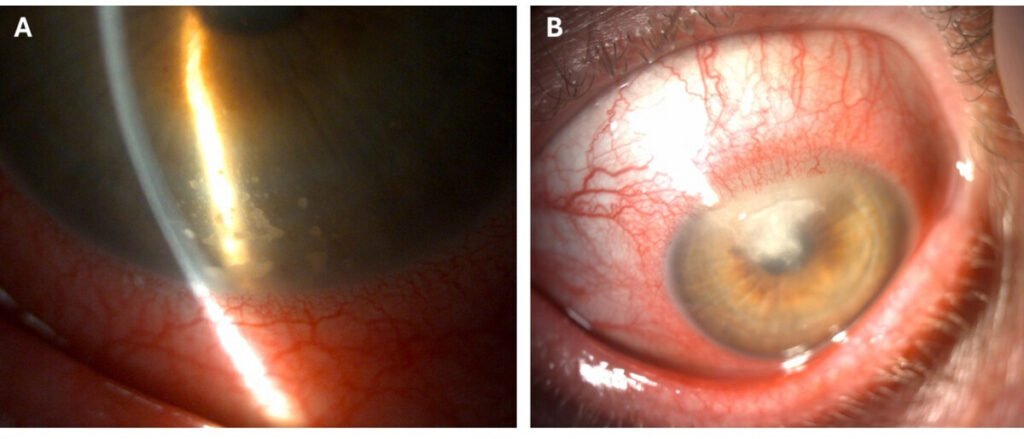
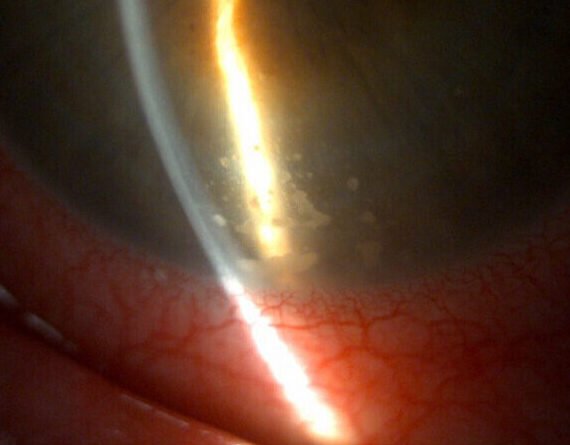
Clinical examination revealed signs of a deep corneal infection with the presence of fungal hyphae. In this case, the fungus was identified as Beauveria bassiana using MALDI-TOF mass spectrometry, a modern diagnostic method that enables rapid and accurate identification of even rare microorganisms.
“The significance of this case lies in the fact that this pathogen has not been previously documented in Hungary, highlighting the diagnostic and therapeutic challenges posed by rare opportunistic fungal infections,” the scientists pointed out.
Initial antibiotic therapy failed to produce improvement, prompting a change in treatment strategy. Local antifungal therapy was initiated, consisting of nystatin ointment and propamidine isethionate eye drops. Over three months, the patient experienced a gradual and significant improvement in visual acuity, which ultimately almost fully recovered.
According to the literature, only around twenty cases of B. bassiana-associated keratitis were reported between 1984 and 2025. As scientists explained, in the United States, infectious keratitis accounts for approximately one million ophthalmology visits and 58,000 emergency department visits annually, resulting in an estimated $175 million in direct healthcare costs. “Each year, an estimated 100,000 eyes are removed due to delays in diagnosis and suboptimal treatment outcomes,” they warned.
This newly reported case underscores the importance of considering rare opportunistic pathogens even in temperate regions, particularly in patients with a combination of risk factors such as contact lens use and metabolic disease. It also highlights the critical role of rapid diagnostics and targeted local therapy in preserving vision in rare but potentially serious ocular infections.
