


Zinc Levels in Healthy Japanese Children Under 10: What the Study Found
Zinc is a micronutrient that is needed in very small amounts, but it plays a very important role in the functioning of the human body. It participates in the activity of more than 300 enzymes and is associated with thousands of proteins that regulate various processes in the body. It is important for immunity, growth, brain development, skin health, and digestion. In children, it is especially important because it affects normal growth and development. Because of this, scientists are trying to determine how much zinc children actually have in their bodies and whether they get enough of it from food.
A new study by Japanese researchers analyzed zinc levels in the blood of healthy children under the age of ten. The researchers reviewed the medical records of children who came for routine preoperative examinations for minor surgical procedures such as umbilical or inguinal hernia repair. A total of 187 children were included in the analysis, while those who were born prematurely, had low birth weight, or had diseases that could affect zinc levels were excluded from the study.
The study, titled “Analysis of Serum Zinc Levels in Healthy Japanese Children Under the Age of 10,” was published in February of this year. The authors are Takato Sasaki, Aya Nishigata, Ryota Ishii, Bryan James Mathis, and Kouji Masumoto.
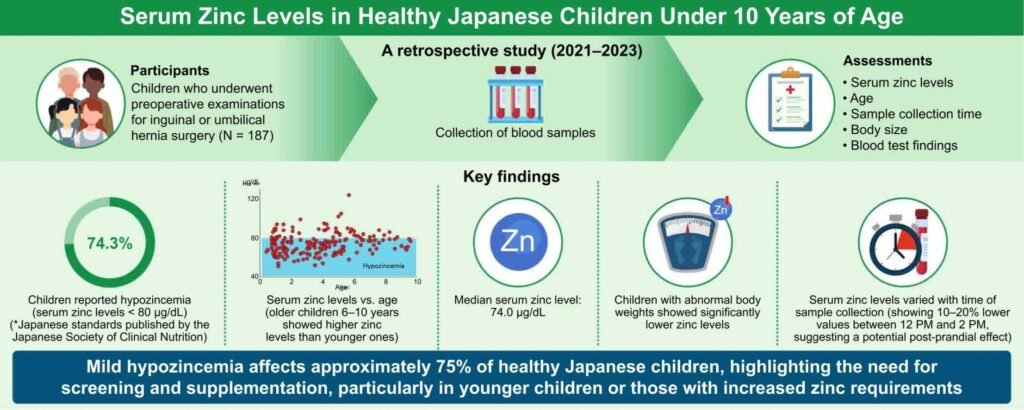
For each child, the researchers analyzed the level of zinc in the blood, as well as several other parameters such as age, albumin level (an important blood protein), hemoglobin, and the time of day when the blood sample was taken. In Japan, a zinc value below 80 micrograms per deciliter is considered a sign of reduced blood zinc levels.
Around 75 percent of the children formally had hypozincemia
The results showed that the median zinc value in the children included in the study was about 74 micrograms per deciliter. In other words, around 75 percent of the children formally had hypozincemia. Further analysis also showed that older children had slightly higher zinc levels in their blood. There was a mild positive correlation between age and zinc levels, meaning that younger children tended to have somewhat lower values. One possible explanation is that small children have smaller body reserves of zinc and often have an uneven or picky diet.
Attention was also given to the protein albumin. Zinc in the blood is mostly transported bound to albumin, so children with lower levels of this protein often had lower zinc levels as well. This means that nutritional status, for example, can influence the concentration of zinc in the blood. Another important factor was the time at which the blood sample was taken. The highest zinc values were recorded in the morning, around nine o’clock. During the early afternoon, especially between noon and two o’clock, the values were lower. Scientists believe the reason is probably that blood is often drawn after a meal at that time, and zinc levels in the blood can temporarily drop after eating. This means that some children may appear to have low zinc simply because of the time when the test was performed.
More attention should be paid to the intake of this mineral in early childhood
However, international recommendations suggest lower cutoff values, around 65 micrograms. If that international threshold were applied, only a small percentage of children in this study would have had low zinc levels. Diet is also an important part of the story. In Japan, the traditional diet is rich in grains and rice, which contain relatively little zinc but a lot of phytic acid. This makes it harder for zinc to be absorbed in the intestines. At the same time, the intake of zinc-rich foods such as red meat is often lower than in Western countries. In young children, an additional issue may be picky eating habits, because they often prefer foods rich in carbohydrates but poor in minerals.
The authors of the study emphasize that their results do not necessarily mean that most Japanese children have a serious zinc deficiency. However, the findings suggest that more attention should be paid to the intake of this mineral in early childhood. They also suggest that pediatricians might consider monitoring zinc levels in children who have slower growth, poor appetite, or other signs of nutritional imbalance. The study, therefore, opens an important discussion about whether mild zinc deficiency in children may be more common than previously thought and how much early-life nutrition influences the body’s mineral status. “Although further research is needed, the finding that even relatively healthy children in this analysis exhibited hypozincemia suggests that children experiencing additional stressors, such as infectious diseases or surgical procedures, may be at an even higher risk for zinc deficiency. Therefore, careful attention should be directed toward these populations,” they concluded.
Image: Got a Picky Eater? Try These 11 Tips at the Table, University of Michigan
