

How Polar Bears’ Leftovers Feed Arctic Residents?
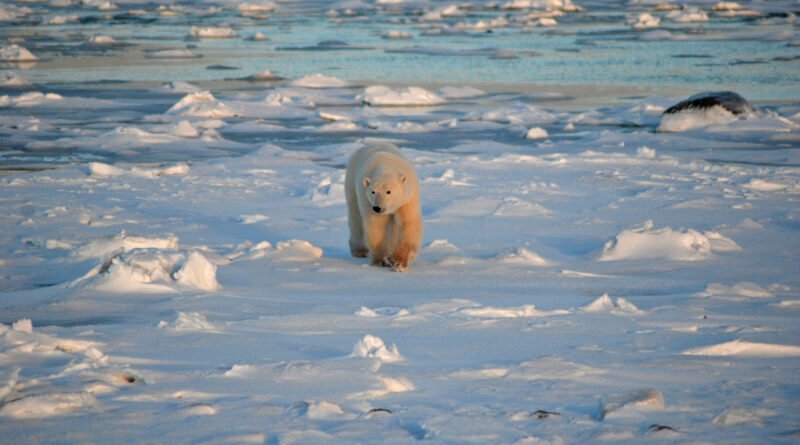
Scavenging is a feeding strategy widely used in the animal kingdom. In the harsh conditions of the Arctic environment, apex predators such as polar bears (Ursus maritimus) can provide food for many species. Scientists explain this in a new study in which they, among other things, reviewed scavenging as a feeding strategy in the Arctic marine environment and investigated the prey contribution that polar bears provide to the Arctic scavenger community. When a bear catches prey, it often eats only the parts with high energy content, while the remaining muscle tissue and bones are consumed by other animals.
The study, titled Predators and scavengers: Polar bears as marine carrion providers, was published today in the scientific journal Oikos, authored by scientists from the University of Manitoba, the San Diego Zoo Wildlife Alliance, Environment and Climate Change Canada, and the University of Alberta. Study authors are: Holly E. L. Gamblin, Andrew E. Derocher, Evan S. Richardson, David McGeachy, James D. Roth, and Nicholas W. Pilfold.
“By presenting an overview of scavenging in the Arctic marine environment, we aim to provide an understanding of the indirect effects of an apex predator and explore the possible consequences of trophic downgrading on a wide variety of scavenging species,” they wrote.
We spoke with two of the researchers, Dr. Nicholas Pilfold, Scientist in Population Sustainability at San Diego Zoo Wildlife Alliance, and Holly Gamblin, lead author for the study and PhD candidate at the University of Manitoba.
Polar bears rarely hide, defend, or hoard their catch; they have a stomach capacity to consume meals approximately 15–20% of their body weight
Scientists estimated that the average polar bear kills approximately 1,001 kg of marine mammal biomass annually, about 30% of which remains available as carrion.
“Carrion can provide a buffer during periods of food scarcity and harsh conditions in high-latitude ecosystems, yet few studies have assessed the role of carrion in the Arctic, particularly in marine systems,” the scientists explain in the study. The polar bear (Ursus maritimus) mainly hunts seals that breed on the Arctic ice, but also feeds on alternative sources, including naturally stranded beluga whales, carcasses of killer whales (Orcinus orca), and remains of food from Inuit gatherers. Polar bears have developed feeding habits that maximize energy intake from food, and they also rarely hide, defend, or hoard their catch, leaving carcasses available to scavenging species, the scientists explain in the study.
From –39℃ to 20℃, the Arctic undergoes many variations, and so does the diet of Arctic species
From –39℃ to 20℃, the Arctic undergoes many variations, and as the temperature changes, so does what Arctic species feed on. Permanent residents are adapted to these variations. However, the role of sea ice is crucial, as the polar bear’s diet depends on the seasonal availability or absence of ice. In other words, sea ice allows polar bears to hunt seals, which provides food and creates carcasses for other species, and when the ice melts, bears lose access to prey and move to land with little food. This interrupts the transfer of energy from the sea to the land via carcasses.
The researchers reviewed existing data on bear feeding habits and analyzed how energy is transferred through the ecosystem via these carcasses. Scientists emphasize that in the Arctic environment, where food sources are highly seasonal and limited, the carcasses of large marine mammals (especially seals and whales) can fill up many stomachs.
The work of Stirling and Øritsland and the transfer of energy from the marine to the terrestrial environment
The researchers relied on previous studies, particularly the work of Stirling and Øritsland, to estimate the annual dietary requirements of polar bears in relation to their prey. In this model, different age groups of seals, which make up the main part of the polar bear’s diet, were taken into account: newborn seals (<2 months), pups (2–11 months), juveniles (1–2 years), and adult seals. Newborns, whose average weight is about 4 kg, were omitted due to their low biomass. Average weights were used for other age classes: 23.6 kg for pups, 19.2 kg for juveniles, and 45.7 kg for adult seals. The kill rate, i.e., the number of seals a bear kills annually in each age class multiplied by the average mass, gave the total annual amount of prey per bear, which was approximately 1,001 kg.
On a global scale, the sum of all subpopulations shows that polar bears leave around 7.6 million kilograms of carrion annually. This amount represents an extremely important resource for the Arctic ecosystem, as it enables the transfer of energy from the marine to the terrestrial environment, which is crucial for numerous scavenging species.
“The provisioning of carrion by polar bears is subject to numerous factors that a simplified model cannot precisely account for without further empirical data. We used the period of one year across all subpopulations using a single prey species to ameliorate conditional variations and provide a basis for future empirical assessment. The kill rates in Stirling and Øritsland (1995) were based on direct observations and polar bear predatory behavior, and our model was built on these estimates to provide a conservative estimation of carrion deposition rates. However, factors such as the seasonality of polar bear resource acquisition, different prey types (e.g., age class, size, and species), surplus killing events, sea ice availability, as well as subpopulation area and demographics influence carrion availability,” they wrote in the study.
This new research shines a light on the community of animals that live with and benefit from polar bears
How does this research change our understanding of polar bears and their protection, including the impact on other species and their young? Which species might be most at risk, and what aspects of the study did you find most interesting or surprising?
Nicholas Pilfold: We have a solid understanding of how climate change is impacting polar bears through the loss of Arctic sea ice, but this new research shines a light on the community of animals that live with and benefit from polar bears. In particular, our synthesis paper highlights the link between the sea ice and land, in which land-based species will venture onto the sea ice to feed on the food left by polar bears. When we think of their protection, polar bears can be considered an umbrella species, in which actions to conserve polar bears will also benefit a community of species, and this new research shows just how direct that connection can be.
When we calculated the carrion mass that remained each year on a wide range scale, it really hit home for me just how much polar bears are providing for other species in their ecosystem. When we thought through the mechanisms, I was also struck by just how unique polar bears and the Arctic ecosystem are: polar bears are an apex predator without comparison, adept at catching seals and hauling them onto the sea ice, in which the remains they leave behind are refrigerated by the cold Arctic air for other species to access.
Holly Gamblin: Our research highlights an underappreciated role of polar bears as apex predators and carrion providers, and showcases the numerous species that would be impacted if polar bears were lost from a system. By conserving polar bears in the Arctic, we also preserve the scavenging effects polar bears have on the food web. Previous research in my lab has showcased that marine subsidies provided by polar bears can impact population dynamics of facultative scavengers, such as the Arctic fox (Roth 2003), which can have impacts even further down the food web by altering the scavengers’ prey populations (Johnson-Bice et al. 2025). By protecting bears, we are conserving a significant energy source for a wide variety of species that rely on these subsidies in the harsh conditions of the Arctic.
Our research highlights a wide variety of known scavengers, but it also indicates that there are a whole lot of unknowns out there. Many other species might be scavenging, but we don’t have a record of it because of how understudied this topic is. When diving into the literature to determine who are known and possible scavengers, I was surprised to see just how little documentation there is of scavenging in the Arctic. We have a few key examples of scavenging studies that have looked at scavenging assemblages along the boreal forest tree line and the Arctic tundra, but no studies have systematically assessed scavenging on the sea ice.
Even more surprising was that for species we consider to be well-known scavengers, such as the Arctic fox, there are a whole lot of unanswered questions about how impactful this resource is on Arctic foxes (i.e., how much of their diet is composed of scavenging resources? How frequently do they use this resource, and is it influenced by terrestrial resource availability?).
The loss of bears directly reduces the amount of carrion, which can destabilize the scavenger network and endanger the entire ecosystem. For example, a reduction in the number of bears in two subpopulations has already resulted in the loss of more than 300 tons of food per year for scavengers. “Our review highlights an underappreciated aspect of Arctic marine ecosystems through scavenging opportunities provided by an apex predator. Declines in polar bear populations will have functional consequences for these ecosystems. It is vital that we examine the magnitude of these potential changes by providing the necessary baseline information,” the scientists concluded in the study.
Image Credit: San Diego Zoo Wildlife Alliance
