

US and Japan Scientists Join Forces to Study Neutrinos
Neutrinos are extremely light particles, and trillions of them pass through our bodies and the entire Earth every second without a trace. What makes them particularly interesting is their ability to change their type (or “flavor”) as they travel, a phenomenon called neutrino oscillation. These changes could reveal why there is an imbalance between matter and antimatter. Matter and antimatter particles were created in equal amounts, and when they met, they would annihilate each other. Billions of years later, the universe is predominantly made of matter, and scientists still don’t know how matter overcame antimatter.
To investigate this, the US-based NOvA and Japan’s T2K have decided to unite their data and methods.
In a new study, Joint neutrino oscillation analysis from the T2K and NOvA experiments, an international team presented some of the most precise neutrino measurements in the field.
“Neutrino oscillation remains the most powerful experimental tool for addressing many of these questions, including whether neutrinos violate charge-parity (CP) symmetry, which has possible connections to the unexplained preponderance of matter over antimatter in the Universe,” the scientists wrote in the study.
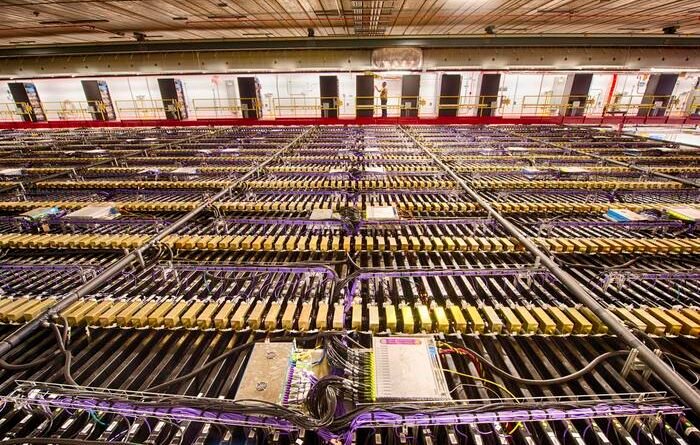
The two largest experiments of this type, NOvA in the United States and T2K in Japan, combined their data to improve the precision of the measurements. NOvA uses two detectors – a close detector at Fermilab and a far detector in Minnesota, 810 km away. T2K uses the Super-Kamiokande, a huge reservoir of water located 295 km from the source, while the nearby detector ND280 monitors the neutrino beam. Both experiments send a beam of neutrinos through the Earth’s crust and measure how many types have changed, allowing a precise determination of the oscillation parameters.
Data analysis uses advanced statistical methods. All models were tested using the posterior-predictive P-value method to check the goodness of fit, i.e., how well the theoretical model corresponds to the actually measured events. All P values show that the models describe the data well, which confirms the reliability of the results. Scientists also tested extreme scenarios using “nightmare parameters.”
“We study correlations in more extreme situations using the so-called nightmare parameters, which are either artificially constructed parameters or existing parameters with highly inflated uncertainties chosen to be deliberately problematic for the individual analyses,” they pointed out in the study. One of the key goals of the research is to determine whether there is a violation of CP symmetry in the neutrino sector. If neutrinos and antineutrinos behave differently during oscillations, this could explain the imbalance of matter and antimatter in the universe.
As noted in the press release, in the future, the scientists will analyze more data from NOvA and T2K, as well as data acquired by planned neutrino experiments that, when operational in the early 2030s, will provide even more precise measurements.
We spoke with Ryan Patterson, professor of physics at Caltech, who co-led the NOvA side of the study.
The two teams decided to combine their data to learn more than any one experiment alone could. What was the key factor that led you to cooperate?
Ryan Patterson: NOvA and T2K are optimized for different pieces of the neutrino puzzle. Some outcomes can be a little ambiguous with just one experiment, but then clarified in the combination. So, this is something we’ve wanted to do for a long time to take advantage of the complementary designs.
“In the future, the scientists will analyze more data from NOvA and T2K, as well as data acquired by planned neutrino experiments that, when operational in the early 2030s, will provide even more precise measurements.” This means you have a lot of work ahead of you. Could you tell me which part of this research you like the most and which part presents the biggest challenge for you?
Ryan Patterson: This first combined result was a milestone, but we’re already working hard toward the next version that will incorporate our most recently collected data and lots of analysis upgrades. But some key questions will simply require the upcoming generation of experiments to reach definitive answers. Neutrinos do not give up their secrets easily! Such an ambitious experimental program necessarily takes a lot of time and a lot of ingenuity by a lot of people.
When it comes to U.S.–Japan cooperation, in what ways do the two teams complement each other? What differences between them help advance the goals of this research?
Ryan Patterson: NOvA and T2K, while based in the U.S. and Japan, are highly international, representing seventeen different countries when taken together. On the technical side, the two experiments have a number of design differences that lead to very different choices in how the measurements are carried out. We aim to bring the best of both worlds into the next generation of experiments, and having this combined platform for deeply sharing ideas and methods has been fantastic.
However, that’s not all. Caltech scientists, led by Professor Patterson, are helping to develop the Deep Underground Neutrino Experiment (DUNE) at Fermilab, and Japan is building a new neutrino experiment, Hyper-Kamiokande, a follow-up to Super-Kamiokande.
Image: View of the NOvA far detector in Minnesota/Reidar Hahn, Fermilab
