

Retrospective Study Shows Earlier Immunochemotherapy Improves Outcomes in Extensive-Stage Small-Cell Lung Cancer
The timing of therapy may be more important than previously thought.
This study explored whether the time of day when immunotherapy is given can influence how successfully one of the most aggressive forms of lung cancer, extensive-stage small-cell lung cancer (ES-SCLC), is treated. The study “Overall survival according to time-of-day of immunochemotherapy for extensive-stage small cell lung cancer” was authored by Zhe Huang, Zhaohui Ruan, Shidong Xu, Nachuan Zou, Li Deng, Huan Yan, Jiacheng Dai, Jun Deng, Xue Chen, Jing Wang, Hua Xiang, Liang Zeng, Gang Yin, and Yongchang Zhang.
We spoke with Dr. Yongchang Zhang, the study’s corresponding author.
The results showed that patients who received therapy earlier in the day had better outcomes
The study is retrospective, meaning that researchers analyzed existing medical data from patients with extensive-stage small-cell lung cancer (ES-SCLC). The goal was to understand how the timing of combined immunochemotherapy, anti–PD-L1 drugs (atezolizumab or durvalumab) alongside standard chemotherapy affects treatment outcomes.
In this study, 397 patients treated between 2019 and 2023 were included. All received a combination of immunotherapy (atezolizumab or durvalumab) and chemotherapy, which is the treatment for this disease. Instead of focusing only on drugs or dosages, the researchers examined the exact time of day when therapy was initiated. The reasoning behind this approach lies in our internal biological clock. The immune system does not function the same way throughout the day. The activity of immune cells and their ability to recognize and attack tumors change in accordance with the circadian rhythm. In other words, at certain times of the day, the body may be more “ready” to fight cancer.
The results showed that patients who received therapy earlier in the day, especially before 3:00 PM, had better outcomes. Their disease progressed more slowly, and overall survival was longer compared to those who received therapy later. The researchers tested different time cutoffs, but 3:00 PM proved to be the most reliable dividing point between better and worse outcomes.
“We acknowledge that concentrating therapeutic interventions during morning hours for the entire patient population may strain institutional resources.”
Is this difficult to apply in practice?
Yongchang Zhang: The integration of time-based treatment approaches into oncology practice poses minimal challenges. Unlike the complexities involved in introducing novel pharmaceutical agents or multi-drug protocols, modifying medication administration schedules represents a straightforward therapeutic modification requiring negligible financial resources and feasible across healthcare facilities of varying capacities. Nevertheless, we acknowledge that concentrating therapeutic interventions during morning hours for the entire patient population may strain institutional resources. Consequently, our ongoing research endeavors aim to establish more precise chronotherapeutic guidelines and develop practically sustainable implementation frameworks. Our forthcoming investigations will provide additional clarity on these considerations.
Sleep is a key regulator of circadian and cardiovascular rhythms as well as immune function, and patients with cancer can also have sleep problems. How does this affect the efficiency?
Yongchang Zhang: That’s an excellent question and highly plausible. Several other research groups, and we are currently investigating this very issue. We look forward to sharing our findings with you in the near future.
What missing information in this case would help you with further investigation?
Yongchang Zhang: Our study lacks information on PD-L1 expression in patient tumors and treatment-related adverse events. We are working to collect these data in future studies to provide more comprehensive insights.
It is important to emphasize that, because the study is retrospective, it cannot definitively establish a cause-and-effect relationship. However, the findings support further research. “This study provides real‐world evidence supporting the survival benefit of earlier immunochemotherapy administration in patients with ES‐SCLC. These findings add to the growing body of knowledge on the clinical relevance of circadian timing in cancer treatment,” the scientists concluded.
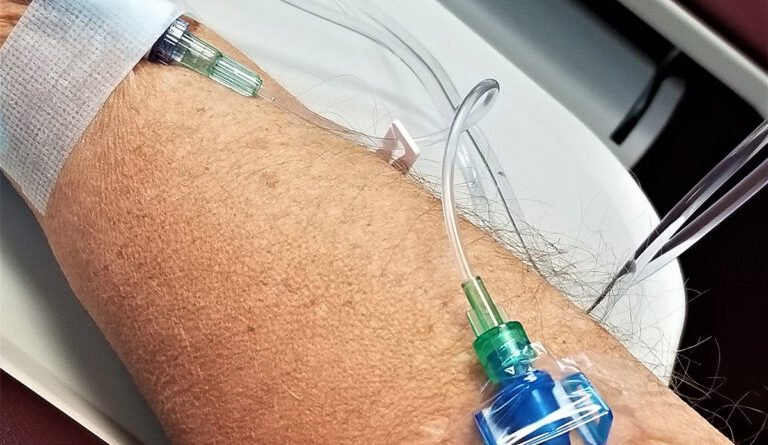
Image: Chemotherapy, Southeastern Medical Oncology Center
This study was conducted in accordance with the ethical standards of institutional and national research committees and adhered to the revised 2013 version of the Declaration of Helsinki. The study protocol was approved by the Ethics Committee of Hunan Cancer Hospital and complied with the STROBE guidelines.
ACKNOWLEDGMENTS
The authors express their sincere gratitude to Analyn Lizaso for her valuable assistance in revising the language of this manuscript. This work received financial support from the National Natural Science Foundation of China (grant numbers: 82222048, 82003206, 82173338, and 82102747). The funding agencies had no role in the study design, data collection, analysis, interpretation, manuscript writing, and the decision to submit the article for publication.
