

Buzzing Through Italy: What Honey Reveals About Bee Health
A new Italian study shows that honey contains genetic traces of bee pathogens, offering a non-invasive way to monitor hive health. Despite the presence of these signals, honey remains safe for human consumption and acts as a “molecular record” of buzzing life inside the hive.
Honey is increasingly being shown as a complex molecular record of life inside the hive. Beyond sugars, it contains traces of environmental DNA and RNA (eDNA/eRNA) derived from organisms that bees come into contact with, including pathogens and parasites.
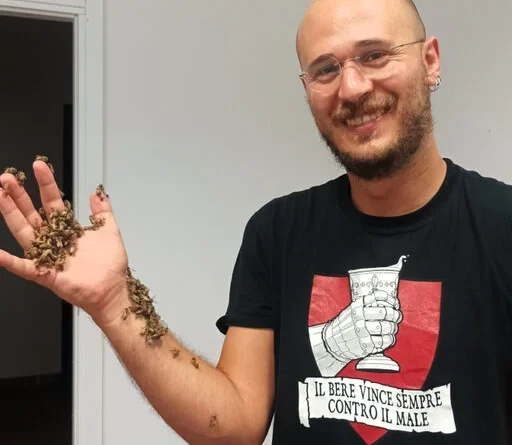
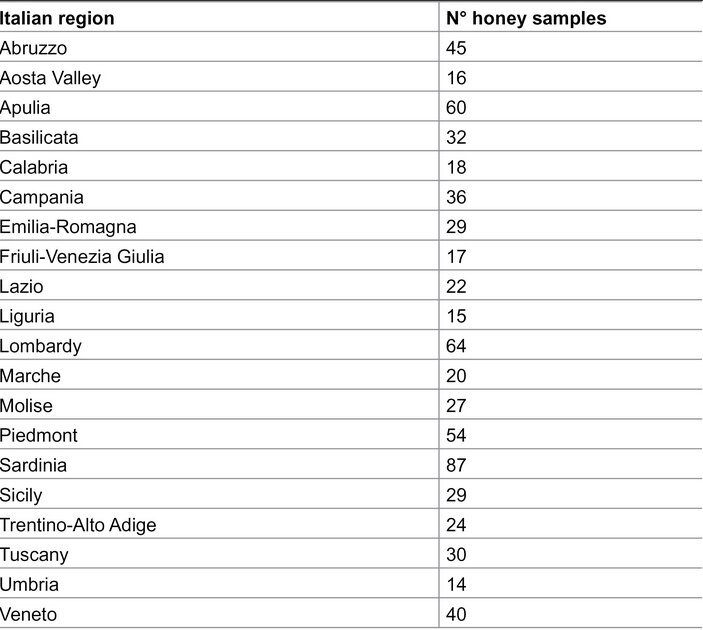
At the end of 2025, scientists Rossella Tiritelli, Gian Luigi Marcazzan, Cecilia Costa, Antonio Nanetti and Giovanni Cilia added to this picture with a study titled Molecular detection of bee pathogens in honey from various botanical origins. In the study, 679 honey samples from 20 Italian regions were analysed to assess honey’s potential as a non-invasive tool for monitoring bee health. We spoke with the lead author of the study, Giovanni Cilia PhD, a researcher at the CREA Research Centre for Agriculture and Environment (CREA-AA) in Bologna, Italy.
As explained, the study began by mixing 50 g of honey with 150 mL of ultrapure water, followed by stirring and incubation at 40 °C for 30 minutes. DNA and RNA were then extracted, and quantitative real-time PCR (qPCR) was performed to measure pathogen copy numbers. The results were subsequently analysed statistically.
97.5% of samples tested positive for at least one microorganism
The results show an exceptionally high pathogen prevalence: 97.5% of samples tested positive for at least one microorganism. The most common were deformed wing virus (DWV) at 81.7%, Nosema ceranae at 56.1%, and chronic bee paralysis virus (CBPV) at 56.0%. These were followed by black queen cell virus (13.11%), Lotmaria passim (5.15%), and acute bee paralysis virus (4.27%), while Kashmir bee virus and Crithidia mellificae were not detected in any sample. Quantitative data further highlight the dominance of certain pathogens: DWV showed the highest average copy numbers (1.06 × 10¹¹), while CBPV also reached high levels (7.87 × 10⁸). This suggests widespread viral circulation within honey bee populations.
Geographical analysis revealed that infection patterns vary depending on region and honey type. DWV levels were lower in southern Italy compared with island regions and northwestern areas, indicating clear regional differences in viral load. More than 77% of samples contained multiple pathogens simultaneously. In some cases, up to five different pathogens were detected within a single sample.
However, it is important to emphasize that the presence of DNA or RNA in honey does not necessarily indicate active disease in individual colonies, but rather signals exposure and circulation of pathogens within the environment. The distinction between DNA and RNA is also crucial: DNA can remain stable for longer periods, whereas RNA degrades more rapidly and is more likely to reflect recent pathogen activity. In this way, honey functions as an epidemiological “logbook” combining both past and current infection signals. The study therefore confirms that honey is not only a food product, but also a potential tool for monitoring pollinator health, with applications in large-scale, non-invasive surveillance systems.
Although the study was conducted in Italy, the method and conclusions are highly relevant to the entire Mediterranean region
Can the results of this study be applied to other Mediterranean countries?
Giovanni Cilia: Yes. Although the study was conducted in Italy, the method and conclusions are highly relevant to the entire Mediterranean region. These countries share similar climates, flowering patterns, and beekeeping practices, as well as the same major pathogens. The research shows that honey is an effective, non-invasive matrix for detecting viruses and pathogens, something that can be easily replicated anywhere honey is produced. This approach could help Mediterranean countries build coordinated surveillance systems to better monitor bee health at a large scale.
How can this study contribute to better protection of bees?
Giovanni Cilia: The study provides a practical new tool: using honey to detect pathogens without opening hives or sampling bees. This makes monitoring faster, easier, and less stressful for colonies. It can serve as an early warning system, allowing beekeepers to identify risks before symptoms emerge, plan targeted treatments, and reduce colony losses. Because many pathogens spread among different pollinators, improving honey bee monitoring also supports the protection of wild bee species and overall biodiversity.
On the question of what surprised him the most and what new questions the study raises, Giovanni Cilla said that the most surprising finding was how widespread pathogens are: almost all honey samples contained at least one, and most contained several. “The persistence of viral RNA, especially DWV and CBPV, even in jarred honey was also unexpected. These results open new questions: How closely do pathogen levels in honey reflect actual disease inside colonies? How long do these genetic traces remain detectable? Could honey itself play a role in transmitting infections between colonies? And what does this mean for wild pollinators that share the same flowers? Further studies are needed to better clarify these aspects,” Cilla concluded.
While bees buzz through a world full of countless environmental threats, it is important to emphasize that this does not mean honey is dangerous for humans.
Image: Giovanni Cilia. PhD
