

Vrije Universiteit Brussel (VUB) is investigating environmental justice in Bolivia, while a co-author of the study is a finalist for the Frontiers Planet Prize
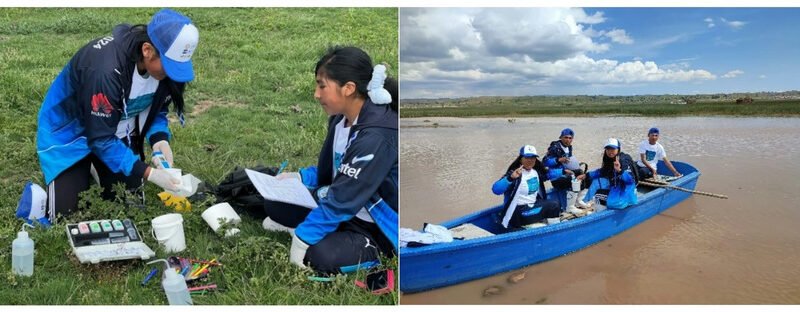
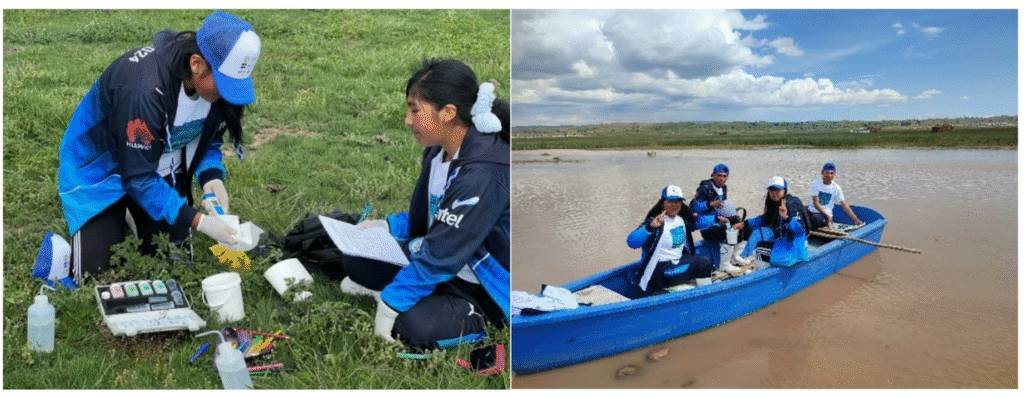
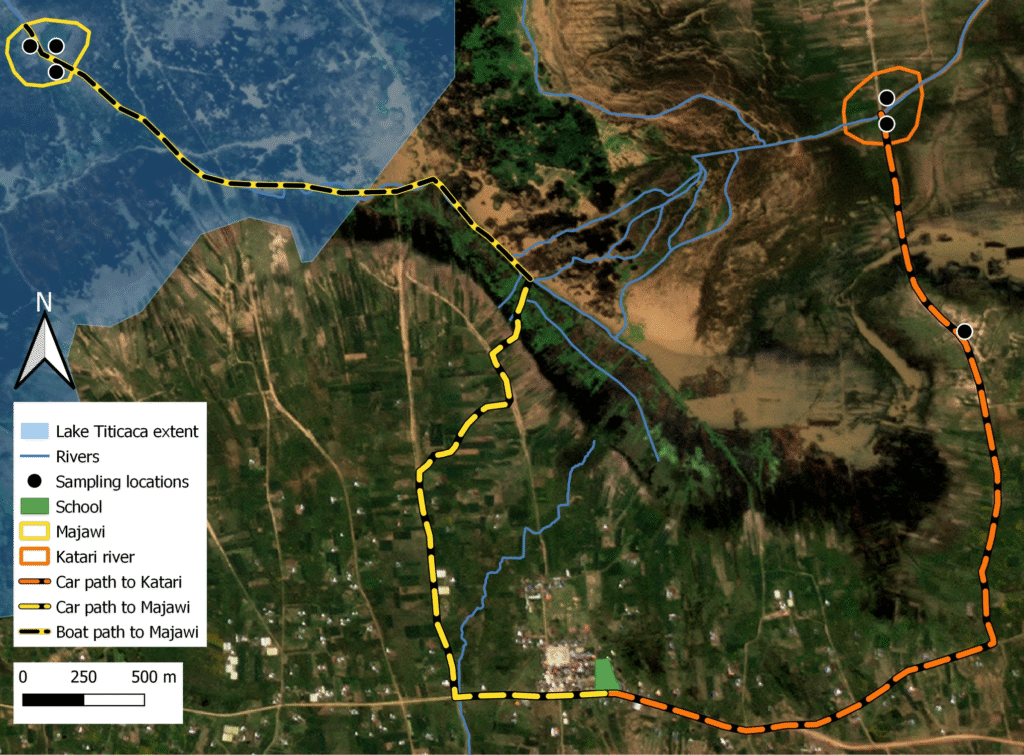
In the study, data were collected between February and August 2024 in the Indigenous subcentral community of Chojasivi in the Katari River Basin in Bolivia, through collaboration between community members, local educators, and researchers from Vrije Universiteit Brussel and the Bolivian Catholic University.
Scientists from Vrije Universiteit Brussel (VUB), in the heart of Europe, traveled more than 10,000 kilometers to conduct a study, “Indigenous community-based approaches to environmental justice through citizen science.” The authors, Afnan Agramont, Analy Baltodano Martinez, Mohammad Gharesifard, Leonardo Villafuerte Philippsborn, Liliana Lizarazo-Rodriguez, Stuart Warner, and Ann van Griensven, present not only results but also a warning. However, behind the results and warnings also stand important recognitions, as demonstrated by Professor Dr. Ann van Griensven’s vision and leadership, whose dedication to African water resources has been acknowledged. As the Belgian representative and national champion of the Frontiers Planet Prize 2026, she is now competing for the grand prize of one million dollars, carrying hope for a more sustainable future for our planet.
As explained in the study, citizen science represents a promising tool for democratizing environmental knowledge and strengthening local governance. However, its potential in the context of Indigenous environmental justice remains insufficiently explored, as in practice it is often reduced to data collection and is less frequently used to claim rights and drive concrete change.
Where the river ceases to be life
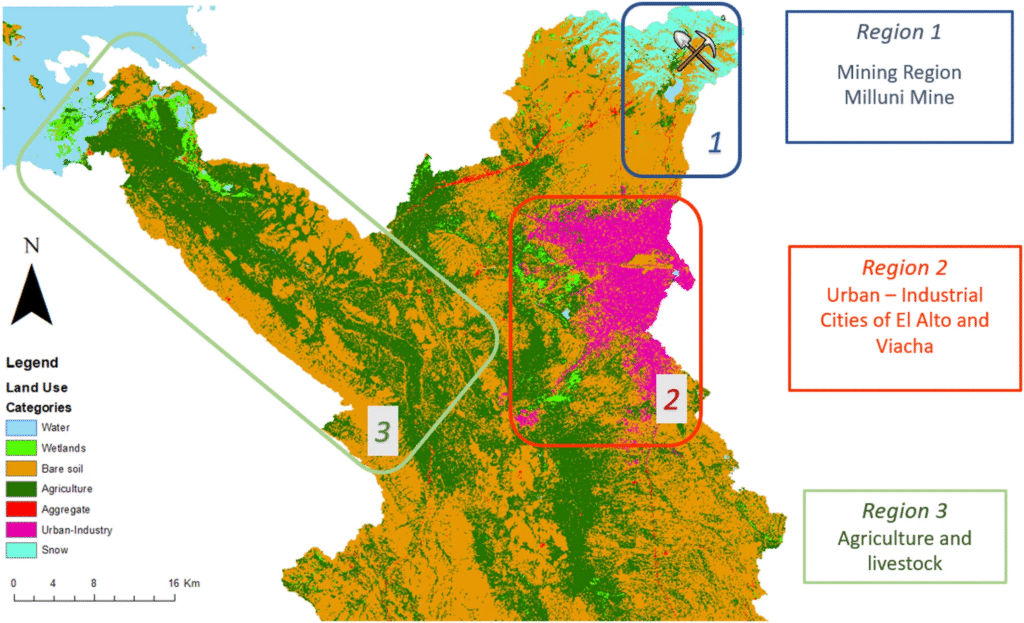
For the Aymara people, the Katari River is no longer a source of life, but a threat. Years of mining, industrial neglect, and urban waste have turned it into a hazard that flows into Lake Titicaca. Scientists warn that these communities, located at high altitudes, are particularly vulnerable due to the combined impacts of climate change and pollution.
When climate pressures combine with systemic water pollution, the consequences become visible in everyday life.
“This study addresses that gap by exploring the potential of community-based water quality monitoring in the Katari River Basin to promote environmental justice. Through a participatory process involving local Indigenous participants, the project had three objectives: (a) to identify and monitor key water quality parameters at the community level, (b) to build Indigenous youth capacity in using simple and accessible water testing methods, and (c) to interpret findings in relation to national water quality standards and environmental rights frameworks. These objectives guided the research questions: (1) what is the current state of water quality in the Katari River Basin as measured through citizen science, and (2) how do participants interpret and respond to these findings in relation to Indigenous rights and environmental justice?” Source: Agramont et al., 2026
As explained in the study, water quality data were collected over four months, from March to June 2024, while interviews included high school students involved in monitoring (n = 12), teachers (n = 2), and community members and local authorities (n = 6). The interviews lasted 30 to 60 minutes and followed a semi-structured guide that ensured comparability of responses while allowing participants to share their own experiences and interpretations. According to the study, the interview questions focused on four main themes: perceptions of water quality and pollution, experiences of participation in citizen science, awareness of environmental justice, and perceived community impacts and opportunities for action.
Science in the hands of the community
During this period, 46 water samples were collected. Participants used simple but reliable measurement methods, including probes for pH and temperature, as well as test strips for phosphates and nitrates. For example, as explained, “the Apera probe was used to measure pH, EC, TDS, salinity, and temperature by immersing the sensor in the water and recording readings once they stabilized. To maintain data reliability, the probe was calibrated each sampling day.“
In total, 83 percent of the samples met data quality standards. The results revealed that the data collected by citizen scientists demonstrated reasonable internal consistency. “Parameters like EC, TDS, and salinity exhibited tight interquartile ranges, especially in Katari River, indicating reproducibility. In contrast, greater variability in PO₄ and NO₃, particularly in Majawi, may reflect localized pollution events or limitations in strip-based testing. Despite these limitations, the dataset captured clear spatial and temporal trends consistent with regional hydrological dynamics and community-reported concerns. These findings document repeated exceedances of national water quality thresholds in downstream locations used by Indigenous communities,” the scientists wrote in the study.
As participants report, water that was once used for drinking is no longer usable, not even for animals.
Participants’ quotes:
- “Now it’s very polluted. Before we could use that water, now not even animals can drink it.”
- “When we entered the lake, we saw floating trash and white foam.”
- “Our grandparents fished in these rivers, but now there’s nothing left due to pollution.”
- “Each test showed different contamination levels depending on the weather, which was interesting.”
- “Using the water testing kits made me feel like a real scientist, and now I understand how to measure contamination levels.”
- “I never thought we could do these kinds of studies as scientists do.”
- Participants also identified challenges to sustained engagement: “It was exciting at first, but without proper guidance, it’s hard to know what to do next.”
- “Seeing the data we collected gave me confidence to speak about water pollution in our community meetings.”
- “City waste reaches us and affects us, but no one asks our opinion.”
- “Companies polluting our water should be held accountable through stricter laws.”
- “I think everyone has the right to clean water, but I don’t know how to enforce it.”
- “After learning, I explained to my mom why the water was bad and shouldn’t be drunk.”
- “My grandparents told me there used to be many fish, and you could swim. Now that’s no longer possible.”
- “In our culture, it was forbidden to contaminate water, but now people don’t respect that.”
- “We can’t grow like before because the water burns the plants.”
An important step toward community empowerment
Although Bolivia formally has a strong legal framework recognizing the rights of nature and Indigenous peoples, practice tells a different story. Environmental regulations are not enforced equally, especially in upstream industrial and urban areas. Communities face serious barriers when trying to demonstrate harm and demand accountability. Without access to data and institutional support, their voices often remain unheard. In this context, the citizen science project gains additional importance. It enables communities to gather evidence themselves and actively participate in understanding the problems that directly affect them. The authors of the study emphasize that environmental justice means that communities should not only be protected from pollution, but also included in decision-making processes and recognized as holders of knowledge about their own environment.
The highlight of the project was the presentation of results in a local school, where participants analyzed and explained the data in front of community members and local authorities. This moment represented an important step toward community empowerment and the development of environmental awareness. Through this process, participants developed a deeper understanding of the links between water quality, health, food, and social inequality. Although a monitoring period of at least one year would have been preferable to understand water quality dynamics, this project had a limited duration due to funding for student transport to sampling sites and the school calendar.
The gap between what is written in law and what flows in the river
The authors emphasize that the results should be interpreted as indicators of persistent pollution pressures, rather than representations of long-term temporal dynamics, and that no claims are made regarding annual or interannual trends. Additionally, the results show that participants developed a locally grounded understanding of pollution patterns and expressed concern about their social, ecological, and health implications. Participants also expressed frustration with the lack of state engagement and the inability to translate scientific evidence into concrete action. The authors further argue that future research should focus on linking community-generated data with legal and policy frameworks, strengthening legal literacy, and enhancing long-term partnerships among communities, civil society, and institutions, in order to increase the impact of participatory environmental monitoring in achieving environmental justice. As concluded, although the findings are based on a single case study and a limited monitoring period, they offer analytically generalizable insights into how citizen science shapes environmental justice processes under conditions of structural constraint.
Citizen science can raise awareness, empower communities, and produce relevant data, but on its own, it is not sufficient to achieve environmental justice. This study reminds us that the struggle for clean water is not only a technical issue, but a deeply political and social one. Without systemic change, even the clearest evidence remains a silent witness to pollution, because, as the study makes clear, paper alone does not purify water.
Image: Community members performing water quality monitoring, Agramont, A., Martinez, A.B., Gharesifard, M. et al. Indigenous community-based approaches to environmental justice through citizen science
More about the study: The author sincerely acknowledges the invaluable participation of the community members of the Subcentral Chojasivi in La Paz, Bolivia. Their engagement and contributions were essential to the success of this research. This project was supported by the AXA Research Fund through the AXA Chair on Water Quality and Global Change, the Vrije Universiteit Brussel VLIR-UOS Global Minds Program, and the UNESCO-IHP Chair on Open Science and Education. Liliana Lizarazo-Rodriguez received support from the ERC Curiae Virides project (Grant agreement 949690).
These publications were produced as part of the Maria Leptin EMBO Fellowship, which allowed us to spend two months exploring the world of science at VUB in Brussels. Importantly, all articles were the result of our own choice of topics and in accordance with our interests.
