

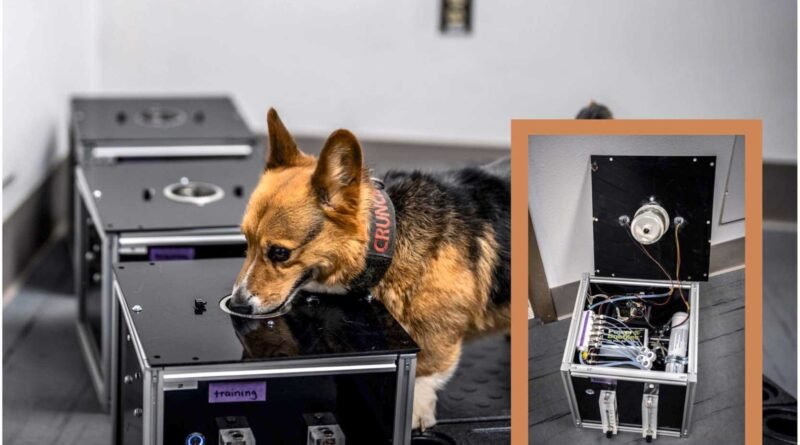
Preliminary evidence: Dogs can sniff out deadly cancer in other dogs
Hemangiosarcoma (HSA) is one of the most dangerous cancers in dogs. This aggressive cancer of the blood vessels often develops silently and without symptoms, and in most cases is only detected once the disease is already advanced. At that stage, treatment options are limited, and the prognosis is poor. Early detection of this disease is therefore one of the biggest challenges in veterinary oncology.
The knowledge and expertise of scientists Clara Wilson, Samantha Holden, Julianna King, Amritha Mallikarjun, Molly Buis, and Cynthia M. Otto resulted in the pioneering study, “Trained dogs can detect the odor of hemangiosarcoma in canine blood samples,” which opens new avenues in the early diagnosis of aggressive canine cancers.
“Among the many tumor types affecting dogs, hemangiosarcoma (HSA) is particularly devastating… Considering the size of the U.S. dog population, this translates to an estimated 0.5–2.5 million dogs expected to develop HSA over their lifetime, underscoring its significance as a major canine health problem,” the researchers explained.
The solution might lie in a dog’s nose
New research suggests that the solution might lie in a dog’s nose. In a strictly controlled, double-blind study, a team of researchers tested whether specially trained dogs could detect hemangiosarcoma in blood serum samples. The study involved five dogs. They sniffed blood samples from three groups of dogs: those with confirmed HSA, healthy dogs, and dogs with other, non-cancerous illnesses. The dogs had to make an immediate decision: either indicate the sample they believed contained the cancer odor or show that no such odor was present.
Accuracy was 70 percent
The results were impressive: accuracy was 70 percent, both on the first trial and overall. This indicates that the dogs were not merely learning through repetition or responding to rewards; they were immediately recognizing the odor category associated with the disease. The dogs responded to HSA samples in about 73 percent of cases, compared to 21 percent for dogs with other illnesses and 17 percent for healthy dogs. Researchers suspect that hemangiosarcoma emits a distinct chemical signature, likely composed of volatile organic compounds (VOCs), which dogs can detect even in the absence of visible symptoms or clinical signs. This strongly suggests that HSA produces a specific chemical signal that is distinct from both healthy and other disease states.
“To our knowledge, no studies to date have investigated canine blood serum as a biological medium to test bio-detection dogs, despite its central role in systemic physiology and disease processes. Further, no work has focused on canine HSA as the disease of interest,” the study authors noted.
These findings provide a foundation for chemical characterization of the HSA odor signature
The researchers emphasize that dogs are unlikely ever to be a practical solution for mass screening due to scalability and logistical limitations. However, dogs have one huge advantage: they confirm that the signal exists. The next step is to identify the specific chemical compounds behind this odor, using techniques such as gas chromatography and mass spectrometry. Once this “cancer scent” is broken down into measurable components, it could be used to develop a laboratory test or an electronic sensor for early disease detection. If this signal can be translated into a reliable technology, it could mean earlier diagnosis, better quality of life, and more lives saved.
“This study provides preliminary evidence that dogs can reliably detect a serum odor of HSA under double-blind conditions. These findings provide a foundation for chemical characterization of the HSA odor signature and the eventual development of minimally invasive diagnostic tools to improve outcomes for dogs affected by this aggressive cancer. A field that began in human oncology is now expanding to veterinary oncology, with the promise of improving early diagnosis for dogs and potentially offering translational insights relevant to human medicine,” the scientists concluded.
Image: An image of the olfactometer line-up. The embedded image shows the inner workings of the olfactometer. Wilson et al., 2025, Trained dogs can detect the odor of hemangiosarcoma in canine blood samples
