

Researchers in Strasbourg Explore What Patients Want in an Ophthalmologist
For the first time, researchers in Strasbourg specifically investigated what patients seek in an ideal ophthalmologist. The study aimed to identify the competencies and personality traits that patients prioritize in ophthalmologists, offering guidance for doctors and trainees to improve both communication and quality of care. The findings reveal the importance of communication and human qualities.
The study “How do patients define a good ophthalmologist? A survey from an academic medical center in France” was led by Lea Trouvé from the Service d’Ophtalmologie, Nouvel Hôpital Civil, CHU de Strasbourg, FMTS, Université de Strasbourg, Strasbourg, France.
“We created a questionnaire in French that included 16 physician qualities identified in the literature and 18 qualities derived from the Process Communication Model profile…To our knowledge, no previous studies have specifically identified the characteristics of a “good” ophthalmologist… To minimize bias, questionnaires were distributed and collected before the ophthalmologist’s examination,” the authors stated.
The study was conducted at the University Hospital in Strasbourg and included nearly 800 patients.
Study Design and Participants
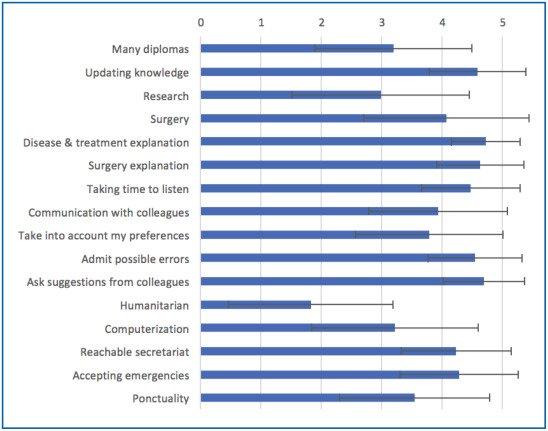
A total of 784 patients (60% women, 40% men; average age 47) participated in the study between November 2020 and April 2021. The questionnaire assessed 16 key medical qualities grouped into four categories: communication, organization, personal qualities, and theoretical and practical skills. Additionally, 18 personality traits derived from the Process Communication Model (PCM) were evaluated, including “Thinker” (logical, organized, responsible) and “Persister” (conscientious, dedicated).
Results: Different groups of patients value different qualities in ophthalmologists
Different groups of patients value different qualities in ophthalmologists. Patients who come only for routine vision checks place less importance on whether the doctor has many diplomas, is active in research, is an excellent surgeon, or participates in humanitarian missions. They also give less weight to communication with colleagues, and instead place more value on punctuality and accuracy.
Patients attending follow-ups for chronic diseases emphasize the doctor’s expertise, including research activity, surgical skills, and their readiness to handle emergencies. Humanitarian engagement is also more important to them, while punctuality is less significant. Patients seen before or after surgery particularly value doctors who invest in research and have strong surgical skills, but they are less concerned with whether the doctor admits mistakes or takes patient preferences into account.
Gender also influences expectations. Women generally expect more from their doctors than men do, with particular emphasis on theoretical knowledge, technical competence, empathy, and communication. Organizational qualities, such as the practice’s workflow, are equally important to both genders. Age plays a role as well: younger patients, under 47, value doctors who consider their preferences and acknowledge mistakes, whereas older patients seek higher quality in nearly all areas. They especially appreciate continuous professional development, research involvement, surgical expertise, clear explanations of disease, good communication with colleagues, humanitarian activity, strong organizational skills, and the doctor’s readiness to manage emergencies.
The most frequently chosen personality profiles
The most valued qualities among patients were conscientiousness, responsibility, and thoughtfulness, suggesting that people expect doctors to act reliably, carefully, and with well-considered judgment. Accordingly, the most frequently chosen personality profiles were those representing a consistent, rational, and calm approach. Preferences, however, varied significantly among different groups. Men more often chose traits associated with imagination and logical thinking, while women tended to favor a warmer and more empathetic profile. Age also played an important role: younger patients preferred energetic and adaptable traits, whereas older patients placed greater value on stability, calmness, and responsibility.
The reason for the visit further shaped expectations. Patients attending routine vision check-ups more frequently valued warmth, while those coming for surgery prioritized calmness and resourcefulness. Patients with chronic conditions emphasized dedication and a composed approach, whereas first-time patients preferred a thoughtful, reflective style of communication.
Interpersonal skills largely absent from medical education
As the authors of the study emphasize, effective communication is a top priority for patients, as is the importance of interpersonal skills, which they warn are largely absent from medical education.
“We suggest that medical education in communication is fundamental and should be included in courses related to clinical practice during ophthalmology residency. We further suggest that confirmed ophthalmologists be encouraged to maintain their high level of technicity and maintain or acquire interpersonal skills through intentionally crafted continuing education programs,” the researchers concluded in the study.
For ophthalmologists, the message is clear: to be seen as ‘good’ doctors, they must also act as psychologists and attentive listeners.
This image is AI-generated.
