


The Study: Supporting Ukrainian Scientists
Recent years have seen multiple conflicts displace scientists worldwide, from Ukraine to Sudan and Myanmar. The outbreak of war in Ukraine in 2022 also shook the international academic community, but the response to the war in Ukraine revealed how quickly the global academic community can react and help. Academics and institutions around the world responded quickly, offering scholarships, short-term positions, mentorship, and access to research resources.
So, the researchers wanted to know which offers were most popular and which actually helped scientists. To answer this, they surveyed hosts responsible for academic support offers. Very detailed explanations of the entire process and its results are presented in the study titled Shelter in Scholarship: Evidence from a Global Survey of Hosts for Displaced Ukrainian Scientists, authored by Michael E. Rose, Katarína Juríková, Marina Pelepets, Olga Slivko, and Julia Yereshko.

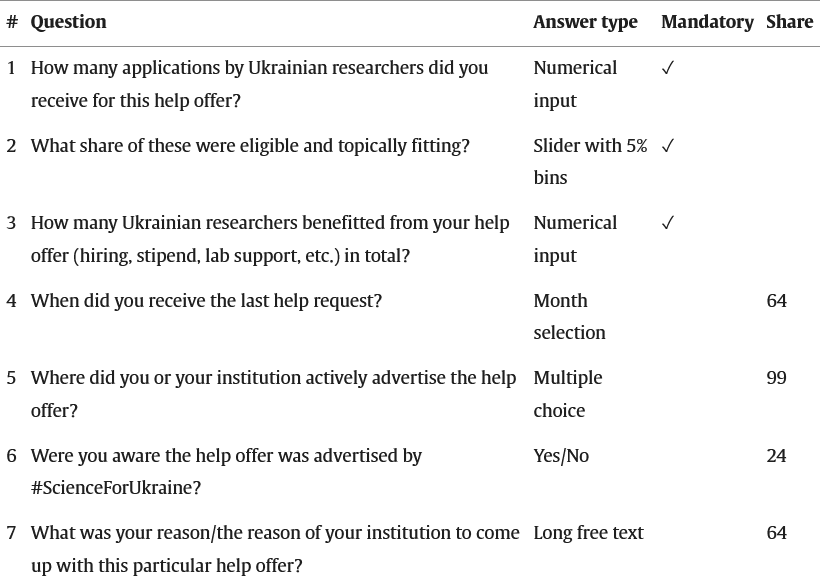
In the study, the scientists highlighted: “In June 2022, several European and U.S. science academies called upon the academic community, from individuals to state actors, to support Ukrainian scientists. The international scientific community has previously stepped up to help persecuted scientists.” They note that in the 1930s, the organization CARA provided aid to persecuted German scientists, and it continues to operate today.
To organize these efforts and make them accessible to those who needed them most, the #ScienceForUkraine initiative was launched, collecting information on available opportunities and publishing them on the scienceforukraine.eu website. The database contained over 3,000 entries, demonstrating the global academic community’s readiness to respond in times of crisis. According to the study results, the #ScienceForUkraine initiative was pivotal in the distribution of the offers; 70% of the offers were submitted to #ScienceForUkraine by the hosts.
Scholarships, academic positions, motivation, and countries
The two most common types of support were scholarships and academic positions. An academic position was defined as a temporary or permanent job associated with a formal employment contract, while a scholarship referred to any form of financial support for study or research. The analysis showed that scholarships were the most sought-after form of support. They not only provided financial stability but also allowed scientists to maintain connections with their home institutions in Ukraine, something of critical importance in a war context.
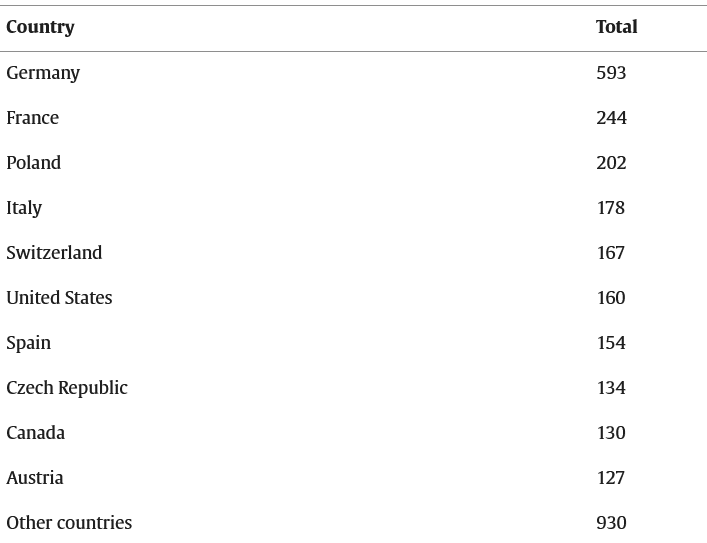
The greatest interest was in opportunities in the social sciences and humanities, partly reflecting the gender composition of displaced scientists: most of those who left Ukraine were women, as wartime restrictions prevented many men from leaving. Additionally, scientists in social sciences and humanities often have stronger language skills, making it easier for them to access international programs and integrate into new environments.
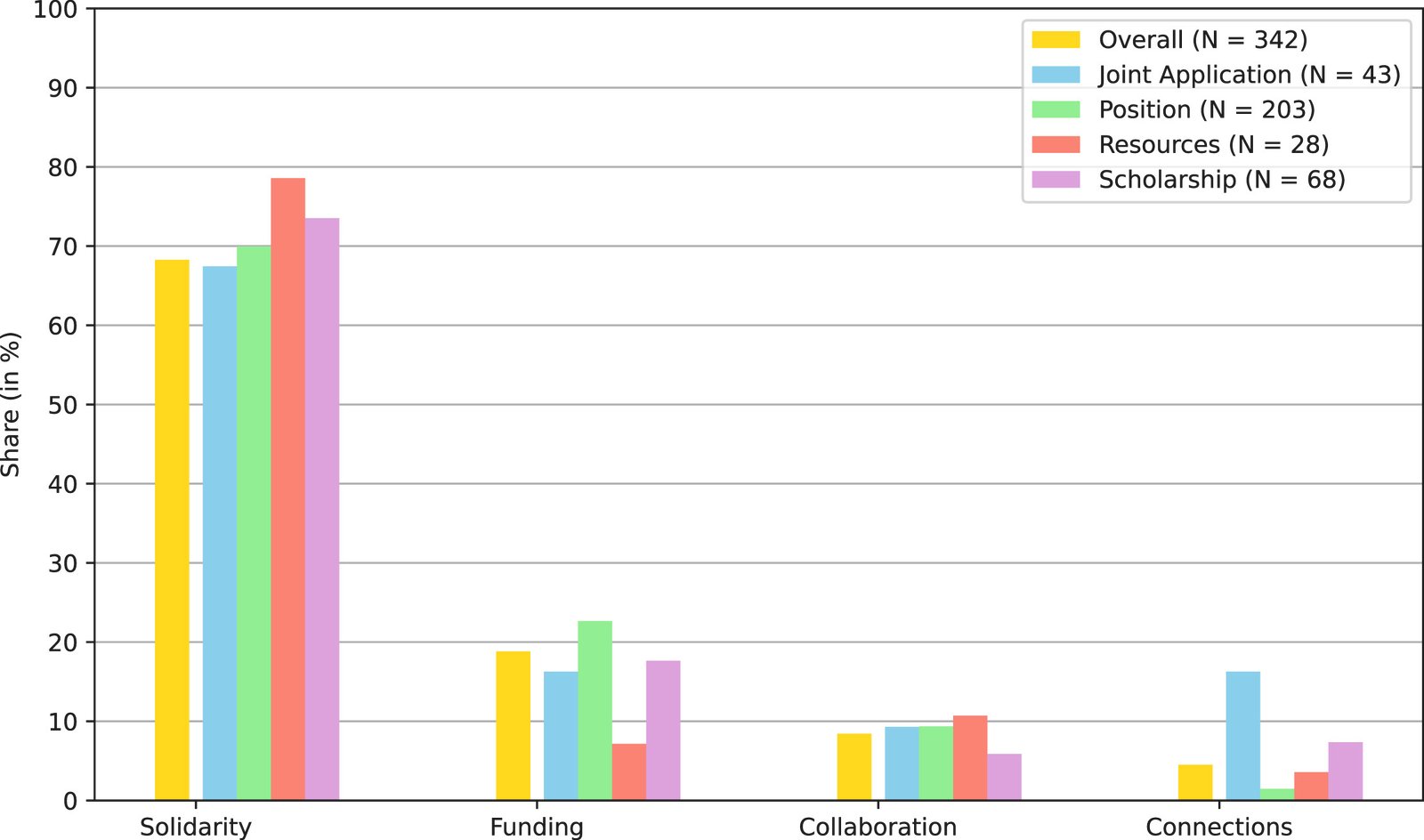
As scientists explained in the study, their data reveal patterns in the types of support most frequently requested by displaced Ukrainian scientists; these patterns should not be interpreted as a direct measure of the adequacy of the support mechanisms. “Instead, they reflect the preferences and constraints faced by scientists during the first 18 months of the war,” they noted.
Four key aspects regarding the preferred support offers
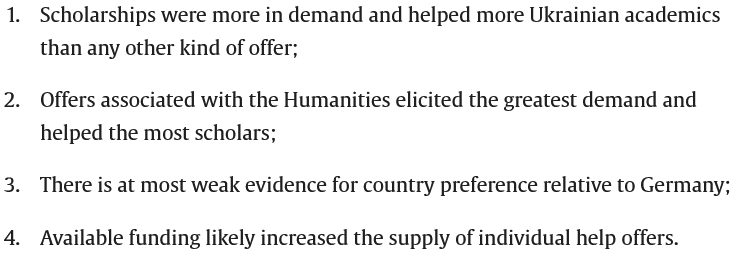
First, the researchers noted that scholarships were highly in demand, even though they are sometimes branded as precarious. This may indicate that scholarships represent a valuable form of help, at least in the first months of a crisis. “Support offers should take into account the likely composition of disciplines among refugee scientists. While country preferences may appear in other crises, Ukrainian refugee scholars do not display them strongly, which may mean that any country may offer effective help,” they added.
Policymakers must maintain these initiatives in times of no crises and nurture an active and empathetic scientific community
As the scientists explained, the Ukrainian experience suggests that funding, supportive policy environments, and a collaborative approach within the scientific community can make a difference… “Funding assistance programmes where Ukrainians and hosts jointly apply, e.g., the Philipp Schwartz Initiative, CARA in the UK, or PAUSE, require active voluntary participation of established scientists in host countries. Faced with a massive scientist refugee inflow, the programmes quickly scaled up. But this was only possible because the programmes already existed. Policymakers must maintain these initiatives in times of no crises and nurture an active and empathetic scientific community,” they warned.
The gender composition of displaced scientists, language proficiency, and funding priorities play a decisive role in determining which types of support are most in demand. “Considering that existing funding motivated hosts to offer help and joint applications were as popular as positions among Ukrainian refugee scholars, we propose that programmes enabling joint applications should be maintained during times of peace so that they can quickly scale up in times of need….Support strategies tailored to the specific context of the targeted academic population benefit not only the academic refugees but the scientific community as a whole,” they concluded.
This experience shows that solidarity, coordination, and community readiness can truly make a difference. Flexible, well-targeted support helps scientists continue their work, maintain connections to their home country, and contribute to global scientific collaboration.
Funding: This project received funding from the European Union’s Horizon 2020 research and innovation programme under the Marie Sklodowska-Curie grant agreement No. 101032702 to KJ.
Image: Science For Ukraine
