

The Beard Factor: Are Women’s Preferences Linked to Their Cycle?
A new study conducted in Poland challenges long-standing assumptions about how hormones shape women’s preferences for “masculine” traits, such as facial hair. “The ovulatory shift hypothesis proposes that women’s mate preferences for androgen-dependent secondary sexual traits in men are most pronounced during the ovulatory phase of the menstrual cycle,” the authors note. However, the results of this research do not support that pattern.
The authors of the study titled “Are women’s sexual preferences for men’s facial hair associated with their testosterone during the menstrual cycle?” are Barnaby J.W. Dixson, Anthony J. Lee, Grazyna Jasienska, and Urszula M. Marcinkowska.
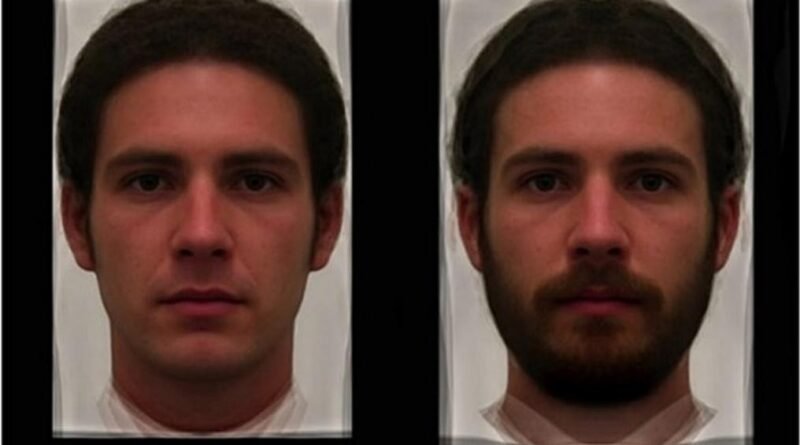
The study included 65 heterosexual women with regular menstrual cycles. Throughout the study period, researchers measured their salivary testosterone levels and verified ovulation using LH tests, providing precise hormonal data. In three phases of the cycle, follicular, ovulatory, and luteal, participants viewed pairs of digitally standardized male faces: one version with a full beard and the other clean-shaven. The task was simple: choose which face was sexually more attractive.
If the ovulatory phase were expected to increase preferences for “more masculine” traits, a stronger inclination toward beards should have appeared specifically during the high-fertility days. However, the analyzed data showed no significant changes. On average, women preferred bearded men, but this preference remained stable across all three cycle phases. A Bayesian analysis further emphasized that it was far more likely that the cycle phase did not affect these preferences.
The only hormonal signal that did show a relationship with preferences was testosterone
The only hormonal signal that did show a relationship with preferences was testosterone. Instead of a positive association, the researchers found a weak but statistically significant trend: higher levels of testosterone in women were linked to a reduced preference for bearded men. This relationship was most pronounced during the follicular and ovulatory phases, although the interaction with the cycle phase was not statistically significant. Overall, the findings suggest that women’s preferences for bearded men are not shaped by hormonal fluctuations across the menstrual cycle. Rather than reflecting predictable biological changes, the attractiveness of beards appears to be a more stable combination of individual and cultural factors.
Future studies and limitations
The researchers concluded that future studies could be most useful if they focused on how beards affect long-term partner choice. This, they explained, could provide clearer insights. The authors also note that their approach has methodological limitations. They used computer-standardized photographs, which are good for controlling variables but may not perfectly mimic how we actually perceive faces in real life. Future studies that combine data-driven models with classical theoretical approaches, using natural photographs, could provide a more complete picture. Despite these limitations, this is the first study to directly test whether there is a positive association between women’s salivary testosterone levels and their preference for men with beards.
Image: The study
Funding: This work was supported to UMM by the Polish National Science Center (grant number 2014/12/S/NZ8/00722).
