

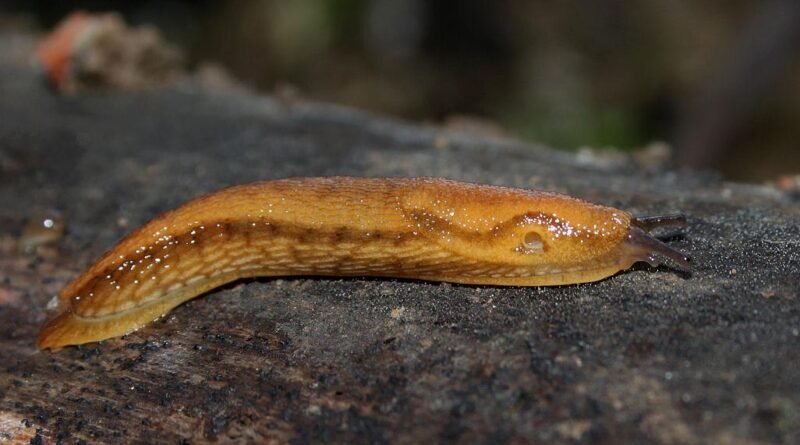
European Slug Discovered in Japan for the First Time
Japanese scientists have recently confirmed the first occurrence of the species Arion subfuscus in Japan. This terrestrial slug, which naturally lives in Europe, was found on the island of Hokkaido. Although it may seem like an inconspicuous visitor at first glance, its presence raises important questions about the spread of species in today’s world.
This is described in detail in the study titled “First record of Arion subfuscus in Japan: a two-century, climate- and trade-mediated invasion pathway,” authored by Tomoyasu Yamazaki and Souichirou Kawai. The study is particularly interesting because no species from the genus Arion had previously been recorded in Japan. This means it is not just the arrival of a new species, but an entirely new group of organisms in that area. To determine the origin of these slugs, scientists analyzed their DNA. The results showed that the Japanese specimens belong to the same genetic group as populations from North America. Since this group originally comes from Europe, it is assumed that the species traveled in several steps: first from Europe to North America, and then to Japan.
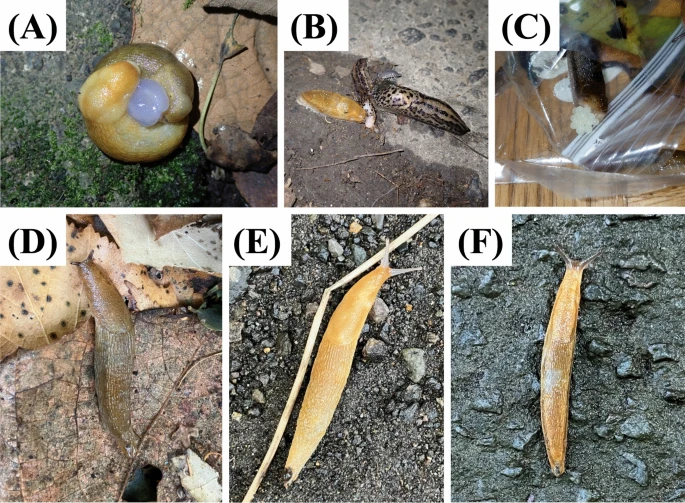
This type of spread is not unusual. Nowadays, global trade allows organisms to travel long distances, often unnoticed. However, arriving in a new area is not enough for a species to establish itself successfully. Suitable conditions are also required. In northern Japan, precipitation has increased in recent decades.
This species feeds on various plants, as well as decaying organic matter. Experiences from other parts of the world show that species from the genus Arion can cause damage in agriculture. Some species damage vegetables, fruits, and ornamental plants, reducing product quality. Invasive species can also affect native organisms through competition or the spread of diseases.
This study also demonstrates a broader pattern of species spread. Invasions do not always happen quickly. Sometimes they take decades and involve multiple steps, as in this case. The combination of climate change and human activities, especially trade, creates conditions that enable such spread. For now, this species appears to be limited to the colder parts of Hokkaido. However, its further spread will depend on climate conditions and human activities. If the introduction of new individuals continues or conditions become even more favorable, it may spread to other areas. For this reason, scientists emphasize the importance of early detection and monitoring of invasive species. Once a species becomes fully established, its removal becomes very difficult. Monitoring trade, especially of plants and soil, can help prevent new introductions. The story of this slug is a reminder of how interconnected ecosystems are today. Even small and seemingly insignificant species can travel great distances and affect new environments. In a world of intensive trade and a changing climate, such examples are becoming increasingly common.
Image: Arion subfuscus (Wikipedia) photo by Holger Krisp
