

New World Leishmaniasis Diagnosed for the First Time in Romania
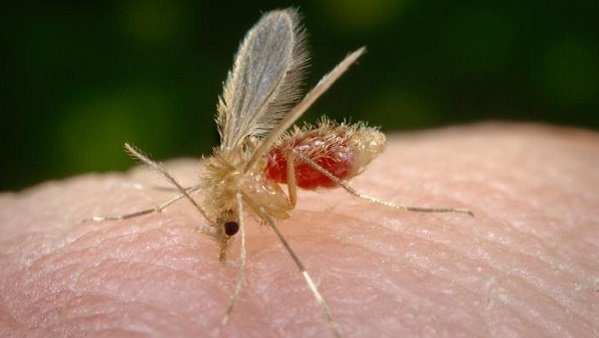
For a 25-year-old woman, returning from travel did not only mean souvenirs, but something much more serious, New World leishmaniasis, a parasitic infection spread by sand flies that can cause long-lasting and destructive skin ulcers.
This case report was presented by Andrei Daniel Mihalca, Ioana Bianca Mitrea, Mihaela Sorina Lupșe, Angela Monica Ionică, Gad Baneth, Yaarit Nachum-Biala, Jaideep Kumar, Marian Taulescu, Filipe Dantas-Torres, Felipe Marinho Rocha de Macedo, and Simona Corina Șenilă in the article titled “First imported case of New World leishmaniasis in Romania: diagnostic and therapeutic challenges in a non-endemic country.”
The first case of New World leishmaniasis in Romania
As scientists explain, leishmaniasis is a disease transmitted by sand flies in humans and animals, and is caused by more than 20 species of the genus Leishmania. In humans, leishmaniasis is endemic in 98 countries across Asia, Africa, the Middle East, and Central and South America, where an estimated 12 million people are infected. As the study points out, a diverse range of Leishmania species, as well as different genera of sand fly vectors, are involved in transmission in the Old (Eastern Hemisphere, especially Afro-Eurasia) and New (Western Hemisphere, especially the Americas) Worlds. “In Europe, most cases involve Old World species, while imported New World infections are rare. The present report presents the first case of New World leishmaniasis in Romania, together with its challenging diagnostics and treatment, due to limited awareness and laboratory capacity,” the scientist wrote in the study.
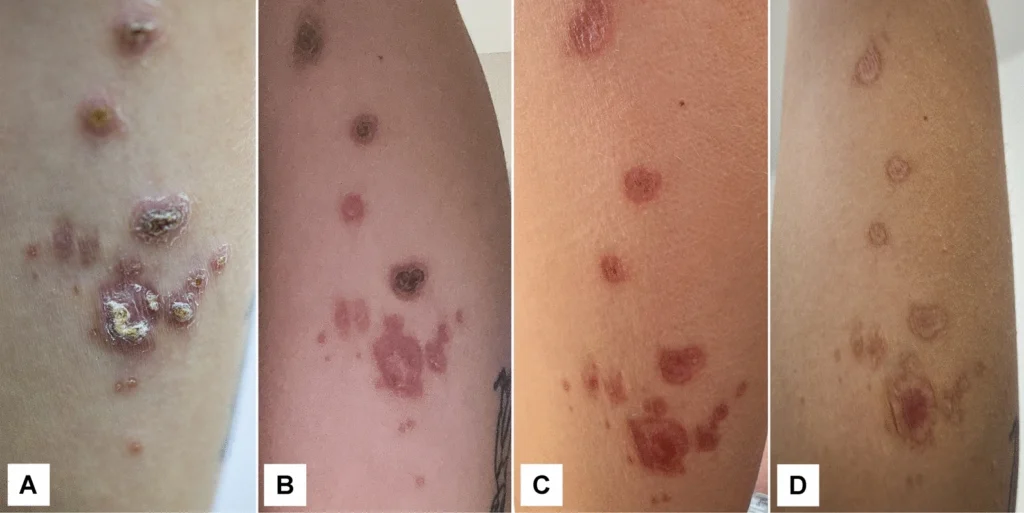
After staying in Panama and Costa Rica, small painless bumps appeared on the back of her left arm. At first, they did not look worrying. However, over time, this changed. Within a few weeks, the changes became a thickened red area with a wound in the center covered by a crust. This pattern, one main ulcer with several smaller “spots” around it and slow progression, is often not easy to recognize at first, because it can look like many more common skin diseases.
“The patient has reported a recent trip to northern Panama (Bocas del Toro) and southern Costa Rica (Puntarenas) between December 15 and 30, 2023….A 25-year-old female patient voluntarily presented to a dermatological consult in a private clinic from Cluj-Napoca on 10th of April 2024, due to progressive multifocal ulcerative lesions on the posterior brachial region of the left arm. According to the patient’s history, the lesions initially appeared as small, unpainful papules on January 1, 2024, which progressed over time.” Mihalca et al.
The first biopsy did not give a clear answer. Only after a second sample and molecular testing was the infection confirmed as Leishmania panamensis. By that time, the disease was already active and progressing. Treatment was started with miltefosine (Impavido®), a drug that had to be imported from Brazil because it was not available in Romania. During treatment, the patient experienced strong side effects, including stomach problems and general weakness, but therapy continued. “An additional therapeutic challenge in our case was the unavailability of miltefosine in Romania, which necessitated its importation from abroad. This delay and difficulty in accessing effective anti-Leishmania therapy further illustrate the vulnerability of patients in non-endemic countries, where both diagnostic and therapeutic resources for leishmaniasis are scarce,” the scientists warned.
The treatment
After treatment began, the skin lesions started to improve fairly quickly. After about ten days, the crust had already started to shrink, and healing had begun. Over the following weeks, the lesions gradually reduced, the redness faded, and the small surrounding spots disappeared. By the end of therapy, the active disease was under control and clearly improving. At the 177-day follow-up, all active lesions had healed. However, clear atrophic scars remained as a permanent reminder of the damage caused by the infection in the skin. At long-term follow-up after 446 days, the situation was stable: there was no relapse and no new lesions.
“The rarity of such cases in Central and Eastern Europe, the frequent overlap of clinical manifestations with more common conditions, and the limited availability of species-level diagnostics all contribute to delayed or missed diagnosis. Strengthening clinician awareness and ensuring access to advanced diagnostic tools are therefore essential for improving the recognition and management of imported leishmaniasis in this region,” the scientists concluded.
This case highlights a broader picture: the boundary between endemic and non-endemic diseases is becoming less clear, but medical awareness and diagnostic readiness need to be stronger.
