

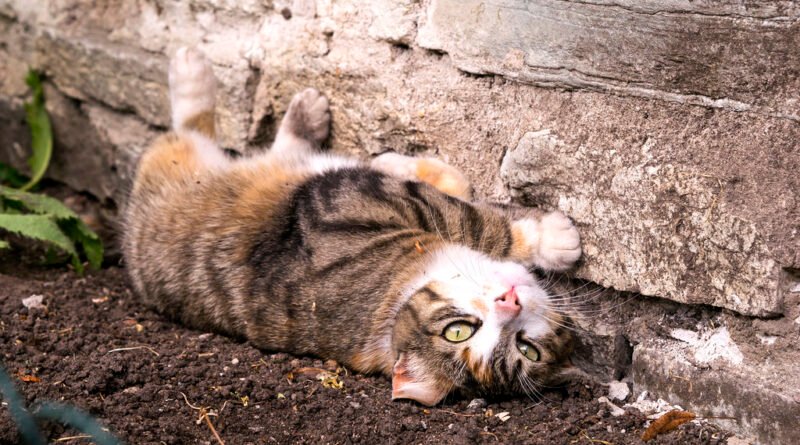
While dogs are kept under control, cats are often allowed to roam freely, but what is their impact on biodiversity?
A dog off the leash runs through a park. It will very likely draw a reaction from passers-by or even the attention of local authorities. At the same time, a cat moving through backyards and along the edges of nearby woodland usually goes unnoticed and without consequence. However, an analysis published in the European Journal of Wildlife Research suggests that this contrast is not consistent with what science and the law actually require.
The research team behind the study “Are cats more equal than dogs?” C. Javier Durá-Alemañ, Francisco Almarcha, José A. Sánchez-Zapata, Esther Sebastian-González, Elvira Martínez Camacho, and Arie Trouwborst examined how existing international and European nature protection obligations apply to free-roaming domestic pets.
“We review the scientific literature on the impacts themselves and discuss societal perception of cats and dogs from a cultural point of view. This includes varying feelings of fear and appreciation, related to differences in risks posed to people, animal size, difficulty in handling, and behavior. We then analyze existing international rules on the management of cats and dogs, particularly international treaties and European Union legislation…Cats and dogs are carnivorous mammals, although dogs originate from a top predator, while cats could be considered mesocarnivores. This subtle difference in their position in the food chain may help explain why humans tend to treat the two species differently, especially because of the varying levels of danger they pose to humans.” Durá-Alemañ et al., 2026
An unequal impact, the impact of cats often occurs out of sight
According to available data, free-roaming domestic cats pose a threat to a larger number of vertebrates, particularly birds and small mammals, with their impact being especially pronounced in sensitive ecosystems such as islands. Dogs can also have significant negative effects, for example, by chasing or disturbing wildlife, but on average, their impact is considered to be smaller.
It is important to clarify that the actual level of risk depends on local conditions, the presence of protected species, and how the animals are kept.
“On the island of Gran Canaria (Spain), the number of owned cats is estimated at 50,000, and around 17% of these regularly bring home prey. These data indicate that cats without adequate control may be a conservation concern for the native vertebrates of Gran Canaria…The ethical key lies in understanding that cats are victims of human irresponsibility, so management must prioritize humane solutions that integrate environmental conservation without resorting to mass extermination.” Durá-Alemañ et al., 2026
International agreements and European legislation require states to protect certain species and habitats, including prohibitions on killing, capturing, or disturbing them. Within the European legal framework, the interpretation of the term “deliberate” is particularly important. In this context, allowing pets to roam freely in areas where they may affect protected species can be legally relevant. Despite this, the way rules are implemented often differs between dogs and cats. In many European countries, dogs are subject to clear restrictions, such as leash requirements in urban areas or additional rules in protected zones. For cats, such measures are less common or are applied much more weakly.
“In many parts of Europe, most people prefer to see fewer or no free-roaming dogs, and a key factor to consider is that dogs no longer contribute to waste elimination and are increasingly perceived as a nuisance or danger with no compensating benefits. Arguments used to justify allowing cats to roam freely in countries where dogs are prohibited from doing so often focus on the well-being of cats…According to the EU Habitats Directive and Birds Directive, national legislation in all EU member states prohibits the ‘deliberate’ killing of listed mammals and reptiles and of all wild birds, including several species vulnerable to predation by cats and/or dogs. As elaborated in Trouwborst and Somsen, the broad interpretation of the term ‘deliberate’ by the EU Court of Justice – as encompassing not only intentional acts but also acts whereby killing and disturbance of protected species is an unwanted but accepted side effect – brings the act of allowing pets to roam free within the prohibitions’ scope. That is, allowing one’s pet cat or dog to wander around in the habitat of protected species prone to predation, such as dormice, lizards or birds, appears to involve accepting the possibility of such animals being killed, and thus to qualify as ‘deliberate killing’ of said animals, in breach of the prohibitions.”Durá-Alemañ et al., 2026
The authors point out that this difference does not stem from the legislation itself, which generally does not distinguish between species, but from social norms and practice. One possible reason is visibility: dog behaviour is easier to observe, while the impact of cats often occurs out of sight. This can lead to an underestimation of their overall effect.
What follows from this
The study points to a clear direction. If existing legal obligations were applied consistently, the management of free-roaming pets would need to reflect their actual impact on biodiversity. At the same time, it is emphasised that such an approach does not exclude animal welfare: controlled movement can also reduce risks to the pets themselves, such as traffic, disease, or conflicts with other animals.
“Our study sheds light on the international legal framework and sets out the guiding criteria that signatory countries of international agreements protecting biodiversity should follow. In the specific case of the EU, the lack of compliance with the environmental regulations described, within the EU framework, is difficult to reconcile with the European Biodiversity Conservation Strategy 2030 and the European Nature Restoration Regulation, which aims to strengthen the EU legal framework for the recovery of nature and increase compliance with EU environmental legislation.”
All of this does not mean that regulation is lacking, but rather that there is a gap between existing rules and their implementation. The issue of free-roaming cats and dogs thus becomes more than a local concern. It opens a broader discussion about how social habits, perception, and the enforcement of law influence our ability to protect biodiversity in an increasingly urbanised landscape. “We believe that future research should examine more closely the social acceptability of responsible management of these animals to reduce their impacts on biodiversity and in accordance with international conservation regulations. An interdisciplinary approach is also necessary to address the issue, involving experts from environmental law, veterinary science, ecology, environmental education, public health, urban planning, ethics, and the social sciences to develop management strategies within the framework of the law and remain sustainable over time,” they concluded.
