

Rare Case: Congenital Pancreatic Pseudocyst Recurs After Surgery in Three-Year-Old Child
A recently published study presents the case of an exceptionally unusual condition in a three-year-old child who developed a pseudocyst considered to be a recurrence of a congenital pancreatic pseudocyst, following surgery performed at the age of eight months. This case, the first of its kind reported in the medical literature, raises new questions about the long-term management and follow-up of these rare conditions.
The case was described by Hussein Hassan Okasha, Abeer Abdellatef, and Mohamed Nabil Alkady in a report titled “Recurrent congenital pancreatic pseudocyst: an exceptionally rare case report.”
“A 3-year-old female child presented to us with upper abdominal pain of 2 months’ duration. The child had a history of a previously diagnosed pancreatic pseudocyst at the age of 8 months, for which she underwent a surgical cystectomy. No history of abdominal trauma, and her symptoms started shortly after birth…To our knowledge, this is the first documented case of recurrent congenital pancreatic pseudocyst following surgical correction. It highlights the need for long-term follow-up and further research on optimal management strategies for such rare cases.” Okasha et al. (2026).
The case of a three-year-old child
Pancreatic pseudocysts, fluid collections that form around the pancreas, are relatively rare in children and are most commonly associated with trauma or inflammation. However, congenital pancreatic pseudocysts (CPCs) are even rarer, and their origin often remains unclear. Diagnosis is challenging, especially when detected before birth, and treatment varies depending on the cause, size, and location of the cyst. Surgical intervention is often required.
The authors describe the case of a three-year-old child who was admitted to the hospital with upper abdominal pain lasting for two months. Her medical history revealed that she had been diagnosed with a pancreatic pseudocyst at the age of eight months, for which she underwent surgical cystectomy. Detailed analysis confirmed the diagnosis of a recurrent pseudocyst.
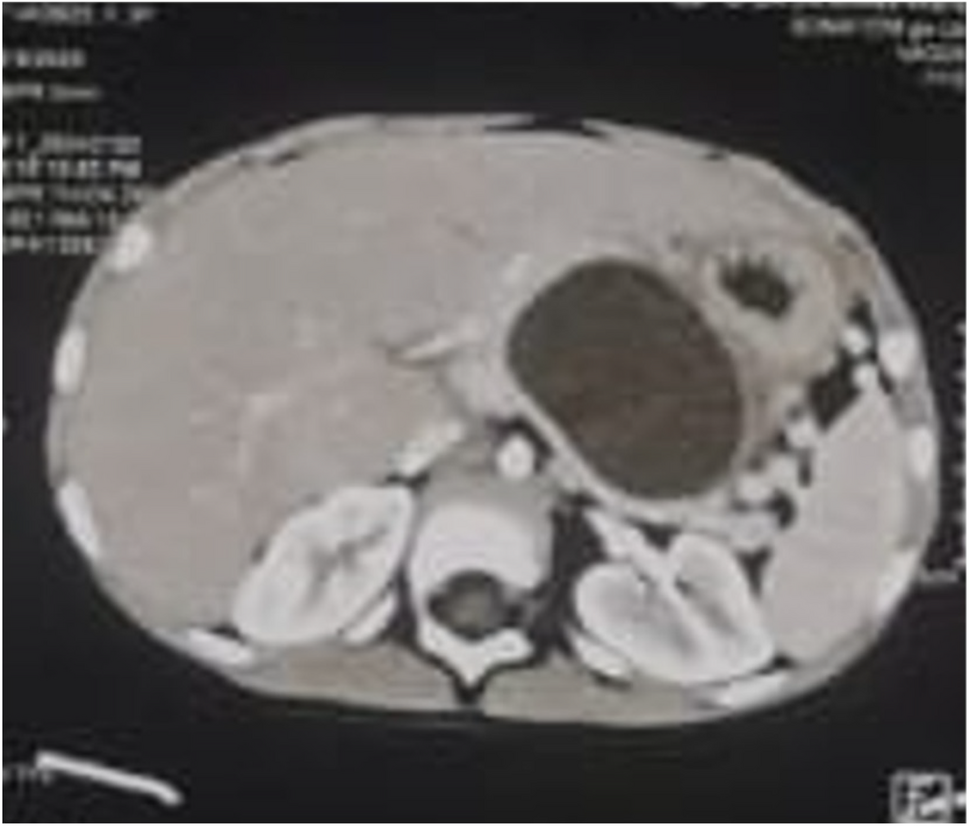
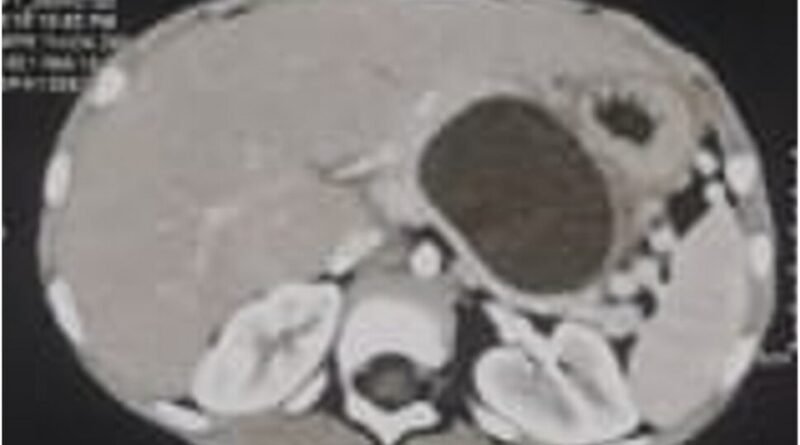
A large cyst was identified, exerting pressure on the stomach and intestinal loops. Analysis of the cyst fluid showed high levels of amylase and carcinoembryonic antigen (CEA), confirming that it was an inflamed pseudocyst without signs of malignancy or bacterial infection. A procedure called cystogastrostomy was performed. Using an endoscope, a small connection was created between the cyst and the stomach from within the body. To ensure continuous drainage and prevent reaccumulation, a special tube was placed, allowing the fluid to drain directly into the stomach, where it is naturally processed by the body.
A single case cannot define the true risk
This represents the first documented recurrence of a congenital pancreatic pseudocyst following surgical correction. The authors emphasize that such recurrences have not previously been described in the literature, making this case important for future understanding and treatment. Although a single case cannot define the true risk, it strongly highlights the need for long-term follow-up after intervention. “The recurrence of congenital pancreatic pseudocysts after surgical management has not been previously reported in the literature. Therefore, the key challenge in our case report is that it presents the first documented instance of a recurrent congenital pancreatic pseudocyst following surgical correction….Further case accumulation and literature-based studies are needed to clarify recurrence risk, define appropriate surveillance strategies, and optimize long-term management of congenital pancreatic pseudocysts,” they concluded.
Image: Okasha et al. (2026).
