

Through the story of two Labradors, this study shows how breeding conditions shape a dog’s entire life
At first glance, buying a puppy online or from a pet shop may seem harmless. The photos are appealing, the breed is well-known, and the puppies are irresistible. However, behind this system often lies a commercial dog breeding industry that leaves deep and lasting consequences, not only for the animals but also for their owners. A recent study published in the Journal of Veterinary Behavior highlights the negative consequences of this practice, revealing how harsh conditions in the earliest stages of life can lead to lifelong behavioral and health problems.
The authors of the study “Case reports of two dogs from commercial breeding establishments: Their behavioral and health problems – treatment, training and outcomes” are C.M. Vinke, D. Hartman, M. Meijer, S.M.A. Gardeweg, and I.R. van Herwijnen.
“According to nonprofit animal welfare organizations like Four Paws (2024), 2.4 million dogs are sold to the Western European companion dog market via Eastern European commercial breeding establishments (CBEs)… Eastern Europe is well known for CBEs that export puppies to Western European dog retailers (some of which also breed themselves), particularly in Belgium and the Netherlands, before the puppies are sold to new owners,” they pointed out.
The study is based on detailed reports of two Labradors whose fates serve as a warning
Two cases, both male Labrador-type dogs who had shown severe medical and behavioral problems from an early age, were presented to the Animal Behavior Clinic (ABC) at the Faculty of Veterinary Medicine, Utrecht University in the Netherlands, where their stories became part of a broader understanding of the consequences of early-life stress.
According to the study, “both dogs were diagnosed with serious problem behaviors that found an onset in early life and carried a very poor outcome. Both dogs suffered from several medical issues, which, in one case, likely worsened early-life aversive experiences, leading to a very poor prognosis. These two cases illustrate how dogs from commercial breeding establishments are predisposed to high animal welfare risks, despite the efforts of veterinarians, shelter personnel, and behavioral therapists to lower such risks.” Commercial breeding, characterized by overcrowding, minimal socialization, and inadequate veterinary care, creates an environment in which puppies do not receive the stimulation necessary for healthy development.
“A large number of dogs, maximal efficiency of space by housing dogs in or near the minimum space permitted by law, breeding dogs spending their entire reproductive lives in their cages or runs, group and solitary housing, dogs rarely if ever permitted out of their primary enclosures for exercise or play, no toys or enrichment, minimal-to-no positive human interaction/companionship, and inadequate health care. Commonly reported conditions present in many but not all CBEs include cage flooring made of wire mesh, accumulation of feces, ammonia odor, no windows and poor ventilation, inadequate protection from inclement weather and temperature extremes, insufficient or contaminated water and spoiled food, serious untreated medical conditions (e.g., advanced dental disease), extensive matting of hair, commonness and apparency of stereotypical behaviors, evidence of starvation, and presence of deceased adult dogs and puppies,” McMillan (2017).
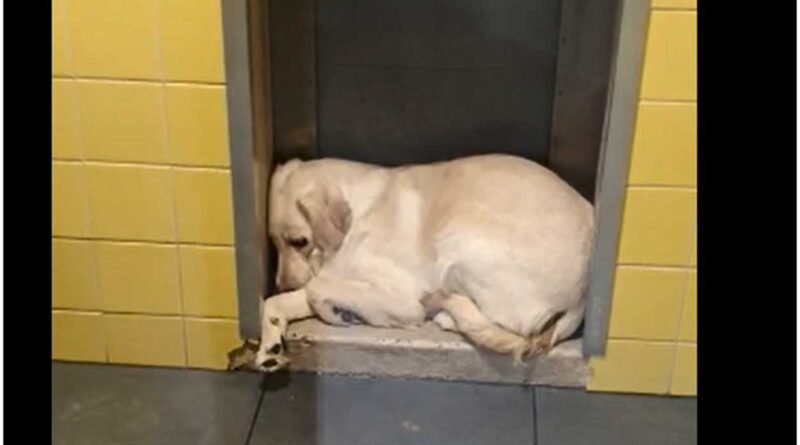
He displayed passive behavior, “freezing” or moving away from people, ate only during the night (when no caretakers were present), and hid behind his dog bedding
The first dog, purchased from an animal retailer, showed extreme fear from the moment it arrived in its new home. It did not move, hid, refused contact, and reacted in panic to human presence. Although it made some progress with long-term therapy and the help of another stable dog, its behavior never became fully normal. In addition, it developed serious health problems, including digestive issues and epilepsy. “The relinquishing owners informed the shelter of the dog’s Hungarian origin, being bred by a CBE and transported to a dog retailer in Belgium. The dog’s first vaccination was dated July 30, 2019, after his arrival at the retail establishment in Belgium. It was from this retail establishment that the relinquishing owners bought the dog based on an internet picture advertised by the retailer. The dog was transported to the owners by car and arrived at their home in a sedated state on April 1, 2020. There was uncertainty on the dog’s age…”
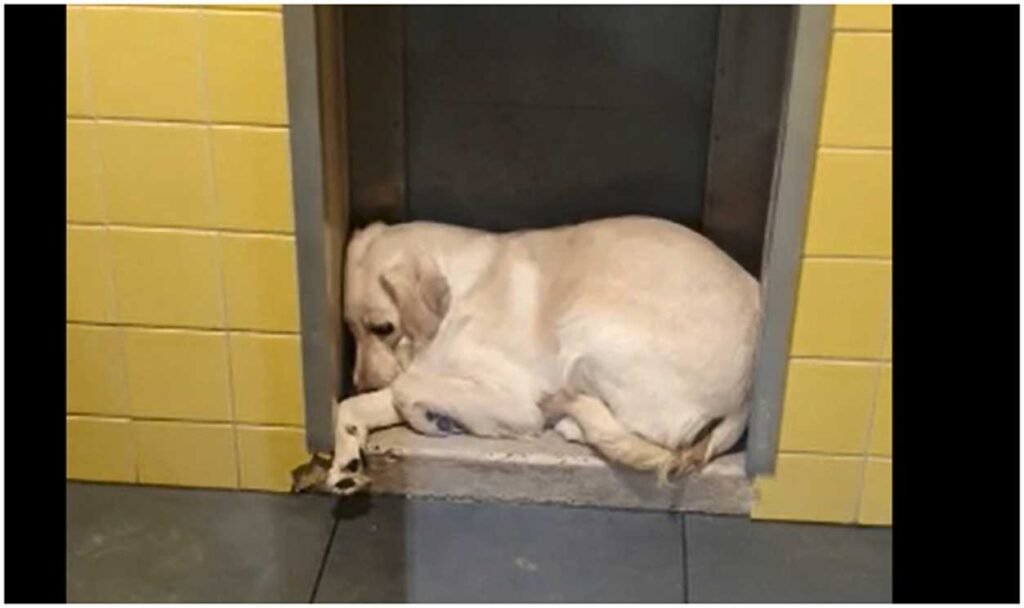
The problems started immediately. During the very first walk, the dog panicked and ran away, after which it completely refused to go outside. At home, it would hide, freeze in fear, and could not tolerate people getting close. It even urinated and defecated out of fear. It did not eat in the presence of people and did not move from one spot. The owners kept it for only 18 days before surrendering it to a shelter. In the shelter, it was clear that this was a dog with severe fear and anxiety. It was afraid of people, hid, and responded with “freezing” behavior. “He displayed passive behavior, “freezing” or moving away from people, ate only during the night (when no caretakers were present), hid behind his dog bedding…”
Progress only began when he was given companionship, a female Labrador. With her, he felt safer, and he also received therapy. Interestingly, the dog appeared to feel safe primarily around Labradors, which further supports the idea of limitations in early-life socialization. This may also suggest a reduced flexibility in how he responds to dogs with different appearances. After several months of this work, he was moved to a foster home, again with another dog. It took him a long time to adjust to a normal life. Only after that was he adopted by an experienced family that already had one female dog. Although he improved, the problems did not disappear. The dog had various health issues, including digestive problems, joint pain, and eventually epilepsy. He required constant treatment and care. In the end, it can be said that the adoption was successful because the dog achieved a stable life; this was only possible through a great deal of time, effort, love, and understanding.
As soon as an object fell to the floor, the dog would growl and possibly bite if a person approached the object by hand/arm or by walking toward it
The second dog had an even more complex clinical picture. It developed severe separation anxiety, resource-guarding aggression, and extreme sensitivity to its environment. At the same time, it suffered from chronic health problems, ranging from digestive disorders to severe orthopedic conditions. “A 4-year-old castrated Labrador-type male, 31.5 kg, was presented to the ABC with a long list of owner-reported problem behaviors. The owners reportedly chose this dog based on temperament, size, and appearance of a Labrador retriever. They unintentionally purchased this dog from a CBE based on social media advertisements and via a dog retailer. When the owners visited this dog retailer, the litter of unknown size was situated in a barn without the mother. The dog retailer reported the puppies’ age as fifteen weeks. The Hungarian passport held a date of birth of December 21, 2019. However, the dog appeared to be younger considering that it did not yet have adult dentition (Van Den Broeck et al., 2023). The owners were not informed of any socialization or habituation efforts by the dog retailer and were given no guidance on how to care for or raise their puppy. After acquisition, the puppy was extremely quiet,” the authors described in the study.
Due to COVID-19-related restrictions, they did not attend puppy training classes and instead tried to raise the dog themselves. In early development, signs of insecure attachment were observed, including low seeking of contact and avoidance of approach, although this was not initially considered problematic. Health issues began to appear around the dog’s sixth month of life. At the age of four, the dog was referred to ABC due to separation-related problems, panic, and highly excited reactions to environmental stimuli, including excessive vocalization, as well as increased reactivity to household sounds and visitors.
A possessive attitude toward objects was also observed, accompanied by aggressive responses. “As soon as an object fell to the floor, the dog would growl and possibly bite if a person approached the object by hand/arm or by walking toward it. The dog also picked up objects, such as a carton drink coaster, and would growl and possibly bite if approached. Biting would not occur if the dog was not approached and given space.”
The medical history revealed multiple progressive health problems, including gastrointestinal disorders, conjunctivitis, lameness, and chronic orthopedic disease. Imaging confirmed bilateral hip dysplasia and severe elbow joint disease with osteoarthritis, as well as recurring gastrointestinal issues, including Giardia infection. Dermatological and ear problems also developed and were treated medically. Initially, partial improvement was observed, with reduced restlessness and short periods of successful separation, but progress was inconsistent and difficult to sustain. Despite therapy, the dog’s orthopedic condition gradually worsened, leading to significant pain and reduced mobility. Due to the combined deterioration of both health and behavioral conditions, euthanasia was ultimately carried out.
It often takes much more than love alone to repair what was broken at the start by the system
These cases highlight a painful fact: a puppy raised in stressful conditions, with a lack of proper nutrition and care, enters life with a serious handicap. The consequences do not stop there. Owners face emotional consequences, negative experiences, and the questions: “Could I have done more? Does it hurt? Was I a good owner? Did I fail them in some way? Did I even need to go through this at all? These questions can linger long after everything is over, slowly turning into ‘I don’t want to go through this with a dog again.’
Long-term therapies and daily behavioral challenges often reduce the quality of life for the dog and can also lead to more abandoned dogs and overcrowded shelters. Despite everything, the demand for puppies continues, partly due to a lack of information and partly due to the appeal of quick purchase. However, as more data is collected, it becomes clear that the real cost of such a purchase far exceeds the initial price.
The solution begins with awareness. Behind every cute puppy lies a story that is not always what it seems, and it often takes much more than love alone to repair what was broken at the start by the system.
Adopt, do not shop.
Image: Vinke et al., 2026
