

Understanding Scent Work in Dogs
Dogs love to sniff, but what actually happens in their bodies when they follow scents? A new study, Heart Rate Variability and Behavior in Dogs During and After Scent Work, aims to answer exactly that question. The authors of the study, published in March this year, are Jade Fountain, Todd J. McWhorter, Marie-Claire Seeley, Aidan D. Bindoff, Kimberley Handley, Robert Hewings, and Susan J. Hazel.
The dogs sniffed three specific target odors
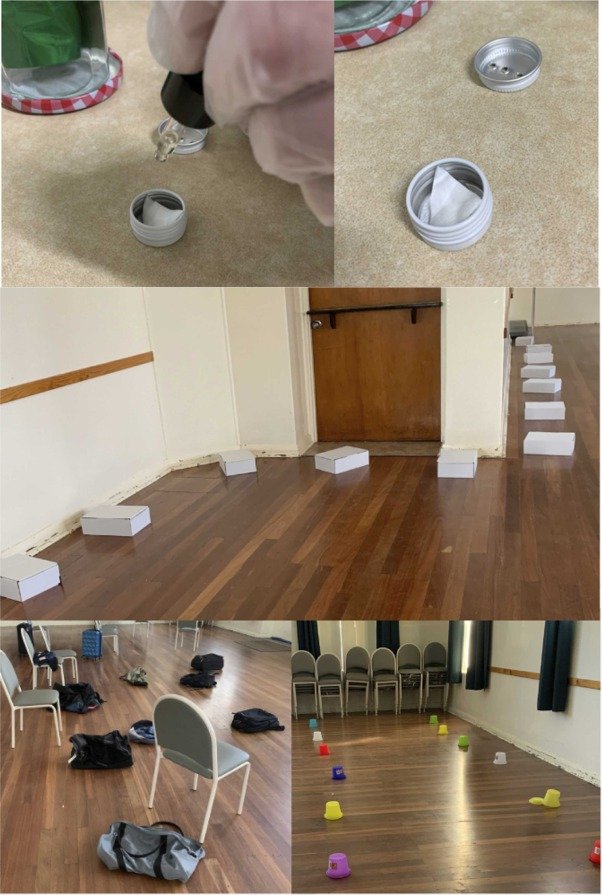
A team of researchers led by Jade Fountain at the University of Adelaide monitored 21 dogs during a controlled experiment that included a scent-detection task (called “scent work”) and a simple walk as a control activity. The study included breeds such as Corgi, Australian Shepherd, Dalmatian, Koolie, Labrador, Wheaten Terrier, Whippet, Cattle cross, Sheltie, Cocker Spaniel, German Shepherd, Basset Fauve de Bretagne, Staffy, and Border Collie. During the search task, the dogs sniffed three specific target odors: essential oils of birch, anise, and clove, which are standard in scent work. These odors were applied to cotton pads and placed in metal containers with small holes, allowing the dogs to detect the vapors without direct contact with the oil. In addition to the target scents, the room also contained containers with clean cotton pads without any odor, to ensure that the dogs were truly responding to the target rather than the container itself. The researchers used these specific scents because they are distinctive to the dogs, allowing precise measurement of their physiological responses during active problem-solving.
During the search task, the dogs had to locate these scents hidden among various objects such as cardboard boxes, metal chairs, suitcases, and overturned plastic pots, which further contributed to their high physiological activation.
The dogs wore ECG devices that recorded heart rate (HR) and heart rate variability (HRV), which are indicators of physiological arousal and regulation of the autonomic nervous system. The experiment was carefully structured, with rest periods alternating with search tasks and walking.
The results showed a clear difference in one key parameter. Heart rate was highest during the scent search task. In other words, the dogs were physiologically most active when using their sense of smell to solve the task. However, another measure, heart rate variability, did not show a significant difference between searching and walking. This is important because HRV often provides additional insight into the balance between the sympathetic and parasympathetic nervous systems.
The dogs’ behavior was also analyzed. One consistent finding was a higher tail position during searching compared to walking. At the same time, the researchers did not observe an increase in behaviors typically associated with stress, such as frequent lip licking or vocalization. However, such indicators have limitations: they cannot reveal how the animal subjectively “feels.” After the activity ended, heart rate returned to baseline at a similar rate regardless of whether the dogs had been searching or walking.
What does all this mean?
The researchers conclude that scent work induces physiological activation without clear evidence of increased stress. They also note that further research is needed to explore more subtle changes in affective state and to develop a more comprehensive understanding of the welfare implications associated with scent-based activities.
For now, the scientific conclusion remains cautious: even for something as common as a dog’s sniffing, the underlying physiological and behavioral responses are more complex than they may seem at first glance.
Image: Getty
