


Dr. Bode: “The experience of being in love has been the same for about 300,000 years”
From Goethe’s The Sorrows of Young Werther to the modern-day “seen” with no reply, love has always had a curious way of turning the most rational among us into poets and philosophers, sending some to cloud nine while leaving others to suffer deeply.
We spoke with Dr. Adam Bode, an interdisciplinary researcher specialising in the science of love, about falling in love, idealisation, unrequited love, and the many mysteries that still surround our most powerful human emotion. A University Guest (Academic) at the University of Melbourne, Bode explores love at the intersection of biology, psychology, and human behaviour. He holds a PhD in Anthropology from the Australian National University, and his research focuses on understanding the many forms love can take.
You are going to get better outcomes listening to relationship therapists or relationship scientists than you will from Instagram influencers
How difficult is it today to research love and romantic relationships?
Dr. Adam Bode: It’s getting easier. The quality of the psychometric scales has improved recently and continues to improve. Access to high-quality survey participants is still a challenge, but there are ways. There is also no shortage of university students who have fallen in love for use in biological studies, if you are happy to have that bias built into the study.
When should couples rely more on scientific research when it comes to relationships, and when on their own feelings? It seems to me that science can still help us better understand certain relationships and help one partner better understand the other.
Dr. Adam Bode: Always. You are going to get better outcomes listening to relationship therapists or relationship scientists than you will from Instagram influencers.
We know very little about love
When a person is in love, they may idealise their partner and not always see things clearly. They may overlook things that later lead to a breakup. Are being in love and idealising a partner inherently connected, or is that something a person does themselves?
Dr. Adam Bode: These things are closely related. Idealisation is actually a feature of most well-functioning romantic relationships, but it seems to be particularly strong during romantic love. Part of the reason we idealise is so that we make decisions about a partner that we might not otherwise make. It is creating bonds where otherwise none may exist.
When it comes to relationships and falling in love, what is the biggest mystery? What does science still not understand, even though people experience it?
Dr. Adam Bode: We know very little about love. We know a lot about romantic relationships, but very little about love, and love is the thing that binds us. It would be good to know a lot more about its psychology, behaviour, and biology.
I like coming up with an idea that helps people understand things better
Today we see situations where someone wants to marry a robot, or where romantic disappointments lead to insecurity and a desire to avoid emotional pain. Why do people tend to suffer over unrequited love or relationships that have ended?
Dr. Adam Bode: Love is a very powerful force, especially romantic love. It evolved to direct behaviour to ensure we had babies. It’s among the most important things humans do. It distracts from other tasks and goals and makes us focus on one thing – the partner.
When it comes to your work, which of your studies is your favourite, the most challenging, and the most interesting, and what kinds of relationships would you like to explore further?
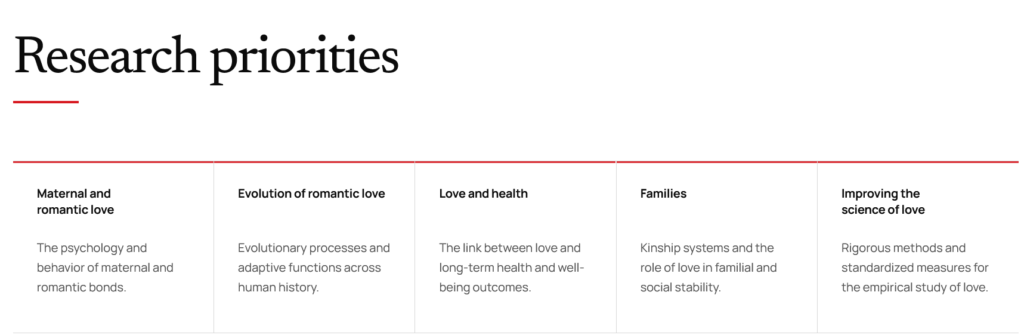
Dr. Adam Bode: The theoretical work is the most rewarding for me. I’ve advanced theories about the biology and evolution of romantic love, and I am currently working on doing the same with companionate love – the love that long-term married couples experience. It’s challenging because you must draw on all sorts of evidence – genetics, hormones, neurobiology, psychology, and behaviour. I like coming up with an idea that helps people understand things better.
The experience of being in love has been the same for about 300,000 years
Love, being in love, and sexual relationships are all part of our lives. Which feeling would you highlight as the key one that connects all three, and why?
Dr. Adam Bode: I can’t give you a feeling, but I can give you a cause. All three relate to reproduction. All of them are about making babies in our evolutionary history, and they continue to play a role today, albeit a little bit differently.
I have to ask: has the way we love and fall in love changed compared to, say, 10–20 years ago?
Dr. Adam Bode: How it starts might have changed thanks to apps and the like. But the experience of being in love has been the same for about 300,000 years.
There are billions of people in the world, and countless ways in which they find one another, fall in love, build a life together, and sometimes lose each other. Some meet through dating apps, others through friends or by chance, and some simply happen to be in the right place at the right time. Yet, beneath all these different stories, there is something we all know and experience, even if we still understand so little about it: love.
Learn more about Dr. Adam Bode’s research here: https://adambode.com/research
Photo: Dr. Adam Bode
