

First Scientific Analysis Uncovers the Hidden History of Samurai Armor Leather
A study published in the journal Talanta addresses a seemingly simple, yet actually highly complex question: which animal species were the leather components of samurai armor made from?
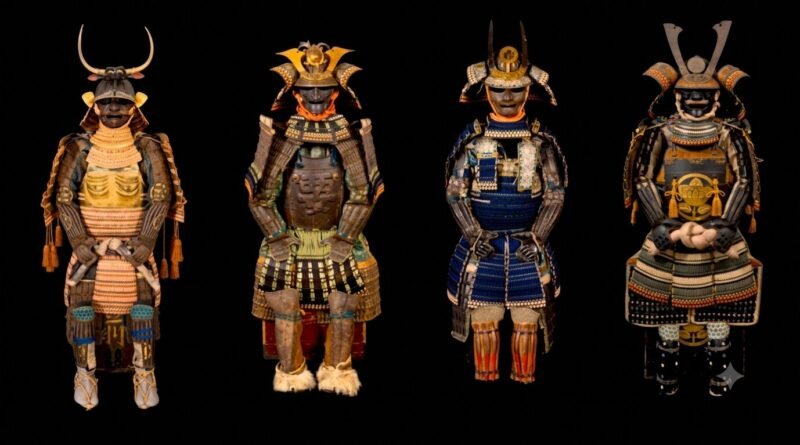
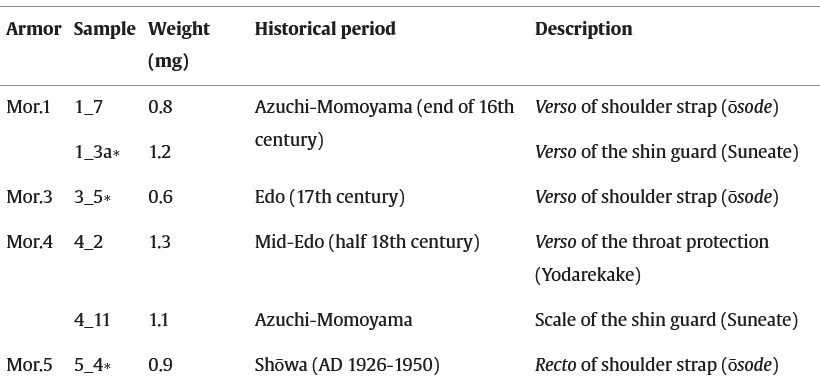
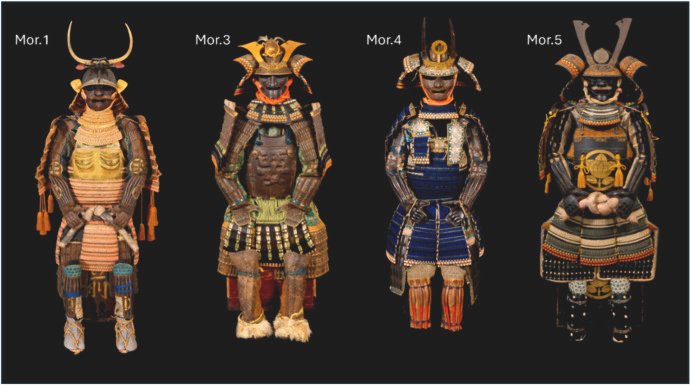
The study examined four suits of armor from the Morigi Collection (MUSEC, Lugano, Switzerland), dating from the late 16th century through the 20th century. Although historical sources had provided certain assumptions about the materials used, direct scientific confirmation had been lacking until now. The study “Challenging proteomic identification of animal species in historical leather from Japanese Samurai armors” was conducted by Italian scientists Elena C. L. Rigante, Cristina Corti, Ludovico Geminiani, Laura Rampazzi, Moira Luraschi, Mariachiara Bianco, Tommaso R. I. Cataldi, and Cosima D. Calvano.
“Since the 10th century, Samurai warriors formed the military elite of Japanese society. The choice of animal skin for leather manufacture depended on the mechanical and chemical properties of collagen-rich tissues. Despite this rich documentary background, the animal origin of leather components in Samurai armor has not, to our knowledge, been directly established by proteomic analysis. This study addresses that gap through the investigation of four armors from the Morigi Collection, donated to the Museo delle Culture (MUSEC, Lugano, Switzerland) by Paolo Morigi (1939–2017)…Six historical samples were collected from the four armors.” Rigante et al.
The main challenge lies in the very nature of the material itself. Historical leather was almost invariably treated through the tanning process, most commonly with plant-derived tannins. Over time, these compounds form exceptionally strong chemical bonds with collagen, the key structural protein of leather, making it well preserved but also extremely difficult to analyze.
A bottom-up proteomic strategy
To overcome this challenge, researchers developed an advanced laboratory method. By combining an alkaline treatment (sodium hydroxide, NaOH), which removes tanning residues, with the FASP (filter-aided sample preparation) method, they were able to isolate and purify collagen without compromising the integrity of the samples. The prepared material was then analyzed using mass spectrometry, a technique that enables the identification of specific protein fragments characteristic of particular animal species. In other words, the researchers used a bottom-up proteomic strategy, analyzing proteins rather than DNA. In this approach, collagen proteins from the leather were enzymatically broken down into smaller fragments called peptides, which were then identified using chromatography and mass spectrometry. By comparing these peptide patterns with reference databases, the researchers determined which animal species the leather originated from.
The results confirmed some expectations while also revealing unexpected insights. Deer leather, traditionally valued among samurai for its durability and availability, was clearly identified, as was cattle leather. However, the most intriguing discovery was the presence of sheep leather in a 16th-century suit of armor. Since this finding does not align with the historical context of that period in Japan, it suggests that the armor did not remain untouched throughout its history. Instead, these artifacts were likely subjected to later repairs, modifications, or partial reconstructions.
“More broadly, this result highlights the adaptability of artisans, who modified and replaced materials according to availability over time. Once sheepskin became more accessible, it may have been readily adopted for restoration of older armor sets, as synthetic and semi-synthetic materials were later introduced alongside traditional ones. Overall, this study demonstrates that bottom-up proteomics is a powerful and cost-effective alternative to DNA sequencing for the speciation of degraded historical hides. The success of the optimized extraction protocol also provides a practical template for future investigations of tanned leather collections in museums, making it possible to recover valuable historical information even from analytically challenging matrices.” Rigante et al.
The first scientific investigation specifically devoted to the animal speciation of leather inserts in historical Samurai armors using a proteomic approach
Although samurai have long disappeared from the battlefield, their armor continues to tell stories. “This study provides the first scientific investigation specifically devoted to the animal speciation of leather inserts in historical Samurai armors using a proteomic approach. By bridging historical documentation and analytical evidence, it offers new insight into the material culture of pre-modern Japan and into the management and circulation of animal resources. Taken together, the results clarify an aspect that has been widely discussed in historical sources but rarely tested through scientific analysis, and they provide a useful methodological framework for future studies of historical leather artifacts,” they concluded.
Image: Rigante et al.
Funding: This work was supported by the Progetto di Ricerca di Interesse Nazionale—PRIN 2022CNNRWZ- REActive GEl for orgaNic bindERs recognition in Artworks (REAGENERA), financed by the Unione Europea – Next Generation EU – Mission 4 component 1 CUP H53D23003830006.
