

Six women, the same loss: a new study reveals how life changes after late miscarriage
“The women in this study described profound changes across psychological, physical, social, and existential aspects of life,” said the study’s lead author, Julie Dalgaard Guldager.
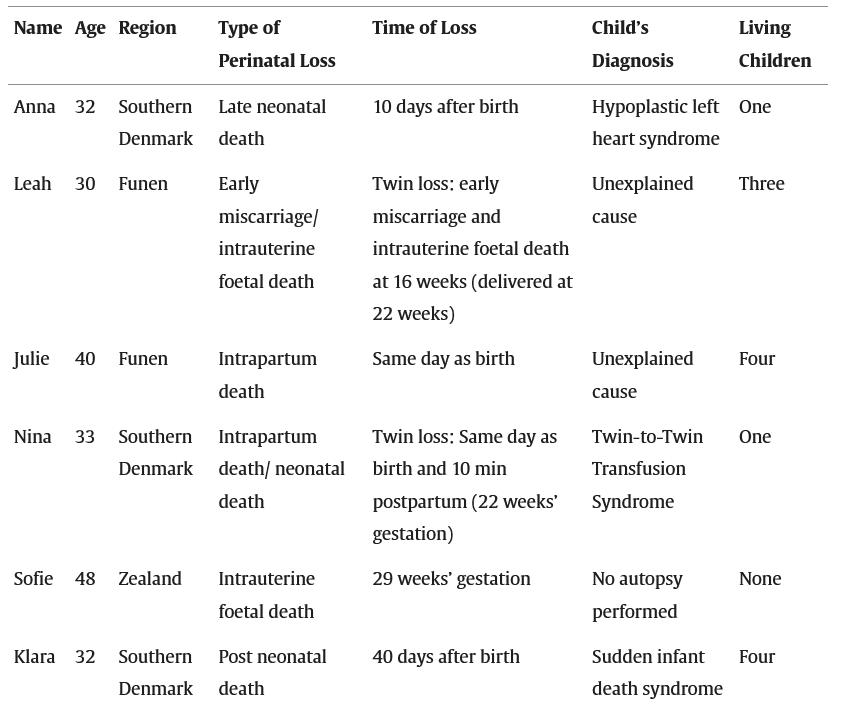
A new qualitative study, based on in-depth interviews with six women who experienced late pregnancy loss or foetal loss, shows that this experience affects every aspect of life: psychological, social, physical, and existential.
The study titled “When hope is broken: A qualitative study of women’s quality of life after late miscarriage or foetal loss”, conducted by Alexia Nicholine Juul Konstantinou and Julie Dalgaard Guldager, explores how late pregnancy loss affects women’s quality of life. It is important to explain the difference; late miscarriage refers specifically to the loss of a pregnancy in the later stages, before birth, while foetal loss is a broader term that includes any death of the fetus before delivery, including late miscarriage and stillbirth.
“Definitions of pregnancy loss vary, complicating cross-study comparisons. Herbert et al. (2022) define miscarriage as loss before 20–28 gestational weeks and stillbirth as loss thereafter. In this study, the term late miscarriage is used to describe pregnancy loss occurring later in gestation. Late miscarriage refers to losses after 20–40 weeks, including pregnancy termination for foetal anomaly, while foetal death is defined as death within the first 40 days of life.” Konstantinou & Guldager, When hope is broken
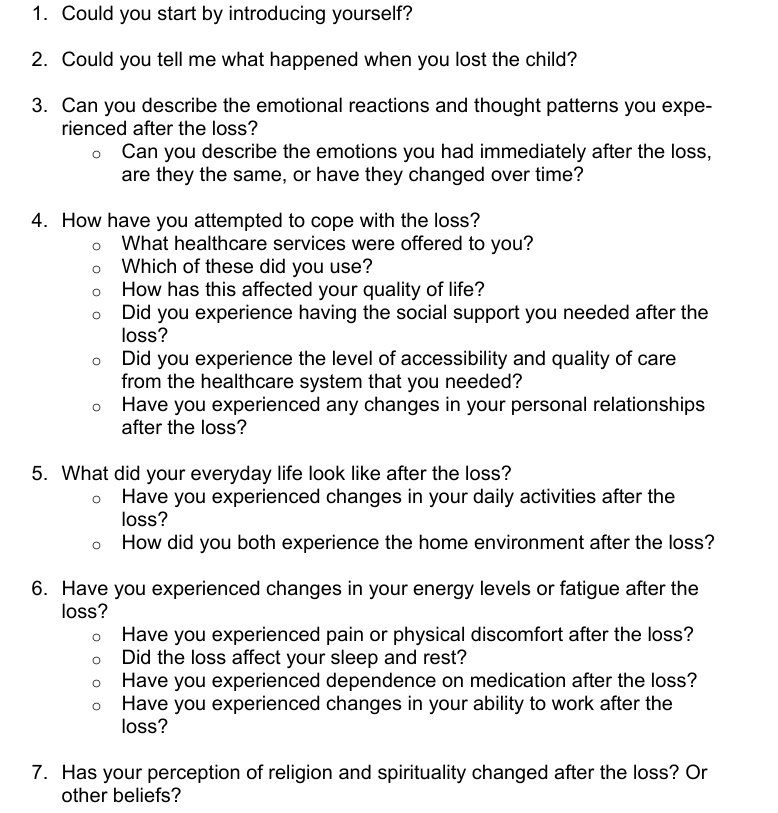
“Interviews were conducted online and lasted approximately 105 min. Only the interviewer and participant were present at the interview,” the authors explained in the study. The analysis was interpreted through the World Health Organization’s quality of life framework (WHOQOL), but was primarily guided by a hermeneutic phenomenological approach, focusing on meaning and lived experience rather than symptoms alone.
“Pregnancy and birth are typically anticipated as joyful milestones; however, when complications result in miscarriage or foetal loss, many parents experience profound grief. ..Despite growing recognition, the long-term impact on women’s quality of life remains underexplored. Despite the high prevalence of pregnancy loss, grief associated with pregnancy loss remains under-recognised both socially and within health systems.” Konstantinou & Guldager, When hope is broken
As the study authors point out, “because recruitment occurred about a year after the acute COVID-19 pandemic, service availability, social support, and coping contexts during that period may have influenced participants’ narratives.” The study’s limitations include a small, self-selected sample of six women. However, the aim here is not generalisation, but deeper understanding.
When everyday life becomes difficult
Women describe profound grief, a sense of emptiness, loss of meaning, and a changed relationship to the future. It is important to note that their study included women who described symptoms consistent with PTSD, and some had received a PTSD diagnosis, but the study was not designed to estimate how common PTSD is after pregnancy loss.
Alongside psychological distress, physical consequences are also present: chronic fatigue, insomnia, pain, and general exhaustion. Pregnancy loss reshapes even the most basic activities. Getting out of bed, showering, preparing food, going to work… all become demanding, sometimes impossible. At the same time, the study highlights the importance of small but meaningful acts of support. A single conversation, silent presence, or practical help… In such moments, women no longer feel alone in their experience.
Experiences with the healthcare system range from deeply supportive to profoundly distressing. Empathic midwives, psychological care, and bereavement groups are often described as crucial to recovery. However, systemic gaps leave lasting marks. Being placed near healthy newborns, a lack of privacy, and impersonal communication that fails to acknowledge the nature of the loss can intensify emotional pain.
Over time, ritual practices, planting trees, creating jewellery, marking dates, or keeping photographs, become ways of giving form to the relationship with the lost child. Some women lose their faith, others find it, while many remain in a space of questioning. Although the experience is marked by grief, the study also notes changes that emerge over time. Some women describe greater clarity and increased sensitivity to their own boundaries.
Recovery requires time, understanding, and long-term, comprehensive care
The important message of this study is that grief after late miscarriage or fetal loss is often not short-lived but can last a long time and have long-term consequences for women’s emotional, psychological, and daily functioning. Therefore, it is extremely important to emphasize that the grieving process does not end with discharge from the hospital or within the first few weeks after the loss. It is also important to note that women can significantly benefit from flexible and holistic support tailored to their individual needs, and that such support should be available over a longer period of time, not limited to the immediate postpartum period.
In other words, pregnancy loss is a life-changing experience on many levels, and recovery requires time, understanding, and long-term, comprehensive care.
A life that does not return, but continues
- “I was in the deepest grief. For instance, there was that scream that came out of me when they took my girls. I had no control over it, and it still echoes in my head.…I needed much more support, but I was not able to seek help on my own.” Nina’s mother had to buy doll clothes to dress her twins who died at birth: “I had no clothes for them. The clothes I had bought, which I had bought really small, were not nearly small enough when they arrived… […] …It touched something in me that there were no clothes for them. It is an enormously significant thing….I needed much more support, but I was not able to seek help on my own.“ (Nina)
- “I think a sense of meaninglessness will always weigh on me. I cannot imagine becoming happy… […] …I no longer have hopes and dreams for the future as I once did. I am not as optimistic. I find it difficult to imagine what a good life would look like…I want to remember the children we have lost by talking about it, and I have had jewellery made with the children.” (Anna)
- “With a dead baby in my belly, I have to look at lots of beautiful pregnant women who have just given birth to their babies, and I am placed in the maternity unit about to give birth to this dead baby. And I have to hear one baby after another cry for their mother… […] …that was very hard.” (Leah)
- “One day my neighbour knocked on the door and said, “I just have to give you a hug because this is just terrible”….[…]…The next day she came with freshly baked rolls and food that could be heated, and she made sure there was lunch for the children…[…]…I have thanked her a thousand times….I cannot keep up with fast conversations. I cannot participate in work meetings. I am partially on sick leave. I lived on coffee and liquorice.” (Julie)
- “The hospital chaplain helped me find calm and gave me space to be angry and sad and to cry and scream….I still believe that there is something between heaven and earth. But religion does not give me the answers” (Sofie)
There are days when it feels possible to go on, and days when everything returns
The wounds remain, but with them comes the capacity to reorganise life. Not as it was before, never as it was before, but differently, with more emotion, questions, and pain, as there are days when moving forward feels possible and days when everything returns.
“This study contributes to public health by emphasising that supporting parents after late miscarriage and foetal loss requires a holistic approach that acknowledges the complexity and duration of grief, strengthens social networks, and ensures sustained access to compassionate, tailored care. By doing so, health systems can better protect women’s mental health and promote long-term wellbeing,” they concluded.
Yet this study may offer comfort or help other women feel less alone, helping them shape this painful experience into something new, one that does not hurt less but allows life to continue.
