


A Place for Paws? Dogs in UK Schools
Dogs are becoming increasingly common guests in British primary schools. They appear during reading sessions, on walks, at school gates, or simply spend time on school premises. A new study shows that school staff and parents generally view their presence positively, but also that practices vary considerably from one school to another.
The authors of the study “Dogs in UK Schools: An Evaluation of the Status Quo” are Claudia A. F. Wascher, Dom Burke, Úna Race, and Jenna Kiddie.
Researchers surveyed 97 people who either work in primary schools in the United Kingdom or care for children who attend them. The questionnaire was open from 10 September to 16 October 2024, and participation was voluntary and anonymous. Participants included teachers, headteachers, teaching assistants, parents and guardians.
Most of the dogs belonged to school employees: 32 per cent were owned by headteachers, 30 per cent by teachers, and 19 per cent by other school staff. Dogs belonging to professional organisations accounted for 12 per cent. The most frequently mentioned breeds and types included Labradors, Cockapoos, Spaniels and mixed breeds.
The dogs did not have a single role. Reading aloud to a dog was the most frequently mentioned activity, with 33 mentions, followed by walking the dog, with 29, and the dog’s general presence at school, with 20. Some dogs welcomed people at the school gates, took part in therapy sessions, or were involved in lessons about animal care.
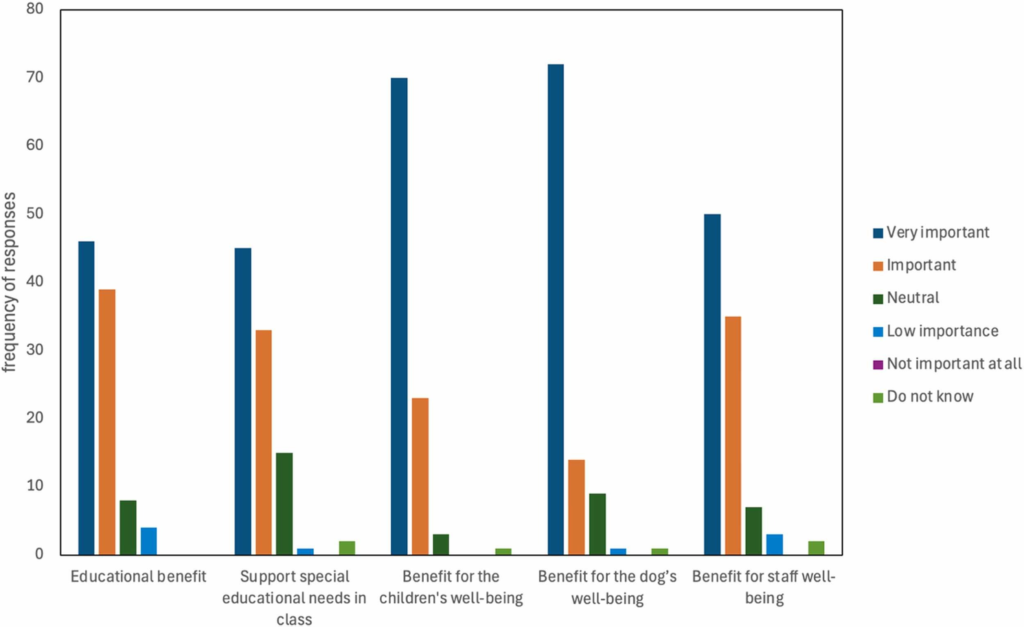
Participants considered wellbeing more important than educational outcomes alone. Benefits to the wellbeing of children, dogs and staff were rated as more important than general educational benefits or support for pupils with special educational needs. The authors link this finding to previous research, which provides clearer evidence of the impact of dogs on wellbeing than on students’ cognitive outcomes. Importantly, however, this study did not measure changes in children’s mood, learning or behaviour; it examined attitudes and existing practices.
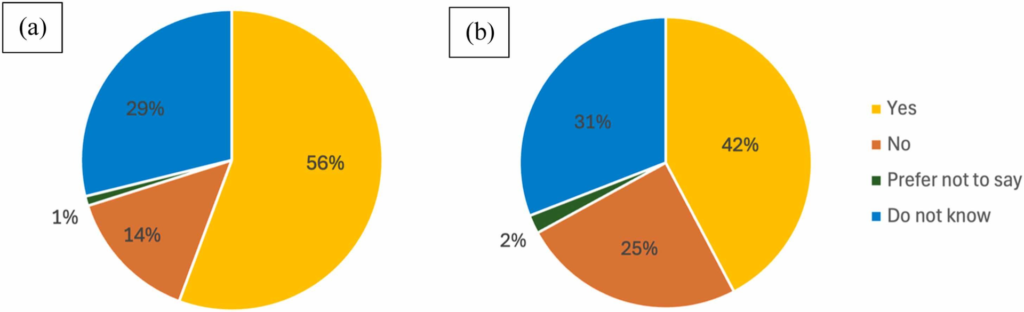
More participants said that dogs needed training before entering a school than said the same about handlers. Only 42 per cent of participants said that handler training was necessary. The authors emphasise the need for an appropriately trained handler who can monitor the dog’s wellbeing. Over the previous 12 months, 88% of respondents were not aware of any injury caused by a dog or any aggressive behaviour by a dog at school. Two per cent reported very rare incidents, while three per cent reported a small number of incidents, fewer than five.
This does not, however, prove that the risk is negligible. The sample was self-selected, meaning that people with positive attitudes towards the use of dogs in schools may have been more likely to participate. The researchers also did not clearly distinguish between pet dogs, therapy dogs and facility dogs, which is another limitation of the study. As noted, dogs can have a meaningful place in educational settings, but their role, training, supervision and wellbeing require clearer standards.
Image: Help frightened dogs like Holly find hope, https://www.dogstrust.org.uk/
