


Fungus First Discovered in South Asia Now Found in Virginia
Researchers from the University of Virginia have reported the first detected cases of the fungus Trichophyton indotineae in Virginia, found in two brothers, causing persistent skin infections that can be difficult to treat with standard antifungal medications.
A relatively new species of fungus, Trichophyton indotineae, causes uncomfortable and persistent skin infections and is raising concern among experts due to its resistance to standard treatments.
First identified in South Asia, this fungus has spread globally in recent years. The first cases have now been reported in the U.S. state of Virginia, further confirming its ability to expand geographically.
The case was described in detail by the authors Hope Winfield, Nicole Edmonds, Wilson Omesiete, Richard Flowers, Amy Mathers, and Emily Snavely in a report titled Trichophyton indotineae in Virginia: diagnostic identification and case report.
Infections caused by T. indotineae do not appear dramatic at first glance. They present as itchy, spreading skin rashes that often resemble common fungal infections such as ringworm. However, the key difference lies in their resistance. Standard antifungal medications, particularly terbinafine, long considered a first-line treatment, often fail.
“In recent years, clinical cases of T. indotineae have emerged globally, including United States (US) cases in New York and Pennsylvania gaining recognition in 2023 and 2024, respectively. To our knowledge, we report the first cases of T. indotineae in Virginia….A 29-year-old immunocompetent male (Patient A) presented to the dermatology clinic in October of 2024 with a diffuse, itchy rash. He had immigrated to the US from Honduras in 2020, developing a rash seven months later. Emergency department visits resulted in trials of topical steroids, topical antifungals, and oral fluconazole without resolution…Three weeks later, his 24-year-old immunocompetent brother (Patient B) presented similarly. He had also immigrated from Honduras in 2020 and reported rash onset several months after arrival…” Winfield et al.
This was the case in two patients described in a recent study. The brothers, both in their twenties, developed widespread rashes that did not respond to conventional therapies. Only after detailed laboratory testing, including genetic analysis, was it confirmed that T. indotineae was the cause. Such diagnostics are not routine. Standard methods, such as microscopy or fungal culture, cannot reliably distinguish this species from related organisms. As a result, many cases likely go unrecognized, allowing the infection to spread further.
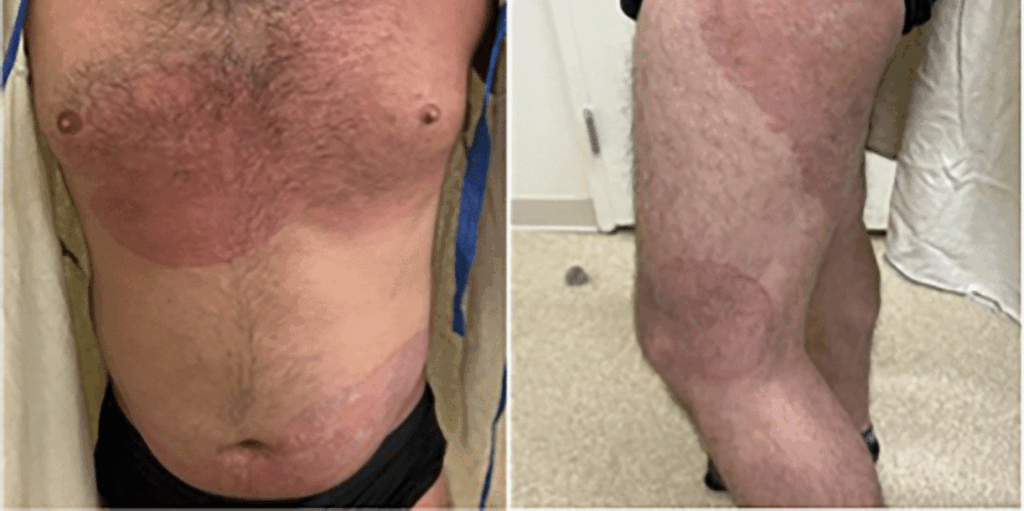
Treatment is available, but it is not straightforward. In the reported cases, itraconazole was used, an oral medication that requires prolonged use. Although both patients eventually improved, the treatment lasted for weeks. Another concern is the mode of transmission. The infection can spread through direct skin contact, but also via contaminated surfaces, clothing, or bedding. In shared households, this makes person-to-person transmission easy.
“Both patients developed persistent pruritic rashes in 2020 after immigrating to the US, but T. indotineae was only suspected in 2024 due to worsening symptoms and antifungal treatment failure. Neither patient reported international travel post-immigration. This delay reflects diagnostic challenges and limited species-level identification capacity in most clinical labs. While pre-immigration acquisition is possible, prolonged symptoms and household exposure raise the possibility of US community transmission before broader recognition of T. indotineae in North America.” Winfield et al.
If not recognized in time, T. indotineae could become a significant public health issue, similar to other drug-resistant pathogens. For now, the key lies in raising awareness among clinicians and improving diagnostic methods.
Image: University of Virginia
